Let’s be honest: turkey is boring. I said it. We spend all year fantasizing about a “Christmas Carol” style feast, but then we settle for a bird that usually tastes like dry cardboard unless you drown it in gravy. If you really want to feel like a Victorian aristocrat (or just someone who enjoys flavor), you need to tackle a roast goose.
I know what you’re thinking. Goose is scary. It’s expensive, it’s greasy, and you have heard horror stories about people setting their ovens on fire. I’m not going to lie to you; the first time I roasted a goose, my smoke detector went off so many times I just took the batteries out.
But here is the thing: once you master the art of the goose, you will never look back. It is the ribeye steak of poultry. The meat is dark, rich, and intensely savory. And the skin? It crisps up into a salty, golden shell that puts chicken skin to shame.
So, put on your apron and maybe open a window, just in case. We are going to conquer this bird together.
Why Choose Goose Over Turkey?
If you enjoy red meat, you will love goose. Unlike turkey or chicken, which have white breast meat, goose is all dark meat. It tastes more like roast beef or duck than it does like poultry.
But the real reason we roast a goose is the fat. Oh, the fat.
People call it “liquid gold” for a reason. A single goose releases liters of clear, high-quality rendering fat during the cooking process. You absolutely must save this. Potatoes roasted in goose fat are, IMO, the single greatest side dish in human history.
However, this fat is also why people mess it up. If you don’t manage the fat, the bird steams in its own grease, the skin gets flabby, and your oven turns into a smoke machine. Don’t worry, we have a plan for that.
Buying Your Bird: Size Matters
Shopping for a goose is tricky because the yield is terrible. I don’t mean that as an insult to the goose; it’s just biology. They have huge chest cavities and heavy bones.
A 10-pound turkey feeds a crowd. A 10-pound goose feeds maybe four people. Maybe.
The Rule of Thumb:
Buy about 1.5 to 2 pounds of raw weight per person. If you are feeding six people, you need a 10-12 pound bird. If you are feeding a huge crowd, roast two geese. Do not try to find a massive 20-pound mutant goose; older, larger birds get tough.
Also, check if your goose comes “young” or “green.” You want a young goose for roasting. An old goose is better for braising or stewing because the meat is tougher.
The Prep: The Prick Test
This is the most critical step in the entire process. If you skip this, you fail.
You need to help the fat escape from under the skin. If the fat stays trapped, the skin never crisps.
Take a sharp metal skewer, a needle, or the tip of a very sharp paring knife. Prick the skin all over the bird. I’m talking hundreds of holes. Focus heavily on the breast, the thighs, and the area near the tail.
Crucial Warning: Do not pierce the meat. You only want to puncture the skin and the fat layer. If you stab the meat, the juices will run out, and you will end up with a dry bird. Go in at an angle. Think of it like acupuncture, not a stabbing spree.
Once you look like a pin-cushion artist, season the bird aggressively. Goose meat is rich, so it can handle a lot of salt. I also like to stuff the cavity with aromatics like onion, lemon, and sage. Do not stuff it with bread stuffing; the fat will soak into the bread and make it incredibly heavy.
The Roasting Strategy
There are a million ways to roast a goose, but I prefer the “Steam then Roast” or the “Slow Roast” method. The goal is to render fat without burning the skin.
Here is my fool-proof method for a crispy result:
- Bring it to Room Temp: Take the bird out of the fridge an hour before cooking. Cold meat cooks unevenly.
- The Rack is Essential: Place the goose on a V-rack inside a large roasting pan. You must keep the bird elevated so it doesn’t boil in the fat that drips down.
- The Blast: Preheat your oven to 400°F (200°C). Roast the bird for about 20-30 minutes. This kickstarts the browning process.
- The Drop: Lower the heat to 325°F (160°C). This gentle heat allows the fat to melt slowly.
The Siphon Method
While the bird cooks, you have a job to do. Every 30 minutes, open the oven. You will see a pool of clear fat in the bottom of the pan.
Remove that fat.
Use a turkey baster to suck up the hot liquid fat and transfer it to a glass jar. If you let the fat fill the pan, it will eventually hit the hot oven walls and smoke up your house. Plus, by saving it incrementally, you get clean, pure fat for later.
Managing the Hunger Gap
Roasting a goose takes time. You are looking at roughly 15 to 20 minutes per pound, plus resting time. Your guests will get hungry.
Since goose is such a rich, heavy main course, I like to serve lighter, punchy appetizers to keep everyone happy without ruining their appetite. A platter of smoked salmon bites works perfectly here because the acidity of the lemon and capers wakes up the palate before the main event.
If you have a crowd that demands something warm, avoid heavy cheese dips. Instead, try passing around some mini quiches. They are elegant, easy to eat with one hand, and won’t weigh everyone down before the heavy meat arrives.
The Temperature Game
Do not trust the “wiggle the leg” method. You need a meat thermometer.
Goose is best served medium to medium-well. We aren’t aiming for the 165°F standard we use for chicken. If you cook a goose to 180°F, it will taste like liver.
Target Temperature:
Pull the bird when the thermometer reads 160°F (70°C) in the thickest part of the thigh. The temperature will rise another 5-10 degrees while it rests.
The breast meat might even look slightly pink. That is okay! In fact, that is desirable. Pink goose breast is juicy; gray goose breast is tough.
Resting is Not Optional
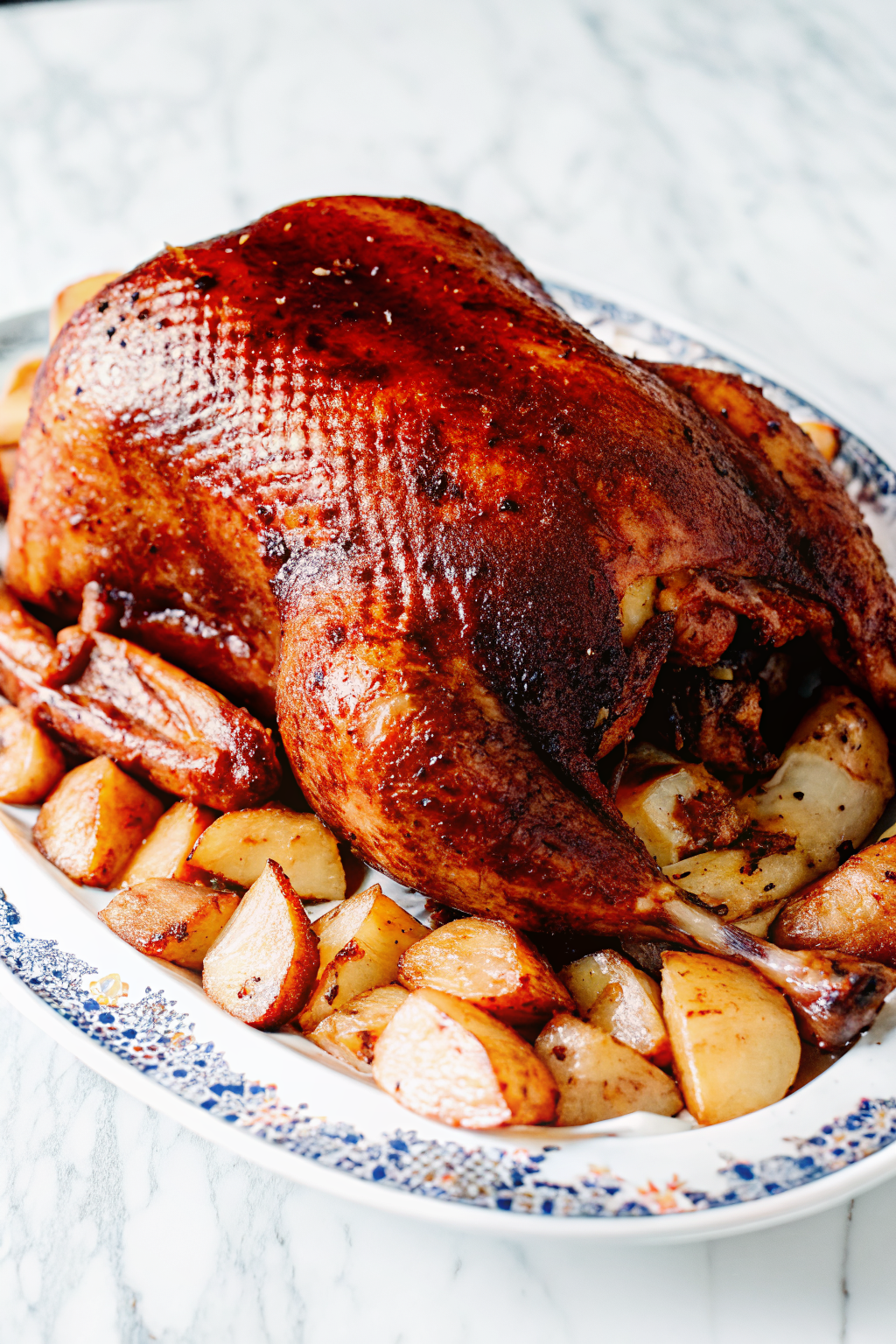
When you take the goose out of the oven, it will look magnificent. The skin should be a deep mahogany brown.
Do not touch it.
Transfer it to a carving board and tent it loosely with foil. Let it rest for at least 30 minutes. If you cut into it now, all those juices will run out onto the board, and the meat will be dry.
While the bird rests, you have time to finish your side dishes. Since you have the oven on anyway, I usually throw in a tray of garlic parmesan bread sticks. They take about 15 minutes, which fits perfectly into the goose’s resting window, and they are great for mopping up any juices on the plate.
Carving the Beast
Carving a goose feels different than carving a turkey. The anatomy is slightly longer and flatter.
- Remove the Legs: Slice through the skin between the leg and the body. Pull the leg back until the joint pops, then cut through.
- Remove the Breasts: Unlike a turkey where you slice thin pieces off the side, I prefer to remove the entire breast lobe from the rib cage. Run your knife right down the keel bone (the center breast bone) and peel the meat back.
- Slice: Once the breast is off, place it skin-side up on the board and slice it crosswise into thick medallions. This ensures everyone gets a piece of that crispy skin.
What to Serve With It
Goose is heavy. It coats your mouth. You need acid to cut through that richness.
- Red Cabbage: Braised red cabbage with apples and vinegar is the traditional German side dish. The sourness balances the fat perfectly.
- Root Vegetables: Roasted carrots, parsnips, or turnips work well.
- Fruit: Apples, prunes, or cherries often appear in goose stuffing or sauces because sweetness pairs well with the “gamey” flavor.
Avoid heavy cream sauces. You don’t need them. A simple pan gravy made from the drippings (with most of the fat skimmed off) is all you need.
The Leftovers
If you manage to have leftovers, count yourself lucky. Cold roast goose is delicious.
Strip the carcass of all the remaining meat. You can use it in sandwiches, salads, or stir-fries. It works essentially anywhere you would use duck.
Do not throw away the carcass!
The bones make the most incredible stock. Throw the bones in a pot with water, onions, and carrots. Simmer it for a few hours. You will get a broth that is dark, rich, and flavorful—perfect for a noodle soup or a risotto base.
The Liquid Gold: What to Do with the Fat
By the end of this process, you should have a jar full of golden goose fat. This keeps in the fridge for months.
Use it for:
- Roasting potatoes (seriously, do this).
- Sautéing greens.
- Frying eggs.
- Confiting garlic.
It has a high smoke point and adds a savory depth that butter just can’t match. It is basically the culinary reward for all your hard work.
Troubleshooting Common Issues
“The skin isn’t crispy.”
You didn’t prick it enough, or your oven wasn’t hot enough at the start. You can try blasting it under the broiler for 2 minutes, but watch it closely—grease flares up fast.
“The meat is tough.”
You likely overcooked it. Goose is unforgiving. Next time, pull it at a lower temperature.
“There is too much smoke.”
Your oven is dirty, or the fat overflowed. Clean your oven before roasting a goose. And keep removing that fat during the roast!
Why It’s Worth the Hassle
I know this sounds like a lot of work. You have to prick the skin, drain the fat, watch the temperature, and carve it carefully.
But when you sit down and take that first bite, you understand. The skin shatters like glass. The meat melts in your mouth. It feels like an occasion.
Turkey is food for sustenance; roast goose is food for celebration.
It forces you to slow down and pay attention to the cooking process. You can’t just throw it in and forget it. You have to interact with the bird. And honestly, that connection makes it taste better.
Final Thoughts
If you are on the fence about trying this for your next holiday meal, just do it. Warn your guests that the bird will be smaller than a turkey. Tell them to bring their appetites for the sides.
And buy a good meat thermometer.
Once you serve a properly cooked goose, you become a legend among your friends. They will talk about “that year you made the goose” for decades.
For a deeper dive into the specific temperatures and food safety aspects of cooking waterfowl, check out this guide from the USDA. It’s dry reading, but it ensures you don’t poison your in-laws.
Now, go find a butcher, order your bird, and get ready for the best roast dinner of your life. Good luck!
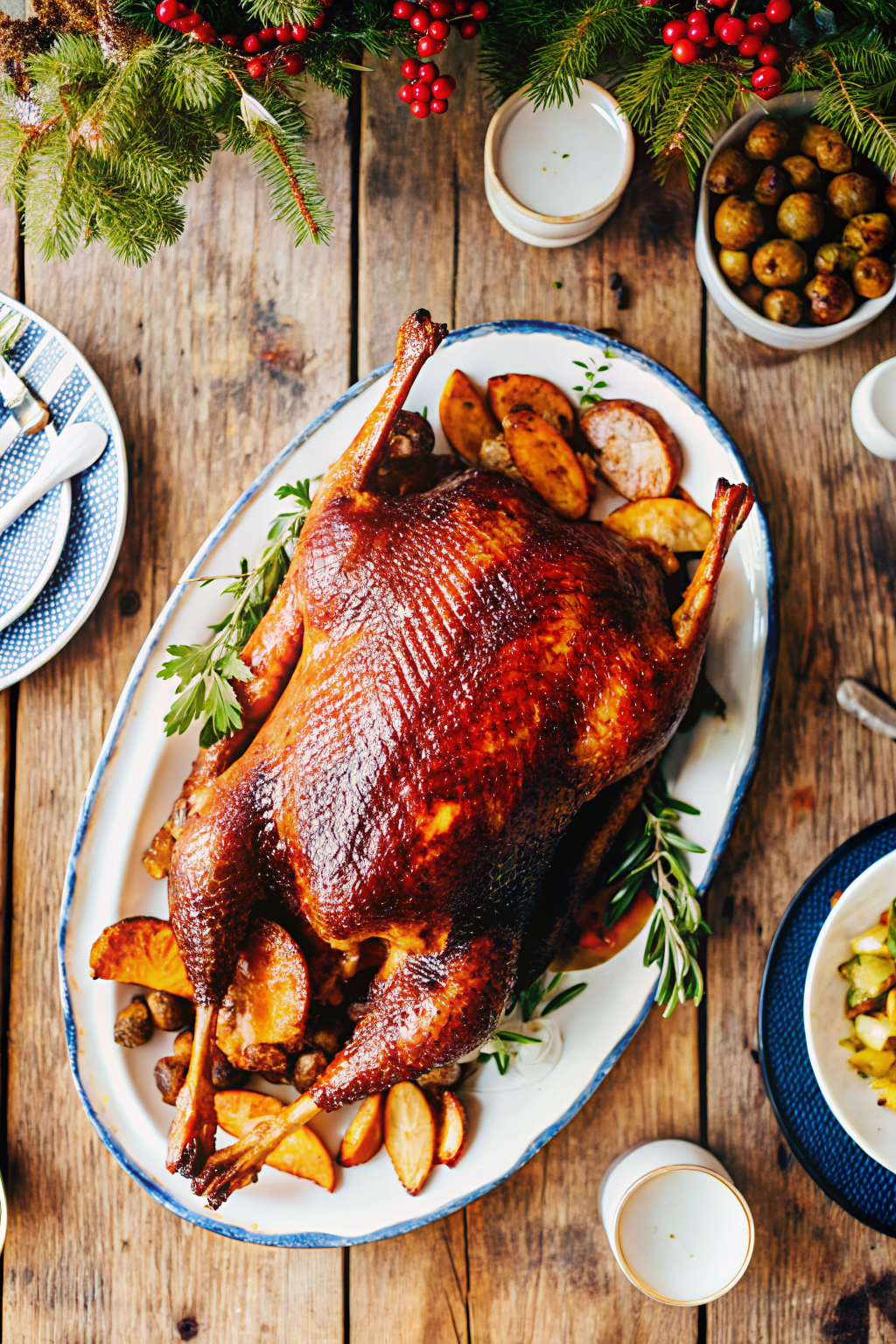
Roast Goose Recipe
Author: Prep: 40 minutes Cook: 3 hours 30 minutes Total: 4 hours 40 minutesEquipment
- Large roasting pan with a rack
- Sharp skewer or paring knife
- Paper towels
- Digital Meat Thermometer
- Kitchen twine (optional)
- Glass jar (for saving the fat)
Ingredients
The Bird
- 1 10–12 lb Whole young goose (thawed if frozen)
- 1 kettle Boiling water for scalding
- 2 tbsp Kosher salt
- 1 tbsp Freshly cracked black pepper
The Aromatics
- 1 Lemon or Orange halved
- 1 Apple quartered
- 1 bunch Fresh herbs Sage, Thyme, Rosemary
- 1/2 Onion peeled and quartered (optional)
Instructions
- Prep the Bird: Remove the goose from the fridge 1 hour before cooking to let it come to room temperature. Remove the giblets and neck from the cavity. Trim any loose neck skin or excess fat from the cavity opening.
- Prick the Skin: Using a sharp skewer or the tip of a paring knife, prick the skin all over the bird. Focus heavily on the breast and the thick parts of the thighs. Tip: Be careful to pierce only the skin and fat, not the meat itself, or the juices will escape.
- The Scald: Place the goose on a rack over a clean sink or large pan. Slowly pour a kettle of boiling water over the entire bird. You will see the skin tighten and shrink immediately. This is the secret to crispy skin!
- Dry and Season: Pat the goose thoroughly dry with paper towels inside and out. Moisture prevents crisping, so get it bone dry. Generously rub the salt and pepper all over the skin and inside the cavity.
- Stuff the Cavity: Loosely place the lemon, apple, onion, and herbs inside the cavity. Do not pack it tight; air needs to circulate. Tie the legs together with kitchen twine if you want a neater look.
- The Blast: Preheat your oven to 425°F (220°C). Place the goose breast-side up on a rack in a roasting pan. Roast for 20 minutes to jumpstart the browning.
- The Long Roast: Reduce the oven temperature to 350°F (175°C). Continue roasting. Calculate approximately 20 minutes per pound total cook time.
- Drain the Fat: Every 30 to 40 minutes, carefully remove the pan and pour off the rendered fat into a heatproof jar. Do not skip this, or your oven might smoke! (Save this fat for roasting potatoes later).
- Check Temp: The goose is done when a meat thermometer inserted into the thickest part of the thigh reads 165°F (74°C). The juices should run clear.
- Rest: Transfer the goose to a carving board and tent loosely with foil. Let it rest for at least 30 minutes before carving. This locks in the juices.
Notes
- Buying Tip: Aim for a “young goose” or “green goose” for the most tender meat.
- Leftovers: Save the carcass! It makes an incredible soup stock.
- Crispy Skin Hack: If the skin isn’t crispy enough for your liking by the time the meat is done, blast it at 400°F (200°C) for the last 5–10 minutes, watching closely to prevent burning.
- Serving Size: Geese have a lower meat-to-bone ratio than turkeys. Calculate about 1.5 to 2 pounds of raw weight per person.
Nutrition