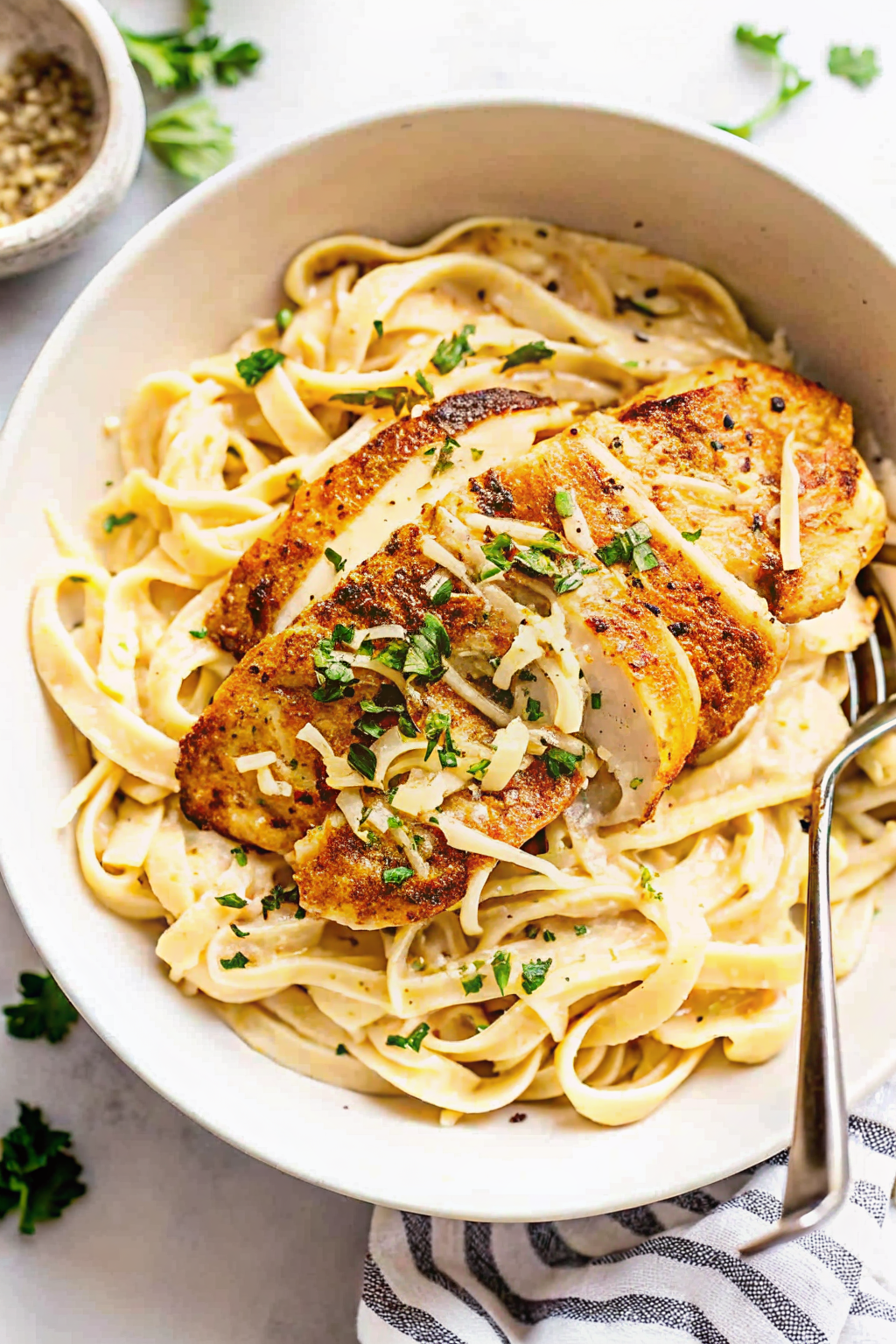
Let’s be honest. Sometimes, a salad just won’t cut it. You have those days where the only thing that will solve your problems is a massive bowl of carbohydrates drowning in a creamy, cheesy, rich white sauce. You know exactly what I’m talking about. We are talking about Chicken Alfredo.
It is the ultimate comfort food. It’s the dish you order at that chain restaurant when you want to feel wrapped in a warm, dairy-filled blanket. But here is the secret they don’t want you to know: making this at home is actually faster than driving to the restaurant, waiting for a table, and listening to the waiter list the specials. And frankly, the homemade version tastes a million times better.
I used to be intimidated by Alfredo sauce. I thought it involved some kind of culinary wizardry or a packet of powder. But once I realized it’s basically just three ingredients getting to know each other in a pan, my life changed. Today, we are going to walk through exactly how to master this dish. We’ll skip the jarred stuff (please, for the love of food, skip the jarred stuff) and make something legendary.
The Great Debate: Authentic vs. American
Before we fire up the stove, we need to address the elephant in the room. If you talk to a purist from Rome, they will tell you that “Alfredo” sauce doesn’t contain cream. The original Fettuccine Alfredo, created by Alfredo di Lelio in Rome, relies entirely on butter and young Parmesan cheese emulsifying with pasta water.
That is delicious, sure. But that is not what we crave when we say “Chicken Alfredo” here in the States. We want that velvety, thick, coat-your-spoon white sauce. We want the cream. So, for this article, we are embracing the Americanized, creamy glory of the dish. We aren’t apologizing for it; we are perfecting it.
The Chicken: Don’t Treat It Like an Afterthought
A lot of people focus so much on the pasta and sauce that they treat the chicken like a rubbery garnish. Do not do this. The chicken needs to stand on its own.
Choosing Your Cut
You generally have two options here:
- Boneless, Skinless Chicken Breasts: This is the classic choice. It looks pretty when you slice it against the grain and fan it out over the noodles. However, breast meat dries out faster than a sidewalk in July.
- Boneless, Skinless Thighs: IMO, this is the tastier option. Thighs have more fat, which means more flavor and a much more forgiving cook time. They stay juicy even if you look away for a minute.
If you stick with breasts, pound them out to an even thickness before cooking. If one end is two inches thick and the other is paper-thin, you will end up with one end raw and the other tasting like sawdust.
The Sear
You want flavor? You need color. Season your chicken aggressively with salt, pepper, and garlic powder. Heat your pan with a mix of olive oil and butter. When you put that chicken in, do not touch it. Let it sit there and sizzle. You want a deep, golden-brown crust.
After you cook the chicken and remove it from the pan, look at the bottom of the skillet. See those little brown bits stuck to the metal? That is called fond. That is concentrated flavor. Do not wash that pan! We are going to build our sauce right on top of that goldmine.
The Sauce: Liquid Gold
This is why we are here. The sauce. If you master this, you can put it on anything—broccoli, shrimp, or even an old shoe—and it would probably taste good.
The Ingredients That Matter
You cannot hide bad ingredients in a recipe this simple. Since we only use a few things, they have to be top-tier.
- Heavy Cream: Not milk. Not half-and-half. You need the fat content of heavy whipping cream to get that luxurious texture that coats the noodle properly.
- Butter: Use unsalted butter so you can control the salt level yourself.
- Garlic: Fresh cloves only. I know the jar of minced garlic is convenient, but it tastes slightly acidic and metallic. Smash a fresh clove; it takes ten seconds.
- The Cheese: This is the hill I will die on. You must use a block of Parmigiano-Reggiano and grate it yourself.
The “Green Can” Ban
I need to be serious for a second. If you use the pre-shredded cheese in a bag, or the powdery stuff in the green canister, your sauce will fail. :/
Why? Manufacturers coat shredded cheese in anti-caking agents (like potato starch or cellulose) to keep it from clumping in the bag. When you melt that into a sauce, those agents prevent the cheese from emulsifying. You end up with a grainy, gritty, oily mess instead of a smooth sauce. Grate your own cheese. It melts like a dream.
The Pasta: The Vehicle for the Sauce
Fettuccine is the traditional choice for a reason. The broad, flat surface area acts like a conveyor belt, delivering maximum sauce to your mouth. Spaghetti is too thin; the sauce slips right off. Penne is okay, but there is something elegant about twirling long noodles.
The Water Rules
- Use a Big Pot: Give the noodles room to dance.
- Salt Like the Ocean: This is your only chance to season the actual pasta. If the water doesn’t taste salty, add more.
- Reserve the Water: Before you drain the pasta, scoop out a cup of that cloudy, starchy cooking water. This is the secret weapon professional chefs use to glue the sauce and pasta together.
Bringing It All Together: The Process
Timing is everything in cooking. You want the pasta to finish cooking right as the sauce reaches perfection.
Start your water boiling while you sear the chicken. Once the chicken rests on a cutting board, drop the pasta in the water and start the sauce in the chicken pan.
Building the Emulsion
Melt your butter in the pan with the chicken drippings. Sauté the garlic for just 30 seconds—you want it fragrant, not burnt. Burnt garlic tastes bitter and will ruin the whole pot.
Pour in the heavy cream. Bring it to a gentle simmer. Do not boil the heck out of it; cream can separate if it gets too hot. Just let it bubble lazily.
Now, whisk in your freshly grated cheese a handful at a time. Whisk constantly. As the cheese melts, the sauce will thicken. This is where the magic happens. If it gets too thick (like glue), splash in some of that reserved pasta water. The starch in the water helps stabilize the creamy emulsion.
Finally, taste it. Does it need salt? Plenty of cracked black pepper? Maybe a tiny pinch of nutmeg? Nutmeg is a classic addition to white sauces; it adds a nutty warmth that people can’t quite identify but love.
The Marriage of Pasta and Sauce
Here is a rookie mistake I see all the time: people put dry noodles on a plate and ladle sauce on top. No!
You must transfer the cooked noodles directly into the skillet with the sauce. Use tongs. Toss the pasta in the sauce over low heat for a full minute. You want the pasta to absorb the flavor, not just sit underneath it. The sauce should cling to every strand.
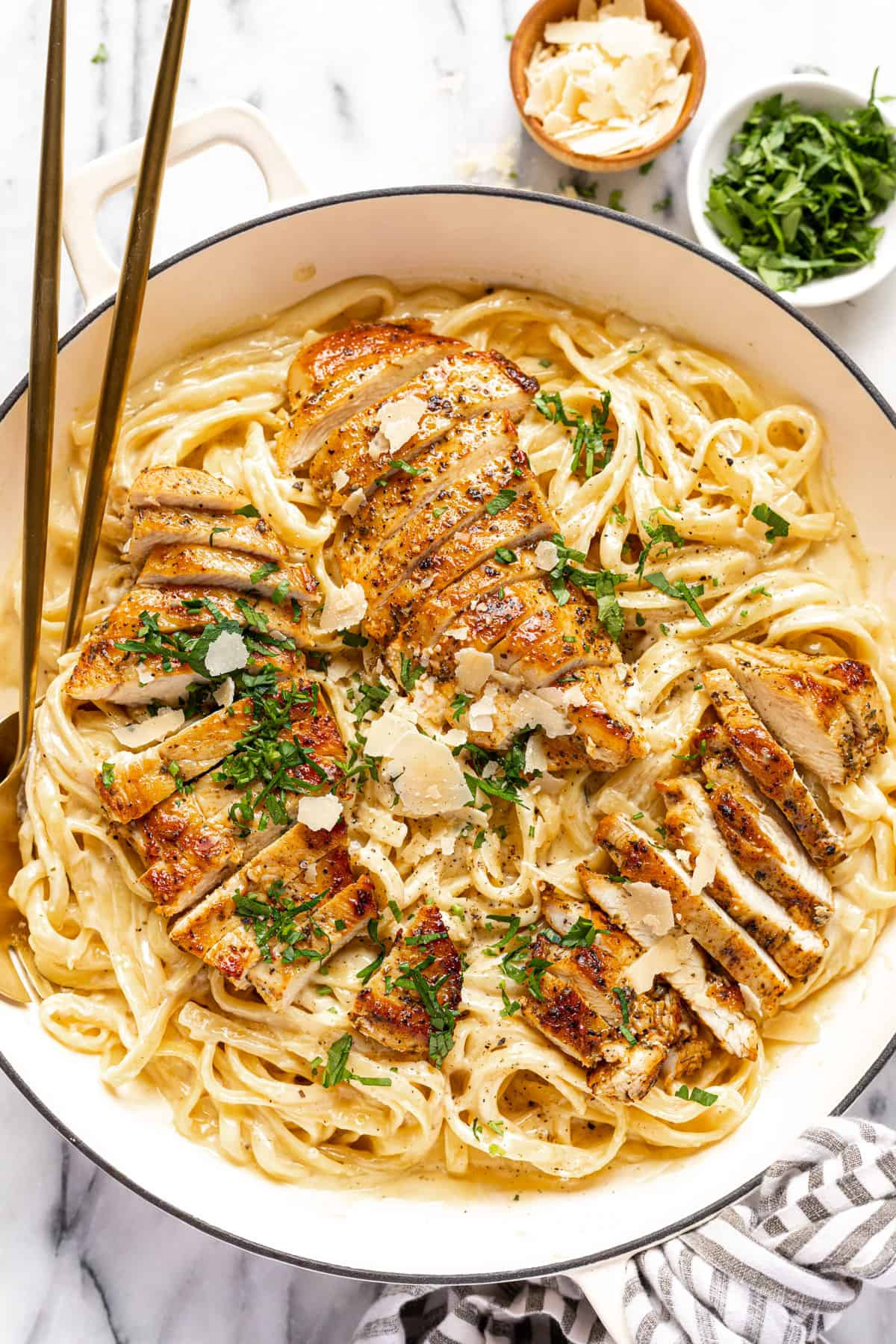
Slice your chicken and place it on top. Garnish with some fresh parsley to prove you ate a vegetable, and maybe sprinkle a little extra cheese because you deserve it.
If you are looking to round out this meal, you definitely need some carbs on the side (yes, carbs on carbs). I highly recommend serving this with some easy homemade garlic bread. You need something to sop up the extra sauce at the bottom of the bowl, right?
Troubleshooting: Why Did My Sauce Break?
It happens to the best of us. You look down, and instead of a smooth cream sauce, you see a pool of oil with curds floating in it. It looks unappetizing, to say the least.
Why It Happens
Usually, the heat was too high. When dairy gets too hot, the proteins tighten up and squeeze out the fat. This causes the separation.
How to Fix It
Don’t panic. Take the pan off the heat immediately. Add a splash of cold heavy cream or a tablespoon of water. Whisk it vigorously—like you are trying to win a gold medal in whisking. usually, this will bring the emulsion back together.
Variations to Keep It Interesting
Once you master the base recipe, you can get creative.
- Cajun Style: Add a tablespoon of Cajun seasoning to the sauce and the chicken for a spicy kick.
- Veggie Loaded: Broccoli is the best friend of Alfredo sauce. The little florets act like sponges for the sauce. You can also throw in spinach, mushrooms, or sun-dried tomatoes.
- Seafood: Swap the chicken for shrimp or scallops. Just cook them quickly so they don’t turn rubbery.
If you want something lighter to balance out this heavy meal, consider starting with a crisp Caesar salad. The acidity in the dressing cuts through the richness of the Alfredo perfectly.
Storage and Reheating: The Struggle is Real
I will be honest with you: Chicken Alfredo is best eaten immediately. Cream sauces are notoriously finicky about being reheated.
If you have leftovers, store them in an airtight container in the fridge. When you go to reheat them, do not use the microwave if you can avoid it. The microwave zaps the moisture out and breaks the sauce, leaving you with oily noodles.
The Stovetop Method
Reheat the leftovers in a saucepan over low heat. You will need to add a splash of milk or water to loosen it up, as the sauce will have thickened into a solid block in the fridge. Stir gently until it comes back to life.
If you absolutely must use the microwave, do it in short 30-second bursts, stirring in between, and add a little water before you start.
Why We Love It
There is a psychological component to this dish. It’s abundant. It’s rich. It signals to your brain that you are safe and fed.
I remember the first time I made this for a date. I was terrified the sauce would break or the chicken would be raw. But when I set that steaming bowl down, the look on their face was pure joy. That is the power of cooking. You aren’t just making calories; you are making a memory.
Plus, let’s be real, cheese is basically a love language.
If you are planning a full Italian feast and have a sweet tooth, you might want to check out a recipe for classic tiramisu to finish the night on a high note.
Conclusion
So, are you ready to ditch the jar? I hope so. Making Chicken Alfredo from scratch is one of those low-effort, high-reward skills that makes you look like a pro in the kitchen.
Keep your heat low, your ingredients high-quality, and your cheese freshly grated. Do that, and you will never look at the pasta aisle the same way again.
Invite some friends over, open a bottle of white wine, and enjoy the process. Cooking shouldn’t be a chore; it should be a party. Now, go get that water boiling!
For more on the fascinating history of how this dish traveled from Rome to your kitchen, check out this article on the origins of Fettuccine Alfredo. It’s a great read while you wait for your water to boil.
Ultimate Creamy Chicken Alfredo
Author: Prep: 10 minutes Cook: 20 minutes Total: 30 minutesEquipment
- Large Skillet or Sauté Pan
- Large Pot (for boiling water)
- Tongs
- Whisk
- Box Grater (essential for the cheese!)
Ingredients
- Large Skillet or Sauté Pan
- Large Pot (for boiling water)
- Tongs
- Whisk
- Box Grater (essential for the cheese!)
Instructions
- Prep the Water: Bring a large pot of water to a boil. Once boiling, add the kosher salt—it should taste like the ocean!
- Season the Chicken: While the water heats, pat the chicken dry. Season both sides aggressively with salt, pepper, and garlic powder.
- Sear the Meat: Heat olive oil and 1 tablespoon of butter in a large skillet over medium-high heat. Add the chicken and cook for 5-7 minutes per side until golden brown and cooked through (165°F internal temp). Remove chicken to a cutting board to rest. Do not wipe the pan!
- Cook the Pasta: Drop the fettuccine into the boiling water. Cook to al dente (usually 1 minute less than package instructions). Important: Before draining, scoop out a cup of that cloudy, starchy pasta water.
- Start the Sauce: Lower the skillet heat to medium. Add the 1/2 cup of butter to the same pan used for the chicken (scraping up the brown bits). Add the minced garlic and sauté for 30 seconds until fragrant—don’t let it burn!
- Simmer: Pour in the heavy cream. Let it come to a gentle simmer (small bubbles only) for about 2-3 minutes.
- The Cheesy Magic: Reduce heat to low. Whisk in the freshly grated Parmesan cheese a handful at a time until smooth and melted. Stir in the nutmeg and black pepper.
- Emulsify: If the sauce looks too thick, whisk in a splash of the reserved hot pasta water until it reaches your desired consistency.
- Combine: Using tongs, transfer the cooked pasta directly into the skillet with the sauce. Toss vigorously for 1 minute so the noodles absorb the flavor.
- Serve: Slice the rested chicken and place it on top of the pasta. Garnish with fresh parsley and extra cheese. Eat immediately!
Notes
- The Cheese Rule: Please do not use pre-shredded cheese in bags or the green canister. They contain anti-caking agents that will make your sauce grainy. Grate your own block for a smooth melt.
- Chicken Thighs: If you prefer juicier meat that is harder to overcook, swap the breasts for boneless, skinless thighs.
- Sauce Troubleshooting: If your sauce breaks (separates into oil and clumps), take it off the heat immediately and whisk in a tablespoon of cold water vigorously to bring it back together.
- Reheating: Cream sauce is best fresh. If reheating, do so gently on the stove with a splash of milk. Avoid the microwave if possible
Nutrition