You know that feeling, right? The one where your throat feels like sandpaper, your nose runs like a leaky faucet, and the gray sky outside matches your mood perfectly. Or maybe you just had a day where absolutely nothing went right. You spilled coffee on your favorite shirt, missed your deadline, and stepped in a puddle on the way home. We have all been there. In those moments, you don’t want a salad. You definitely don’t want a kale smoothie. You want a hug in a bowl. You want chicken noodle soup.
Let’s be real for a second. Is there any dish on this planet that carries more emotional weight than chicken noodle soup? I don’t think so. It transcends culinary boundaries. It ignores trends. While the rest of the world obsesses over deconstructed avocado toast or molecular gastronomy foams, chicken noodle soup just sits there, reliable and perfect, waiting to fix your entire life. Okay, maybe it won’t pay your taxes, but it will definitely fix your afternoon.
I remember my grandmother making this massive pot of soup whenever the temperature dropped below fifty degrees. She didn’t use a recipe. She just threw things in a pot and somehow created liquid gold. For the longest time, I thought she had magic powers. Turns out, she just understood the fundamentals of flavor building. And guess what? You can do it too. You don’t need a culinary degree to make soup that tastes like home; you just need to stop overthinking it and start cooking with your senses.
We are going to break this down today. No pretension, no fancy equipment you’ll only use once, and absolutely no passive voice here (grammar nerd alert!). We are making the ultimate comfort food, and we are going to enjoy every second of the process.
The Soul of the Bowl: Ingredients Matter
You cannot hide bad ingredients in a soup. I know, that sounds harsh, but hear me out. Water makes up the majority of this dish. If you start with lackluster components, you end up with lackluster hot water. Nobody wants that. You want depth. You want flavor that punches you in the taste buds and says, “Wake up!”
The Chicken Choice
Let’s tackle the protein first. You have options here, and frankly, I have strong opinions about them. IMO, bone-in, skin-on chicken thighs reign supreme. Why? Because fat equals flavor. The breast meat dries out faster than a sidewalk in July, but thighs stay juicy and tender even if you accidentally simmer the soup a bit too long. Plus, those bones release gelatin into the broth, giving it that silky, rich mouthfeel we all crave.
However, I get it. Sometimes you just need soup now. In those emergencies, a rotisserie chicken from the grocery store saves the day. You just shred that meat, toss it in at the end, and boom—dinner is served. But if you have the time, roast your own chicken. You can even use a perfect roasted chicken recipe to prep the meat beforehand, ensuring you have incredible flavor right from the start.
The Veggie Base (Mirepoix Magic)
Ever wonder why almost every Western soup starts with onions, carrots, and celery? The French call it mirepoix, and it forms the aromatic foundation of your soup. Please, for the love of all that is tasty, do not rush this step.
You need to sweat these vegetables. You want the onions to turn translucent and sweet, the carrots to soften slightly, and the celery to release its savory aroma. If you throw raw veggies into boiling water, you get crunchy, grassy-tasting soup. We want mellow, melded flavors.
Pro Tip: Don’t chop your veggies too small. You want a bit of texture. A rustic chop shows people that a human made this, not a machine.
Broth vs. Stock: The Great Debate
People use these terms interchangeably, but they are not the same thing. Stock comes from simmering bones for hours. It’s rich, thick, and full of collagen. Broth comes from simmering meat. It’s lighter and thinner.
So, which one should you use?
Ideally, you use homemade stock. I know, I know. Who has time to watch a pot of bones boil for four hours? But if you make a big batch of homemade chicken stock on a rainy Sunday and freeze it, you will thank yourself later. The difference in flavor is astronomical. Store-bought cartons just taste like salt and sadness in comparison.
If you must buy it from the store (no judgment here, we all have busy lives), buy “bone broth” rather than regular chicken broth. It packs way more protein and flavor. And please, check the sodium content. You want to control the salt level, not let a factory decide for you.
The Noodle Dilemma
Here is where friendships end and families divide. What is the correct noodle for chicken noodle soup?
Some people swear by thin spaghetti. Others demand shells or rotini. But let’s look at the facts. You need a noodle that holds its own. You need surface area. You need the classic wide egg noodle.
Egg noodles bring a chewiness and a richness that standard pasta lacks. They soak up the broth just enough without disintegrating immediately. Although, if you want a controversial take: try making your own dumplings. It changes the game entirely. But for the sake of classic soup, grab a bag of high-quality, wide egg noodles.
Warning: Noodles are thirsty little things. If you cook them directly in the soup and then let the pot sit, they will drink all your broth. You will open the lid to find a casserole, not a soup. :/
To avoid this tragedy, cook your noodles separately if you plan on having leftovers. Just add them to the bowl right before serving. It keeps the noodles bouncy and the broth plentiful.
Step-by-Step to Liquid Gold
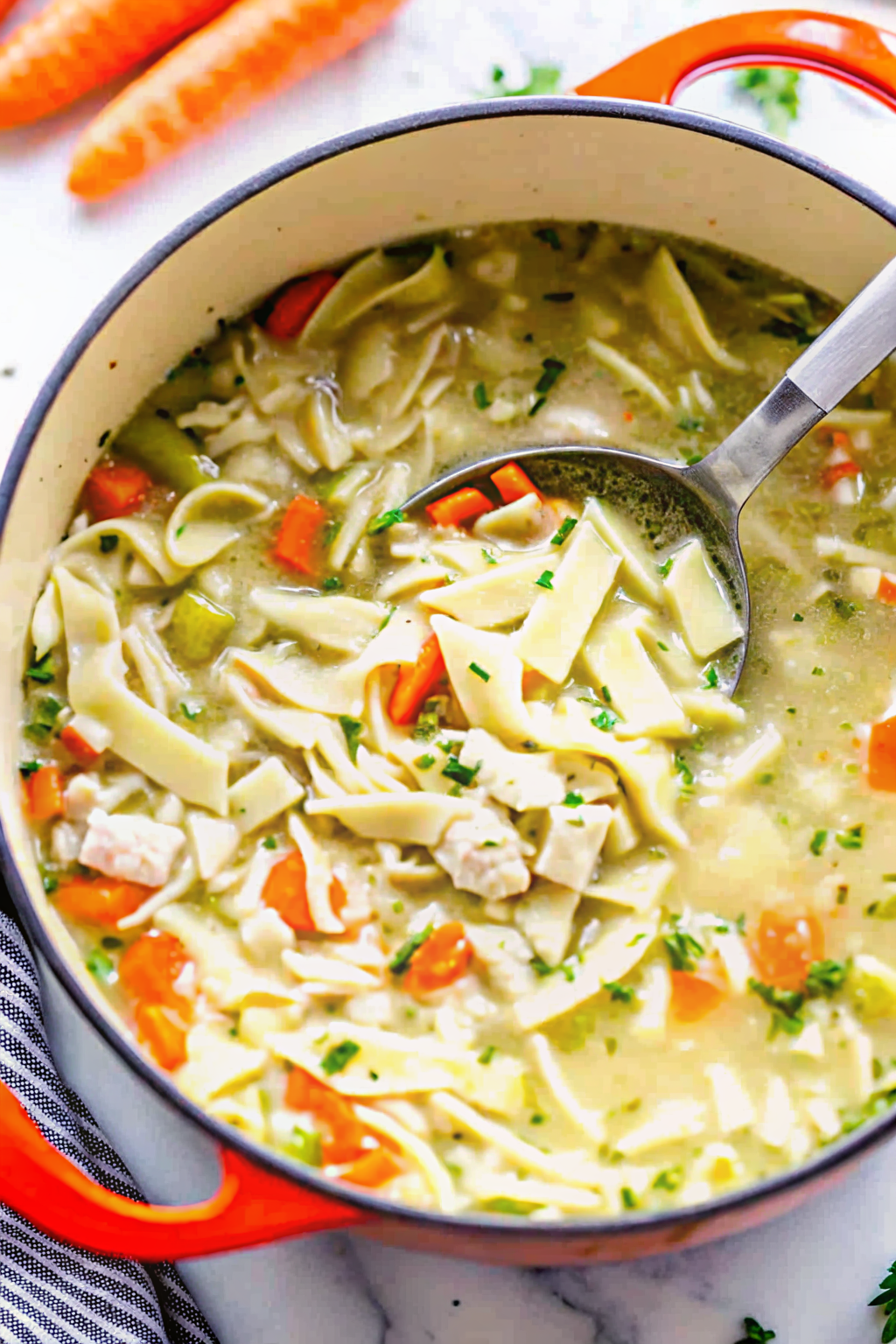
Alright, let’s get cooking. Grab your biggest heavy-bottomed pot (a Dutch oven works wonders here) and let’s build some flavor.
- Sauté the Veggies: Heat some oil or butter over medium heat. Toss in your onions, carrots, and celery. Add a pinch of salt right now. This draws moisture out and helps them cook faster. Sauté them for about 8–10 minutes until they smell amazing.
- Add Garlic (Late!): Do not burn your garlic. Add minced garlic only in the last minute of sautéing the veggies. Burnt garlic tastes bitter and ruins everything.
- Pour the Liquid: Add your stock. Scrape the bottom of the pot with a wooden spoon to get up any brown bits (that’s the fond, and it’s pure flavor).
- Simmer the Chicken: If you are using raw chicken thighs, add them now. Bring the pot to a boil, then drop it to a simmer. Let it bubble gently until the chicken cooks through—usually about 20 minutes.
- Shred and Return: Pull the chicken out. Let it cool slightly (burn your fingers if you’re impatient like me). Shred it with two forks. Toss the bones (or save them for stock later) and throw the meat back in.
- Noodle Time: Add your noodles now if you are eating immediately. Cook them until they are al dente. Mushy noodles are a crime against soup humanity.
- Seasoning Adjustment: Taste your soup. Does it need more salt? Pepper? Maybe a dash of soy sauce for umami? Trust your tongue.
Leveling Up Your Bowl
You have a pot of good soup. Now let’s make it great. The difference between a cafeteria soup and a restaurant-quality masterpiece usually comes down to the finishing touches.
- Acid is Key: Squeeze a fresh lemon into the pot right before serving. You won’t taste “lemon,” but the acid wakes up all the savory flavors. It cuts through the richness and makes the soup taste brighter.
- Fresh Herbs: Dried herbs (thyme, bay leaf) go in at the beginning. Fresh herbs (parsley, dill) go in at the very end. A handful of chopped fresh parsley adds color and a fresh, grassy note that balances the salty broth.
- Spice it Up: A few dashes of hot sauce or a pinch of red pepper flakes clears the sinuses effectively.
- The Cream Factor: Want something richer? Stir in a splash of heavy cream or a dollop of sour cream. It turns the broth opaque and luxurious.
Common Mistakes to Avoid
Even the best of us mess up sometimes. Here are a few pitfalls to watch out for so you don’t ruin your hard work.
- Boiling Instead of Simmering: A rolling boil emulsifies the fat into the liquid, making the stock cloudy and greasy. Keep it at a gentle simmer. Think “lazy bubbles,” not a jacuzzi.
- Over-Salting Early: Stock reduces as it cooks. If you salt it perfectly at the beginning, it will be a salt lick by the end. Season lightly at the start and adjust right before you eat.
- Undercooking Veggies: Crunchy carrots in soup feel wrong. Make sure they are tender before you call it done.
- Ignoring the Sides: Soup needs a partner. You need something for dipping. A slice of easy crusty bread is non-negotiable in my house. The crunch of the crust against the soft soup is a texture match made in heaven.
Why This Soup Actually Heals You
Is it just a placebo? Maybe. But who cares? There is actual science suggesting that chicken soup reduces inflammation in the body. The warm liquid hydrates you, the steam clears your congestion, and the protein helps rebuild your strength.
Plus, there is the psychological aspect. Eating something that someone (even if that someone is you) took the time to make with care signals to your brain that you are safe and loved. That mental shift alone boosts your immune system.
Fun Fact: Historically, doctors in the 12th century prescribed chicken soup for the common cold. They knew what was up way before modern medicine caught on.
Customizing for Dietary Needs
One of the best things about this dish is its versatility. You can adapt it to fit almost any dietary restriction without losing the soul of the meal.
- Gluten-Free: Swap the egg noodles for rice, quinoa, or gluten-free pasta. Just be aware that gluten-free pasta falls apart faster, so cook it separately!
- Low Carb: Ditch the noodles entirely. Add more veggies like zucchini, spinach, or cauliflower florets. You still get the comfort without the carb crash.
- Vegetarian: Obviously, chicken is out. But you can use chickpeas or firm tofu. Use a robust vegetable stock and add a parmesan rind while simmering to mimic that savory, meaty depth.
Storage and Reheating
Let’s say you made a gallon of soup. Unless you have a football team to feed, you will have leftovers. This soup stores beautifully, but you need to follow a few rules.
Cool the soup down quickly. Don’t leave a massive pot sitting on the stove for six hours; that is a bacteria party waiting to happen. Transfer it to shallow containers to speed up the cooling process.
In the fridge, it lasts about 3–4 days. In the freezer? You are good for 3 months. If you freeze it, remember what I said about the noodles. They don’t freeze well. Freezing the broth and chicken mixture is better, then add fresh noodles when you reheat it.
When you reheat it, do it on the stove. Microwaving soup often leads to cold spots and exploding broth. A gentle reheat on the stovetop brings everything back to temperature evenly.
A Final Thought
We live in a fast-paced, high-stress world. We stare at screens all day. We eat lunch at our desks. We prioritize efficiency over enjoyment. Making chicken noodle soup from scratch rebels against that mentality.
It forces you to slow down. You have to chop the vegetables. You have to wait for the pot to simmer. You have to taste and adjust. It is a mindful practice. And the reward? A bowl of something that tastes real.
So, the next time you feel the weight of the world on your shoulders, or just a tickle in your throat, go to the kitchen. Buy the good chicken. Chop the carrots. Smell the onions. Make the soup. Your body will thank you, your family will thank you, and honestly, your soul might just feel a little bit lighter too.
Now, go grab a spoon and dig in. You’ve earned it. 🙂
For more on the science behind why comfort foods like this actually make us feel better, check out this fascinating read from Serious Eats.
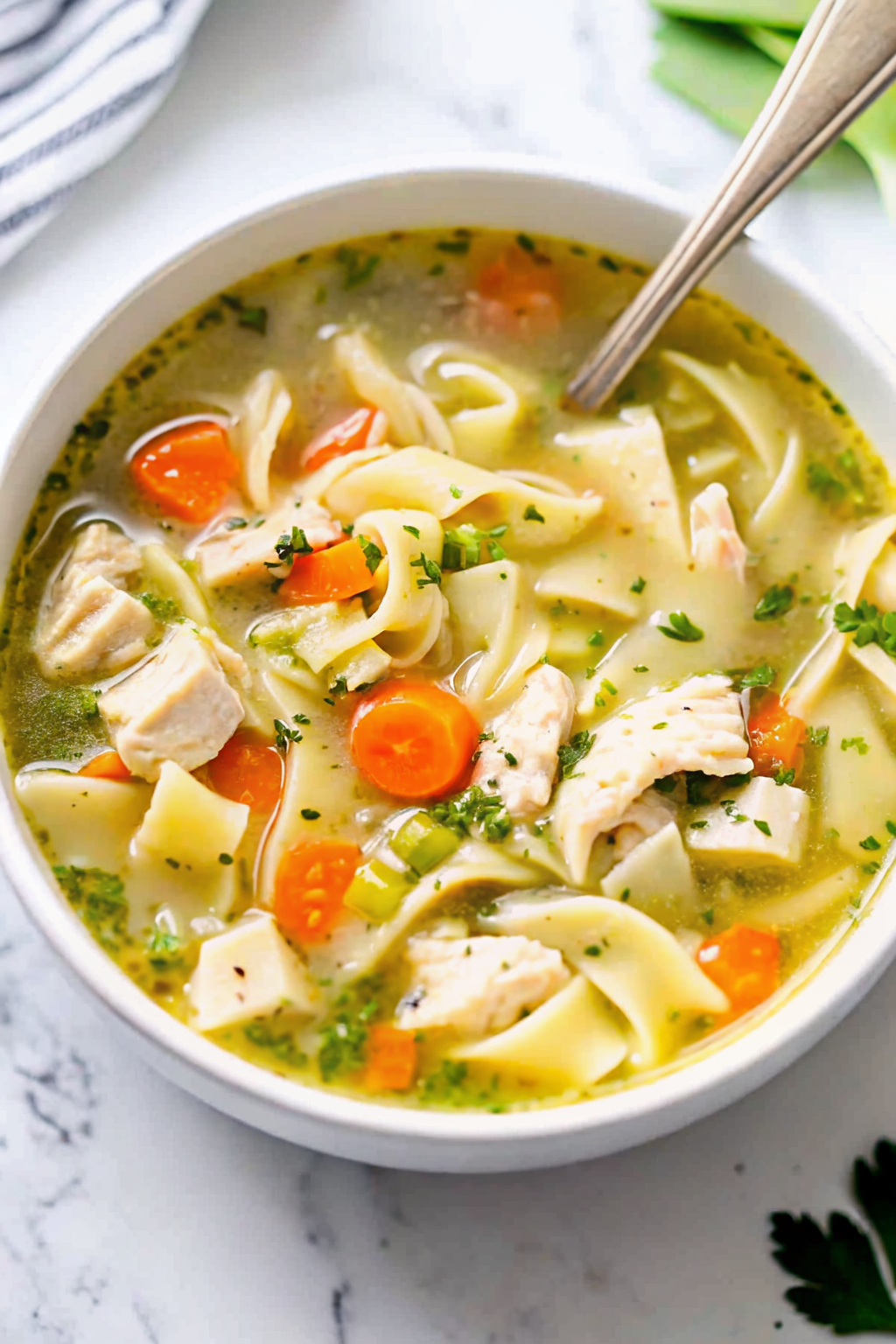
Homemade Chicken Noodle Soup
Author: Prep: 15 minutes Cook: 40 minutes Total: 55 minutesEquipment
- Large Dutch Oven (or heavy-bottomed pot)
- Chef’s knife
- Cutting board
- Tongs
- Two Forks (for shredding)
Ingredients
The Basics
- 1 tbsp olive oil or unsalted butter
- 1 large yellow onion diced
- 3 medium carrots peeled and sliced into rounds
- 3 ribs celery sliced
- 4 cloves garlic minced
The Broth & Protein
- 8 cups high-quality chicken stock or bone broth
- 1.5 lbs bone-in skin-on chicken thighs (approx. 4 thighs)
- 2 bay leaves
- 1 tsp dried thyme or 3 sprigs fresh thyme
- 1 tsp salt plus more to taste
- ½ tsp black pepper
The Finishers
- 6 oz wide egg noodles
- 1 tbsp fresh lemon juice about ½ a lemon
- ¼ cup fresh parsley chopped
Instructions
- Sauté the Veggies:
- Heat the olive oil or butter in a large Dutch oven over medium heat. Add the onion, carrots, and celery along with a pinch of salt. Sauté for 8–10 minutes, stirring occasionally, until the onions are translucent and the veggies have softened.
- Add Aromatics:
- Stir in the minced garlic and cook for just 1 minute until fragrant. Be careful not to let it burn!
- Build the Broth:
- Pour in the chicken stock and use a wooden spoon to scrape up any flavorful browned bits from the bottom of the pot. Add the chicken thighs (raw), bay leaves, dried thyme, salt, and pepper.
- Simmer:
- Increase the heat to bring the soup to a boil, then immediately reduce it to a low simmer. Cover the pot partially and let it cook for about 20–25 minutes, or until the chicken is cooked through and tender.
- Shred the Chicken:
- Remove the chicken thighs from the pot and set them on a cutting board or plate. Let them cool slightly, then discard the skin and bones. Use two forks to shred the meat into bite-sized pieces. Return the shredded meat to the pot.
- Cook the Noodles:
- Increase the heat slightly. Stir in the egg noodles and cook for 6–8 minutes (or according to package directions) until they are al dente. Note: If you plan to have leftovers, see the “Soggy Noodle Warning” in the notes below!
- Finish & Serve:
- Turn off the heat. Stir in the fresh lemon juice and chopped parsley. Taste your soup and add more salt or pepper if needed. Serve hot with a slice of crusty bread.
Notes
- The Soggy Noodle Warning: Noodles will soak up the broth if they sit in it too long. If you aren’t serving the whole pot immediately (or if you are meal prepping), cook the noodles in a separate pot of boiling water. Add them to individual bowls just before serving.
- The Acid Trick: Don’t skip the lemon juice! The acidity brightens the heavy, savory flavors and makes the soup taste like it came from a restaurant kitchen.
- Shortcut Version: Short on time? Swap the raw thighs for a shredded rotisserie chicken. Just sauté the veggies, add the broth and seasonings, simmer for 10 minutes to meld flavors, then add the cooked chicken and noodles at the end.
- Storage: Store leftovers in an airtight container in the fridge for up to 4 days. If freezing, freeze the soup without the noodles for best results (up to 3 months)
Nutrition