Let’s talk about the sad state of vegetable soup. For most people, it’s that watery stuff you get at a diner when the other option is chowder. It’s bland, it’s mostly soggy carrots, and it leaves you hungry again an hour later. That isn’t soup; that’s just hot vegetable water. We deserve better.
True Minestrone Soup is a completely different beast. It is thick, hearty, and packed with enough pasta and beans to actually count as a meal. It’s the kind of dish Italian grandmothers make to cure everything from a cold to a broken heart.
I remember my first real bowl of Minestrone in a tiny restaurant in Florence. It wasn’t a side dish; it was the main event. It had layers of flavor—parmesan, garlic, slow-cooked tomatoes. I realized then that I had been eating the wrong soup my entire life. Today, we are going to fix that. We are making a Minestrone that eats like a meal.
What Actually Defines Minestrone?
You might wonder, “Is there a strict recipe for Minestrone?” The short answer is no. The long answer is also no, but with rules.
Minestrone literally translates to “thick vegetable soup.” In Italy, it is a seasonal dish. You use whatever vegetables grow in your garden at that moment. In spring, it’s full of peas and broad beans. In winter, it relies on cabbage and root vegetables.
However, a great Minestrone Soup always follows a specific architecture:
- The Soffritto: A base of onions, carrots, and celery.
- The Bulk: Beans (cannellini or borlotti) and small pasta.
- The Liquid: A rich tomato-based broth.
- The Finish: A swirl of pesto or a handful of parmesan.
This flexibility is great because it means you can clean out your fridge. Have a zucchini that’s seen better days? Throw it in. A handful of spinach? Why not. It’s very forgiving.
The Secret to Deep Flavor (No Meat Required)
Often, vegetable soups taste thin. They lack that savory punch you get from chicken or beef stock. How do we fix that without adding meat?
Use a Parmesan Rind.
This is my number one tip. Next time you finish a wedge of parmesan cheese, do not throw away the hard, waxy rind. Toss it into the freezer. When you make soup, drop that rind into the simmering pot. As it cooks, it releases savory oils and umami flavor into the broth. It mimics the richness of meat stock perfectly. Just remember to fish it out before serving, unless you like chewing on cheese-flavored rubber. :/
Also, don’t skimp on the tomato paste. Sautéing the tomato paste with your vegetables before adding the liquid caramelizes the sugars and deepens the flavor. It makes the difference between a soup that tastes like fresh tomatoes and one that tastes like a rich stew.
Beans: Canned vs. Dried
Let’s be realistic. It’s a weeknight. You probably didn’t soak beans last night.
Canned beans are absolutely fine. In fact, for Minestrone, I prefer them. They are consistent, easy, and already tender. Just make sure you rinse them well. The liquid in the can is starchy and salty, which can cloud your beautiful broth.
If you have the time and want to cook dried beans, go for it. But IMO, the difference in a soup with this many ingredients is negligible. Save your energy for chopping the vegetables.
The Pasta Problem
Here is where people ruin their soup. They cook the pasta in the soup, then store the leftovers in the fridge.
Do not do this.
If you leave pasta in the soup overnight, it acts like a sponge. It will drink all your broth and turn into a bloated, mushy mess. By the next day, you won’t have Minestrone Soup; you will have a pasta casserole.
The Solution:
Cook your pasta (ditalini, macaroni, or tiny shells) separately in salted water. Add a scoop of cooked pasta to each bowl right before serving. Store the leftover soup and pasta in separate containers. This keeps the soup brothy and the pasta al dente.
Step-by-Step: Building the Layers
Let’s walk through the process. It’s not hard, but the order of operations matters.
1. The Sauté
Start with plenty of olive oil in a large Dutch oven. Sauté your onion, carrots, celery, and garlic. Take your time here. You want them to soften and sweeten, not just get hot.
If you enjoy the comforting aroma of my lentil soup, you know that rushing the vegetable base is a crime. Let them sweat for at least 10 minutes.
2. The Seasoning
Add your tomato paste, dried oregano, and maybe a pinch of red pepper flakes. Cook this for 2 minutes. This “blooms” the spices and cooks out the raw metallic taste of the tomato paste.
3. The Simmer
Pour in your vegetable broth, diced tomatoes, and drop in that parmesan rind. Add your heartier vegetables like potatoes or squash now. Bring it to a boil, then lower the heat. Let it simmer until the potatoes are tender.
4. The Greens and Beans
In the last 5 minutes of cooking, add your rinsed beans and softer vegetables like zucchini or green beans. Finally, stir in fresh spinach or kale right at the end. They only need a minute to wilt.
Customizing for the Seasons
One of the rhetorical questions I ask myself every season is: “What does the market look like right now?” Your soup should reflect that answer.
- Spring: Use asparagus, peas, leeks, and spinach. Skip the heavy tomatoes and keep the broth lighter.
- Summer: Go heavy on the zucchini, green beans, fresh basil, and fresh tomatoes.
- Autumn: Use butternut squash, sage, kale, and borlotti beans. It feels like a hug in a bowl.
- Winter: Root vegetables like parsnips, turnips, and cabbage are king.
Just like adjusting spices in pumpkin bread creates a seasonal vibe, swapping vegetables changes the entire personality of this soup.
Texture Matters
A good Minestrone should be thick. If it looks too watery, you have two options.
- The Bean Smash: Take a ladle of beans and vegetables out of the pot. Mash them with a fork and stir them back in. This naturally thickens the broth without adding flour or cornstarch.
- The Potato Trick: If you used potatoes, let some of them overcook slightly so they break down into the liquid.
Serving Suggestions
You cannot serve this soup naked. It needs accessories.
- Pesto: A dollop of basil pesto on top adds a burst of herbal freshness and oil that looks beautiful.
- Crusty Bread: Essential for dipping. Rub a slice of toasted sourdough with a garlic clove for instant garlic bread.
- More Cheese: Grate fresh parmesan over the top. Don’t use the stuff in the green can. Please.
If you serve this alongside a simple protein like air fryer chicken thighs, you have a complete, nutritionally balanced feast that feels fancy but costs very little.
Troubleshooting Common Mistakes
Even simple soups can go wrong. Let’s fix them.
My soup tastes bland.
You likely didn’t add enough salt. Potatoes and beans absorb a massive amount of salt. Add more salt, then add a splash of acid like lemon juice or red wine vinegar. Acid wakes up the flavors.
The vegetables are mushy.
You added everything at once. Potatoes take 20 minutes; zucchini takes 5. Stagger your additions based on cooking time.
It tastes too tomato-y.
You might have used a pasta sauce instead of diced tomatoes or too much paste. Balance it out with a little sugar or more broth.
Why This Meal Prep Works
Minestrone Soup is a meal prep champion. It tastes significantly better the next day after the flavors meld.
I often make a massive pot on Sunday. I eat it for lunch all week. Because I store the pasta separately, every bowl tastes fresh. It stops me from spending $15 on a mediocre salad at work.
It also freezes well—if you don’t put the pasta in. Freeze the vegetable bean soup base in quart containers. When you want dinner, boil some fresh pasta, defrost the soup, and combine. Easy.
The Health Benefits (The Bonus)
We eat this because it tastes good, but your body loves it too. It’s packed with fiber from the beans and vitamins from the rainbow of vegetables. It’s hydrating, low in fat (if you go easy on the cheese), and filling.
When you eat a bowl of this, you don’t get that heavy, sluggish feeling you get after eating a burger. You feel
energized. It’s fuel.

Final Thoughts
We need to stop treating vegetable soup as a punishment or a diet food. Minestrone Soup is vibrant, rich, and deeply satisfying. It celebrates produce rather than hiding it.
Whether you are cleaning out the vegetable drawer or trying to feed a family on a budget, this recipe delivers. It connects you to the seasons and forces you to slow down, chop some carrots, and smell the rosemary.
So, save your parmesan rinds. Buy some good olive oil. Make a pot of this soup this weekend. I promise, once you try the real thing, you will never look at that watery diner soup the same way again.
Happy cooking!
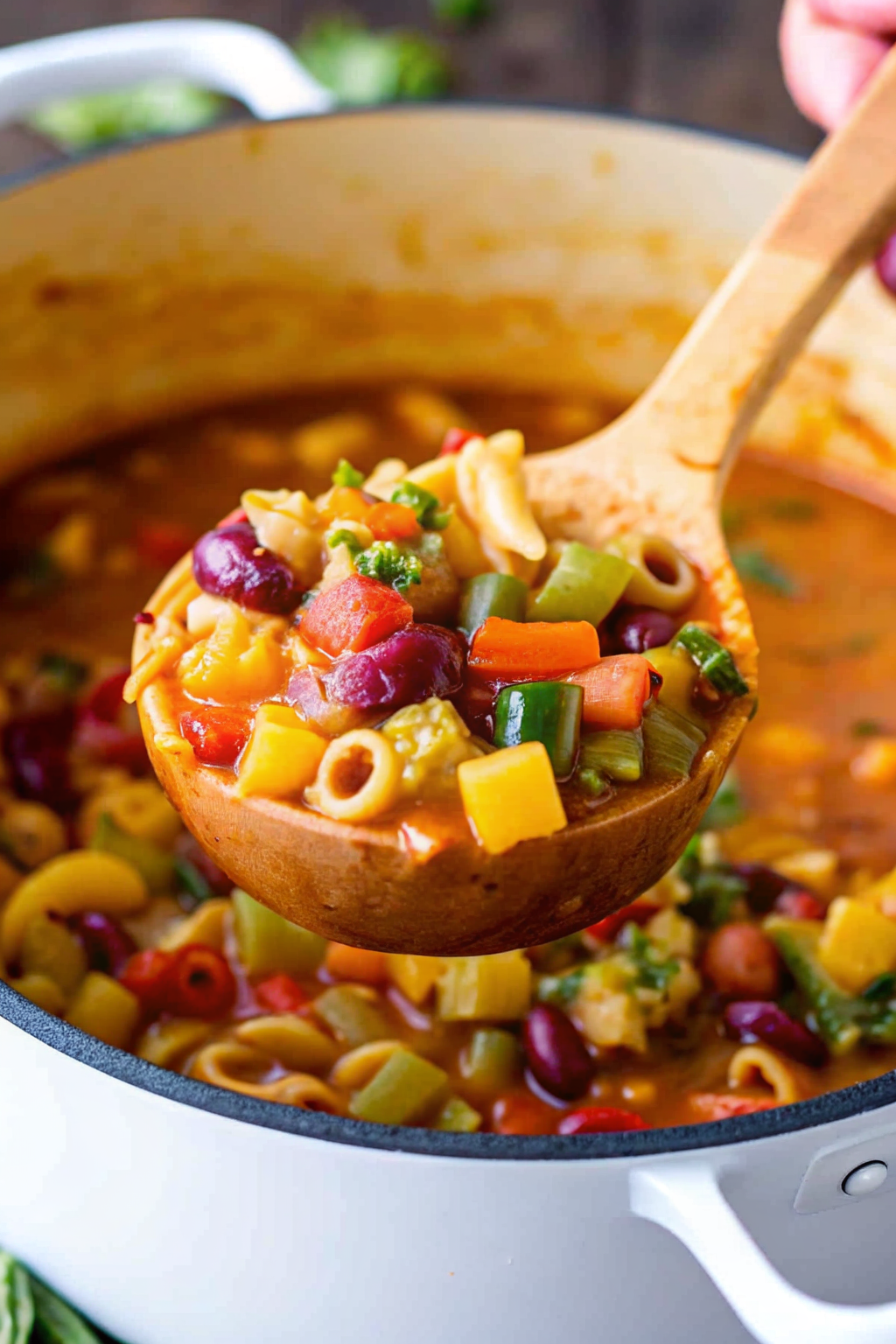
Classic Minestrone Soup
Author: Prep: 20 minutes Cook: 40 minutes Total: 1 hour 5 minutesEquipment
- Large Dutch Oven or Heavy Soup Pot
- Chef’s knife
- Cutting board
- Medium Pot (for boiling pasta)
- Ladle
Ingredients
The Soffritto Base
- 3 tbsp Extra Virgin Olive Oil
- 1 Large Yellow Onion diced
- 2 Large Carrots peeled and diced
- 2 Celery Stalks diced
- 4 Cloves Garlic minced
The Broth & Seasonings
- 2 tbsp Tomato Paste
- 1 tsp Dried Oregano
- ½ tsp Red Pepper Flakes optional, for a little heat
- 1 can 14 oz / 400g Diced Tomatoes
- 1.5 Liters Vegetable Broth 6 cups
- 1 Parmesan Cheese Rind Don’t skip this!
- 1 tsp Salt plus more to taste
The Vegetables & Beans
- 1 Medium Potato peeled and cubed OR Butternut Squash
- 1 Medium Zucchini sliced into half-moons
- 1 can 15 oz / 425g Cannellini or Kidney Beans (rinsed and drained)
- 2 cups Fresh Spinach or Kale chopped
To Serve
- 1 cup Small Dried Pasta Ditalini, elbows, or shells
- Freshly Grated Parmesan Cheese
- Basil Pesto optional garnish
Instructions
- Sauté the Base: Heat the olive oil in a large Dutch oven over medium heat. Add the onion, carrots, and celery. Cook gently for about 8–10 minutes. You want the vegetables to soften and smell sweet, not just brown quickly.
- Bloom the Flavor: Stir in the minced garlic, tomato paste, dried oregano, and red pepper flakes. Cook for 2 minutes, stirring constantly. This caramelizes the paste and wakes up the spices.
- Build the Broth: Pour in the diced tomatoes (with juices) and the vegetable broth. Drop in the parmesan rind and the cubed potatoes.
- Simmer: Bring the soup to a boil, then reduce the heat to low. Cover and simmer for 15–20 minutes, or until the potatoes are almost tender.
- Add Soft Veggies: Add the zucchini and the rinsed beans. Simmer for another 5–8 minutes until the zucchini is tender.
- The Pasta Rule: While the soup simmers, cook your small pasta in a separate pot of salted boiling water according to package directions for al dente. Drain and set aside. (Cooking it in the soup will steal all your broth!)
- Finish: Stir the fresh spinach into the soup and let it wilt for 1 minute. Remove the pot from heat. Fish out and discard the parmesan rind. Taste and season generously with salt and pepper.
- Serve: Place a scoop of cooked pasta into each bowl and ladle the hot Minestrone Soup over it. Top with extra parmesan cheese or a swirl of pesto.
Notes
- The Parmesan Rind: This is the secret to a rich vegetable soup. Ask your local deli for spare rinds if you don’t have one saved in your freezer.
- Storage: Store the soup and the cooked pasta in separate airtight containers in the fridge. This prevents the pasta from turning mushy and absorbing all the liquid. The soup lasts up to 5 days.
- Seasonal Swaps: Feel free to swap the vegetables! Use green beans in the summer, squash in the fall, or cabbage in the winter. Minestrone Soup is meant to be flexible.
- Thickening: If you prefer a thicker stew-like consistency, mash about 1/2 cup of the beans and potatoes with a fork and stir them back into the pot
Nutrition