Let’s be honest for a second. When someone mentions Christmas cake, do you immediately picture a delicious, moist festive treat? Or do you picture a dark, heavy brick capable of breaking a window? If you’re like most people, you probably have a bit of “fruit cake trauma” from dry, crumbly disasters of Christmases past. I get it. I used to hate the stuff. I thought it was just something grandmothers made to punish us for being naughty throughout the year.
But here is the good news: this recipe changes the game.
We are making a boiled fruit cake. I know, “boiled” sounds about as appetizing as “steamed socks,” but hear me out. This method ensures the fruit plumps up, the butter melts evenly, and the final result remains incredibly moist for weeks. You don’t need a mixer, you don’t need to cream butter and sugar until your arm falls off, and you definitely don’t need a degree in pastry arts. So, grab your apron and let’s fix your relationship with holiday baking.
Why This Method Beats the Classics
You might wonder, “Why boil the ingredients?” Most traditional cakes use the creaming method. You beat butter and sugar, add eggs, and pray the emulsion doesn’t break. It’s fine for a sponge, but for a heavy fruit cake, it often leads to a dry crumb.
With this moist, easy fruit cake, you place the butter, sugar, dried fruit, and liquid into a pot and melt it all together. This does two magical things:
- It hydrates the dried fruit immediately, so the fruit doesn’t suck moisture out of your batter later.
- It creates a glossy, rich base that guarantees a dense, fudge-like texture.
FYI, this is also the best way to ensure you don’t end up with pockets of unmixed butter. It’s foolproof. If you can boil water, you can make this cake.
The Fruit Squad: Choosing Your Mix
You cannot make a great cake with terrible fruit. Please, I beg you, do not buy those tubs of neon-green “glacé mix” that look like radioactive waste. They taste like sugar and sadness.
You want a mixture of high-quality dried fruits. Here is what I usually toss in the pot:
- Sultanas and Raisins: These are the backbone of the cake.
- Currants: For that tiny pop of texture.
- Glacé Cherries: Buy the good red ones, wash the syrup off, and halve them.
- Mixed Peel: Only use this if you actually like it. If you hate it, leave it out! It’s your cake.
I often tell people that if they enjoy the flavors in my pumpkin bread, they will appreciate the warm, spiced profile of this fruit mix. It’s all about quality over quantity.
To Booze or Not to Booze?
Ah, the age-old question. Does Christmas cake need alcohol? IMO, yes, it does. 🙂
Alcohol acts as a preservative and adds a depth of flavor you just can’t get with juice alone. Brandy is the traditional choice, but dark rum, whiskey, or even sherry works wonders. The alcohol cooks off during the boiling process and the bake, leaving behind only the flavor. However, if you plan to “feed” the cake after baking (we will get to that later), the alcohol stays potent.
For the non-drinkers:
You can absolutely swap the alcohol for orange juice, apple juice, or even strong black tea. Tea is actually a fantastic option because the tannins help tenderize the fruit. Just remember that an alcohol-free cake won’t last as long in the cupboard. You should probably eat it within a week or freeze it.
The Magic Method: Boil and Bake
Let’s break this down. We aren’t just throwing things in a bowl. We are building flavor layers.
The Boiling Stage
Grab your biggest saucepan. You put your butter, sugar (dark muscovado or dark brown sugar is non-negotiable for that rich color), fruit, zests, and liquid into the pan. You turn the heat to medium.
You stir it occasionally until the butter melts and the sugar dissolves. Once it bubbles, simmer it for about 10 minutes. This creates a thick, syrupy fruit soup. It smells like Christmas exploded in your kitchen.
Important: You must let this mixture cool down. If you add your eggs to the boiling hot mix, you will end up with scrambled eggs in your cake. Nobody wants that. :/
The Mixing Stage
Once your fruit goop is lukewarm, you stir in your eggs, followed by the flour and spices. I usually use a mix of cinnamon, nutmeg, and allspice. You don’t need a whisk; a wooden spoon is your best friend here.
If you enjoy baking simple treats like chocolate chip cookies, you’ll love how low-maintenance this batter is. You just stir until you don’t see any white streaks of flour. Done.
The Slow Bake
Fruit cakes are heavy. They are dense. If you bake them at a high temperature, the outside will burn while the middle remains raw liquid.
Bake at 150°C (300°F) or even lower. Low and slow is the mantra. Depending on your tin size, this could take anywhere from 2 to 3 hours. It tests your patience, but the result is worth it.
Ingredients List Breakdown
Let’s get specific. To get that perfect moist, easy fruit cake, you need the right ratios. Here is what you should have on your counter:
- Dried Fruit: 1kg mixed fruit (approx. 2.2 lbs). Yes, that’s a lot of fruit. It’s a fruit cake.
- Butter: 250g (2 sticks), unsalted.
- Sugar: 250g Dark Brown Sugar. White sugar adds zero flavor here; stick to the dark stuff.
- Liquid: 200ml Brandy, Rum, or Orange Juice.
- Flour: 300g All-Purpose or Plain Flour.
- Eggs: 4 large eggs.
- Spices: 2 tsp Mixed Spice (or pumpkin pie spice), 1 tsp Cinnamon.
- Extras: Zest of 1 orange and 1 lemon.
Step-by-Step Instructions (The “Don’t Mess It Up” Part)
Ready to bake? Follow these steps exactly, and you will look like a culinary genius.
- Prep Your Tin: Grease a 20cm (8-inch) round or square deep cake tin. Line the bottom and sides with a double layer of parchment paper. This protects the edges from burning during the long bake.
- Boil: Place butter, sugar, fruit, zest, and alcohol/juice in a large pot. Heat until butter melts, then simmer for 10 minutes.
- Cool: Remove from heat and let it cool for at least 30 to 45 minutes. It should be warm to the touch, not hot.
- Mix: Beat the eggs lightly and stir them into the fruit mixture.
- Fold: Sift the flour and spices over the mixture. Fold it in gently until combined.
- Bake: Pour into your prepared tin. Smooth the top. Bake in the center of the oven at 150°C (300°F) for 2 to 2.5 hours.
- Check: Insert a skewer into the center. If it comes out clean or with just a few sticky crumbs, it’s done.
- Cool Again: Leave the cake in the tin until it’s completely cold.
Feeding the Beast (Maturing Your Cake)
You baked the cake. It smells amazing. Now, do you eat it? Not yet.
The secret to a truly spectacular Christmas cake is “feeding” it. This involves poking holes in the cake with a skewer and brushing a tablespoon of brandy or rum over the top once a week leading up to Christmas.
Why do we do this? The alcohol permeates the crumb, killing off any bacteria and keeping the cake moist. It also matures the flavor. A cake eaten the day it’s baked is good; a cake eaten after four weeks of maturing is legendary.
For more deep dives on the science of preserving baked goods with alcohol, you can check out this guide from King Arthur Baking. They explain the chemistry far better than I can, but trust me, the patience pays off.
Troubleshooting Common Disasters
Even the best of us have bad oven days. Here is how to fix—or avoid—common issues.
Why did my cake sink in the middle?
You probably opened the oven door too early. I know you wanted to check it, but opening the door lets cold air in and collapses the structure before it sets. Keep the door closed for at least the first 90 minutes.
Why is the cake dry?
You overbaked it, or your oven runs hot. Get an oven thermometer. Also, did you use the boiling method? If you creamed the butter and sugar instead, that might be your culprit.
Why is the cake crumbly when I slice it?
This usually means there wasn’t enough binder (egg/flour) to hold the heavy fruit together, or you didn’t pack the fruit mix down into the tin. Next time, make sure you don’t skimp on the flour, and use a sharp, serrated knife to cut it.
Decorating: Keep It Simple or Go Full Martha?
Once your cake matures, you have a choice. Do you go with the traditional marzipan and royal icing, or do you keep it rustic?
Personally, I prefer the rustic look. I arrange glazed pecans and cherries on top and brush them with a little apricot jam for shine. It looks elegant and doesn’t require rolling out fondant, which is a nightmare to work with if your kitchen is humid.
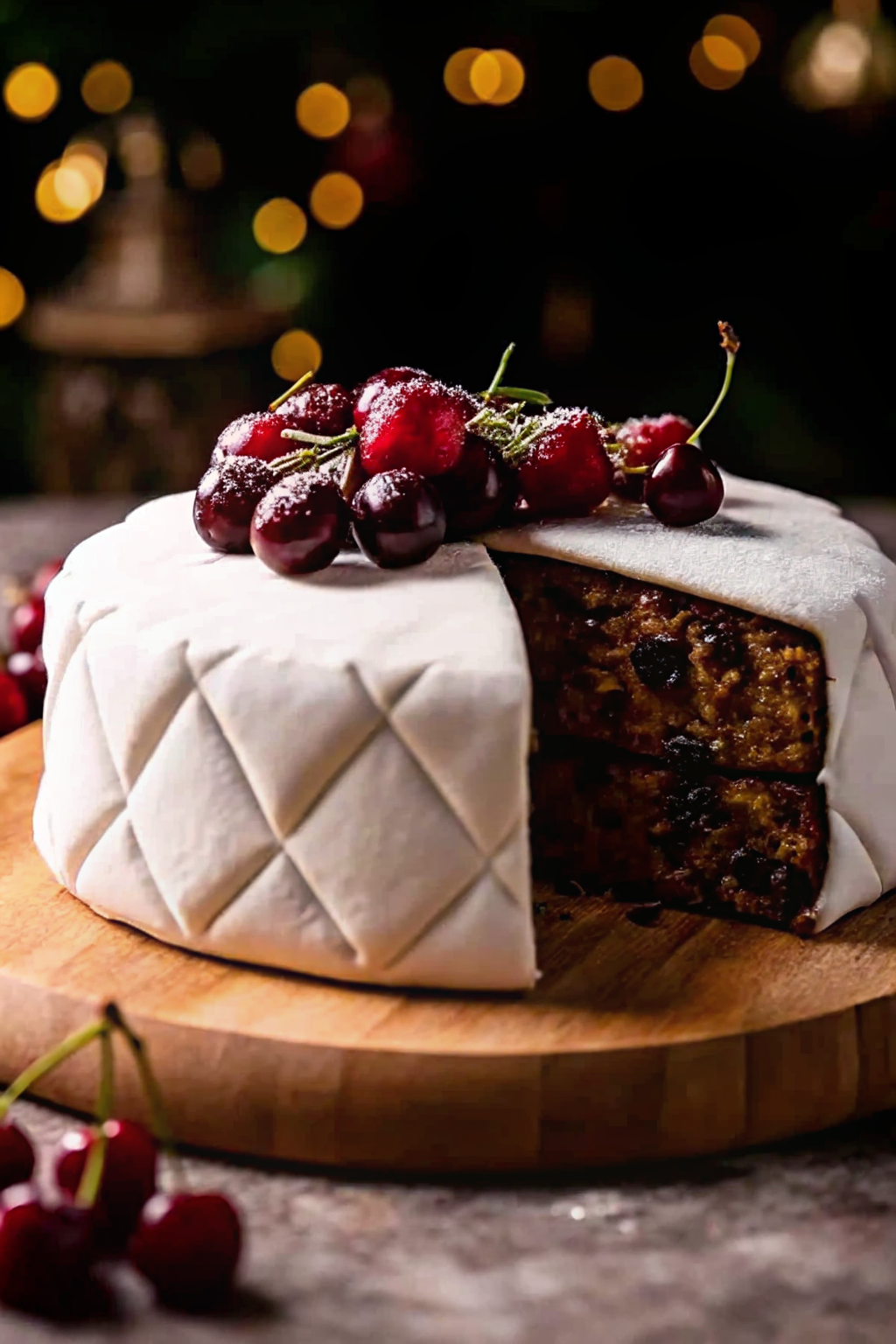
However, if you love a sugar rush, a layer of marzipan followed by fondant creates that classic snowy look. It’s like dressing your cake in a winter coat. If you are looking for something lighter, you could even serve a slice with a dollop of frosting similar to what I use on my easy vanilla cake, though purists might yell at you.
Storing Your Masterpiece
If you fed your cake with alcohol, it can last for months. Wrap it tightly in parchment paper, then a layer of foil. Store it in an airtight container in a cool, dark place.
Do not put it in the fridge. The fridge dries out cake faster than leaving it on the counter because of the way starch molecules recrystallize at cold temperatures. Keep it in the pantry.
If you made the alcohol-free version, wrap it well and freeze it if you aren’t eating it within a week.
Final Thoughts
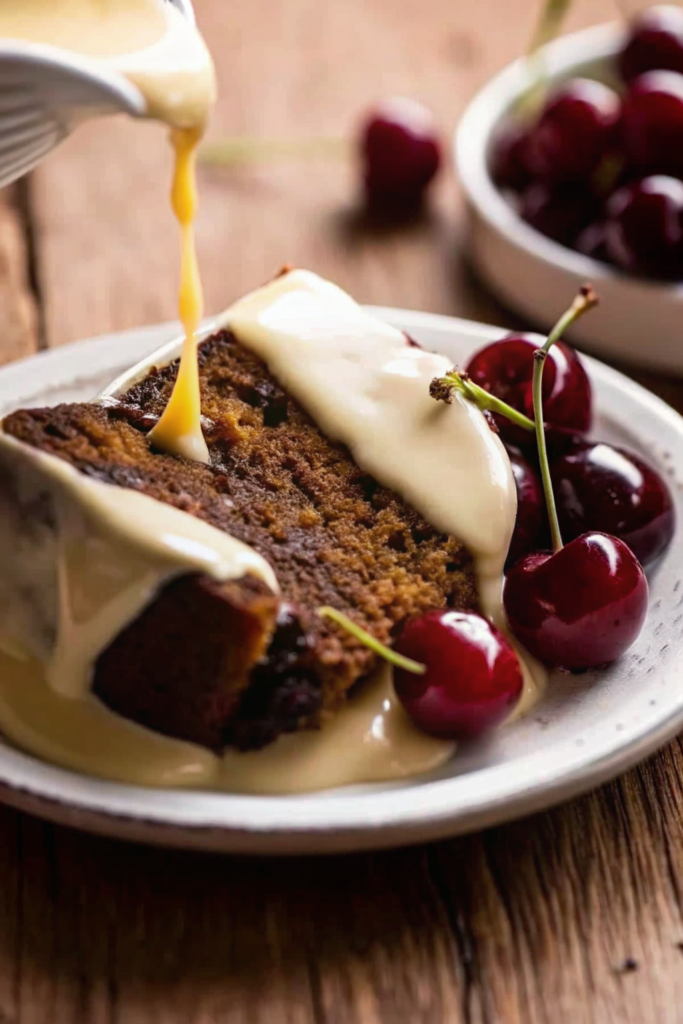
Christmas cake doesn’t have to be the holiday villain. When you make it yourself using this boiled method, you create something genuinely delicious. It’s rich, spicy, and moist—everything a winter dessert should be.
Plus, making this cake is a ritual. The smell of cinnamon and nutmeg wafting through the house marks the official start of the festive season for me. It’s a labor of love, but since this recipe is so easy, it’s mostly just love.
So, give this moist, easy fruit cake a shot. Worst case scenario? You have something to dip in your coffee for the next three months. Best case? You become the legend of the family Christmas dinner.
Now, go preheat that oven. You’ve got this!
Moist Easy Christmas Cake (Boiled Method)
Author: Prep: 15 minutes Cook: 2 hours 30 minutes Total: 3 hours 30 minutesEquipment
- 20cm (8-inch) Deep Round or Square Cake Tin
- Large Saucepan
- Wooden spoon
- Parchment Paper (Baking Paper)
- Kitchen Scale
- Skewer (for testing and feeding)
Ingredients
The Fruit Mix
- 250 g Unsalted Butter cubed
- 250 g Dark Brown Sugar or Muscovado sugar for best flavor
- 1 kg Mixed Dried Fruit Sultanas, Raisins, Currants, Glacé Cherries, Mixed Peel
- 200 ml Brandy Dark Rum, or Orange Juice (plus extra for feeding)
- 1 Orange zest only
- 1 Lemon zest only
The Batter
- 4 Large Eggs lightly beaten
- 300 g All-Purpose Flour Plain Flour
- 2 tsp Mixed Spice or Pumpkin Pie Spice
- 1 tsp Ground Cinnamon
Instructions
- Prep the Tin: Preheat your oven to 150°C (300°F). Grease a 20cm (8-inch) deep cake tin and line the bottom and sides with a double layer of parchment paper. This insulation is crucial to stop the edges from burning during the long bake.
- Boil the Mix: In a large saucepan, place the cubed butter, dark brown sugar, mixed dried fruit, citrus zests, and your liquid of choice (brandy, rum, or juice).
- Simmer: Turn the heat to medium. Stir occasionally until the butter has completely melted and the sugar dissolves. Bring it to a gentle boil, then simmer for 10 minutes.
- Cool Down: Remove the pan from the heat. Let the mixture cool for at least 30 to 45 minutes. Important: It must be lukewarm (not hot!) before adding eggs, or you will end up with scrambled eggs in your cake.
- Add Eggs: Once the fruit mixture is cool enough to touch comfortably, stir in the beaten eggs with a wooden spoon until well combined.
- Add Dry Ingredients: Sift the flour, mixed spice, and cinnamon over the wet mixture. Fold everything together gently until there are no white flour streaks left.
- Bake: Pour the batter into your prepared tin and smooth the top with the back of a spoon. Bake in the center of the oven for 2 hours to 2 hours and 30 minutes.
- Test: Check the cake after 2 hours. Insert a skewer into the center; if it comes out clean or with just a few sticky crumbs, it is done. If it’s still wet, give it another 15–30 minutes. (Tip: If the top looks like it’s browning too fast, cover it loosely with foil).
- Cool & Store: Let the cake cool completely in the tin. Once cold, remove it, wrap it tightly in parchment paper and foil, and store it in a cool, dark place.
Notes
- Alcohol-Free Version: You can swap the alcohol for cold tea (Earl Grey is nice!), apple juice, or orange juice. Note that alcohol-free cakes have a shorter shelf life and should be eaten within a week or frozen.
- Feeding the Cake: To mature the cake, poke holes in the top with a skewer and brush with 1-2 tablespoons of brandy or rum once a week leading up to Christmas.
- Fruit Mix: Feel free to customize the 1kg of fruit. If you hate mixed peel, swap it for more cranberries or apricots! Just keep the total weight the same.
- Oven Temps: Fruit cakes burn easily because of the high sugar content. If your oven runs hot, reduce the temp to 140°C (285°F) and bake a little longer
Nutrition