Let’s be honest. The holidays are stressful enough without spending six hours constructing a gingerbread house that collapses the moment you look at it wrong. We need wins. We need appetizers that look like culinary masterpieces but actually require zero professional training and minimal effort. That is exactly why I am obsessed with Savory Christmas Puff Pastry Trees.
I remember the first time I saw one of these on social media. I rolled my eyes. It looked too perfect, too “Pinterest,” and I assumed it would taste like cardboard. I was wrong. I made one for a potluck last year, and people lost their minds. It’s crispy, buttery, cheesy, and shaped like a Christmas tree. What’s not to love?
Today, I’m walking you through exactly how to make these festive showstoppers. We aren’t just slapping dough together; we are building a savory centerpiece that will make your Aunt Karen ask for the recipe through gritted teeth. Grab your rolling pin; let’s get festive.
The Foundation: Puff Pastry Realities
Listen, I love cooking from scratch. But if you make your own puff pastry during December, you are either a superhero or a masochist. IMO, store-bought frozen puff pastry is one of the greatest inventions of the modern era. It creates those hundreds of flaky layers without requiring you to laminate dough for three days straight.
Choosing Your Dough
Not all frozen pastries are equal. Look for an all-butter puff pastry if you can find it. Many cheaper brands use shortening or vegetable oils. While those still puff up, they lack that rich, buttery mouthfeel that we want.
Thawing is the most critical step.
If you try to unfold frozen pastry, it will crack. If you let it get too warm, the butter melts before it hits the oven, and you lose the layers.
- The Fridge Method: Put the box in the fridge the night before. This is the safest bet.
- The Counter Method: Leave it out for about 40 minutes. Watch it like a hawk. It should be pliable but still cold to the touch.
The Flavor Profile: Choosing Your Filling
You can put almost anything between two sheets of puff pastry, but we want a Savory Christmas Puff Pastry Tree that looks green and festive. Pesto is the obvious winner here, but let’s look at the options.
The Pesto Strategy
Basil pesto provides that vibrant green color that screams “Christmas Tree.” You can buy a jar, or you can make your own. Just ensure the pesto isn’t too oily.
- Drain the Oil: If your pesto has a pool of oil on top, drain it off. Excess oil will make the pastry sodden and heavy.
- Nut-Free Options: If you have guests with allergies, look for a seed-based pesto or simply use an herb paste.
Alternative Fillings
Maybe you hate pesto. That’s fine (we can still be friends, mostly).
- Tapenade: A black olive tapenade tastes sophisticated and salty, though your tree will look a bit dark.
- Red Pesto/Marinara: Sun-dried tomato pesto gives a reddish hue. It tastes like a pizza twist.
- Creamy Fillings: You can spread a thin layer of cream cheese mixed with herbs. Actually, if you want to blow minds, spread a thin layer of my favorite spinach artichoke dip between the sheets. Just chop the artichokes finely so the tree keeps its shape!
Constructing the Tree: A Step-by-Step Guide
This part looks intimidating, but it’s actually basically kindergarten arts and crafts with edible materials.
Step 1: The Setup
Preheat your oven to 400°F (200°C). You need a high temperature to create the steam that puffs the pastry. Line a large baking sheet with parchment paper. Do not skip the parchment paper. If cheese melts and hits the metal pan, it burns and sticks. Parchment saves your sanity during cleanup.
Step 2: Layering
Unroll your first sheet of puff pastry directly onto the parchment paper. Spread your chosen filling evenly over the dough. Leave a tiny border around the edges.
- Sprinkle the Cheese: I like to add a handful of grated Parmesan or Gruyère right on top of the pesto. It acts as a glue and adds a salty kick.
- The Second Sheet: Unroll the second sheet of pastry and place it directly on top of the filling. gently press it down to seal the deal.
Step 3: The Cut
Now, you become a sculptor.
- Imagine a Triangle: You want to cut a large triangle shape out of the rectangle.
- Use a Pizza Cutter: A knife works, but a pizza cutter drags less and keeps the layers intact. Cut from the top center down to the bottom corners.
- Save the Scraps: Do not throw away the extra dough! We bake those as “chef snacks” later.
- The Trunk: Cut a small rectangle at the base to create the tree trunk.
Step 4: The Twist
This is the moment where the magic happens. You need to create the “branches.”
- Cut Horizontal Strips: Using your cutter, slice horizontal strips up both sides of the triangle. Leave about an inch of solid dough in the center (the “spine” of the tree) intact.
- Twist Away: Take a strip, twist it twice away from you, and press the end down onto the parchment. Repeat this all the way up the tree. The twists expose the filling and create that beautiful spiral look.
The Secret to the Golden Glow
If you put the tree in the oven right now, it will look pale and sad when it comes out. You need an egg wash.
Whisk one egg with a teaspoon of water. Brush this mixture gently over the entire tree. This gives the pastry a glossy, golden-brown finish that looks professional.
Pro Tip: Sprinkle sesame seeds, poppy seeds, or even crushed red pepper flakes on top after the egg wash. It adds texture and looks like little ornaments.
Baking and Timing
Slide the tray into the oven. Bake for 18–22 minutes. You want the pastry to puff up significantly and turn a deep golden brown.
Don’t open the oven door early!
I know you want to peek. Resist the urge. Opening the door releases heat and can cause the puff pastry to deflate. Trust the process. :/
While the tree bakes, your kitchen will smell like an Italian bakery. This is usually when I pour myself a drink. A festive cranberry mimosa pairs perfectly with the savory herbs wafting from the oven, just FYI.
Serving: The Grand Reveal
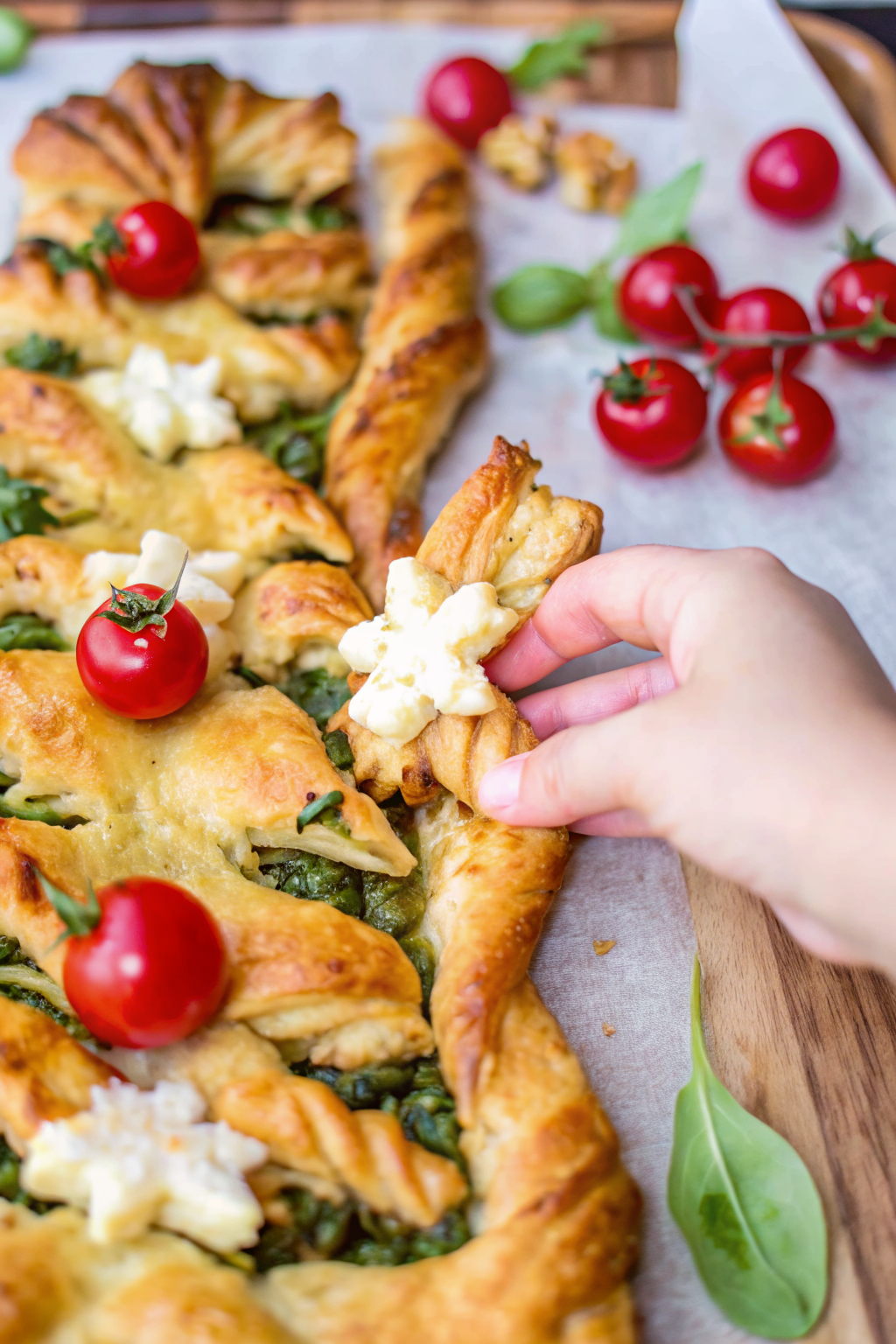
Once the tree comes out, let it cool on the baking sheet for at least 5 to 10 minutes. The filling is essentially molten lava right now, and the pastry needs a moment to set its structure.
Transfer the whole sheet of parchment paper to a serving board. I find this easier than trying to slide a fragile, flaky giant tree onto a platter. You can trim the paper around the edges with scissors for a cleaner look.
Garnish Like a Pro
- Pomegranate Seeds: Scatter these over the tree. They look exactly like red Christmas ornaments and provide a tart burst of flavor that cuts through the rich cheese.
- Fresh Herbs: Tiny sprigs of rosemary or thyme placed around the board mimic pine needles.
- The Star: Remember those dough scraps? Cut a star shape out of one using a cookie cutter, bake it, and place it right on top of the tree.
This appetizer serves as a fantastic starter. It keeps people occupied and happy before you bring out the heavy hitters, like a massive prime rib roast for the main course.
Troubleshooting Common Issues
Sometimes things go wrong. Let’s fix them before they happen.
“My pastry is soggy in the middle.”
This usually means your filling was too wet or the oven wasn’t hot enough. Make sure you drain that pesto! Also, ensure your oven fully reaches 400°F before you slide the tray in. If you have a “soggy bottom” fear, bake the tree on the lower rack for the first 10 minutes to conduct heat directly to the base.
“The tips of the branches burnt.”
The ends of the twists are thin, so they cook faster than the thick center trunk. If you see the tips getting too dark, simply drape a loose piece of foil over the edges of the tree for the last 5 minutes of baking.
“It lost its shape!”
Did you let the dough get too warm while you were cutting it? If the butter melts before baking, the layers collapse. If your kitchen is hot, pop the assembled tree in the fridge for 15 minutes before baking to firm up the butter. This is a game-changer for defined layers.
According to baking experts at King Arthur Baking, keeping your ingredients and tools cold is the absolute golden rule for pastry success, so don’t hesitate to use that fridge!
What to Do With the Scraps?
I mentioned earlier that we save the scraps. You have those two large triangles left over from cutting the main tree shape.
- Twist ’em: Just twist them into long savory cheese straws.
- Bake ’em: Throw them on a separate tray and bake for 10-12 minutes.
- Eat ’em: These are the cook’s treat. You eat these while standing over the stove, ensuring quality control. It’s a tough job, but someone has to do it.
Variations on the Theme
Once you master the basic tree, you can get creative.
The Meat Lover’s Tree
Layer thin slices of prosciutto or pepperoni over the pesto before adding the top sheet of pastry. It adds a salty, meaty bite that people adore. Just keep the slices thin so you can still twist the branches easily.
The Cheesy Garlic Tree
Skip the pesto. Mix softened butter with minced garlic and parsley. Spread that inside, top with mozzarella, and bake. It’s basically garlic bread in tree form. Serve this with a side of warm marinara for dipping.
The Sweet Version
Okay, the title says “Savory,” but I have to mention this. Nutella. Swap the pesto for chocolate hazelnut spread. Skip the cheese (obviously). Dust with powdered sugar after baking to look like snow. You just made dessert. You’re welcome.
Storage and Reheating
Let’s be real: there are rarely leftovers. But if you somehow have half a tree left, you can save it.
Storage:
Store the leftovers in an airtight container in the fridge for up to 3 days. Do not leave it on the counter overnight; the filling has cheese and needs refrigeration.
Reheating:
Do not microwave puff pastry. I repeat: Step away from the microwave. It turns the pastry into a chewy, sad, rubbery mess.
Instead, place the leftover pieces on a baking sheet and pop them into a 350°F oven (or toaster oven) for about 5–8 minutes. They will crisp right back up and taste almost as good as fresh.
Why This Recipe Wins
I love this Savory Christmas Puff Pastry Tree because it solves the “hosting paradox.” We want to impress people, but we also want to actually enjoy our own party. This recipe takes maybe 15 minutes of active work.
You get to present a stunning, golden, festive centerpiece that people rip apart with their hands (which breaks the ice immediately, by the way). It’s communal, it’s delicious, and it makes you look like a pastry wizard.
So, this holiday season, skip the intricate canapés that require tweezers to assemble. Go buy two boxes of puff pastry. Grab a jar of good pesto. Make the tree. Your guests will be happy, your kitchen will smell amazing, and you will have plenty of time to enjoy that cocktail while everyone else fights over the last cheesy branch.
Now, go preheat that oven. You’ve got this!
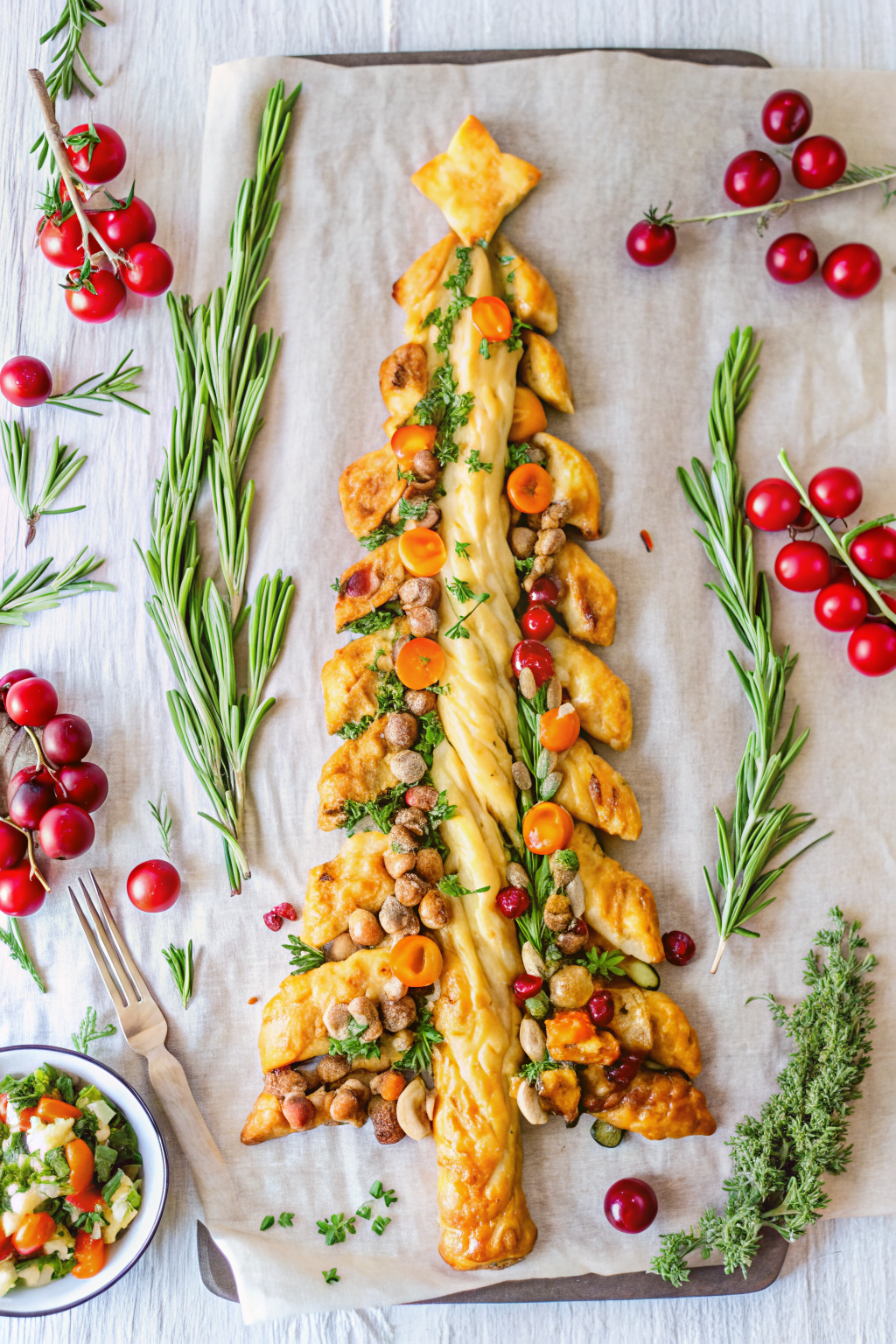
Savory Christmas Puff Pastry Tree
Author: Prep: 15 minutes Cook: 20 minutes Total: 45 minutesEquipment
- Large Baking Sheet
- Parchment paper
- Pizza Cutter or Sharp Knife
- Pastry brush
- Small whisk
Ingredients
The Base
- 2 sheets Puff pastry thawed (preferably all-butter)
- 1/2 cup Basil pesto store-bought or homemade
- 1/2 cup Parmesan cheese grated (or Gruyère)
The Glaze
- 1 large Egg
- 1 tsp Water
- 1 tsp Sesame seeds or poppy seeds optional
The Garnish
- 2 tbsp Pomegranate seeds
- Fresh Rosemary sprigs
Instructions
- Preheat & Prep: Preheat your oven to 400°F (200°C). Line a large baking sheet with parchment paper. (Trust me, do not skip the parchment paper or the cheese will stick!).
- Base Layer: Unroll the first sheet of thawed puff pastry and place it flat on the parchment paper.
- Add Filling: Spread the basil pesto evenly over the pastry, leaving a tiny border around the edges. Sprinkle the grated Parmesan cheese over the pesto.
- Top Layer: Unroll the second sheet of puff pastry and place it directly on top of the filling, lining up the edges. Gently press down to seal them together.
- Cut the Shape: Using a pizza cutter or sharp knife, cut a large triangle shape (the tree) out of the rectangle. Cut a small rectangle at the bottom to form the trunk. Pro Tip: Don’t toss the scraps! Bake them alongside the tree as “chef snacks.”
- Make the Branches: Cut horizontal strips about 1-inch wide up both sides of the triangle, leaving a 1-inch strip down the center intact (this is the spine of the tree).
- The Twist: Take each strip and gently twist it twice away from you, pressing the end down onto the parchment paper. Repeat until all branches are twisted.
- Egg Wash: Whisk the egg with 1 teaspoon of water. Brush this mixture gently over the entire tree. This ensures a golden, shiny finish. Sprinkle with sesame seeds if desired.
- Bake: Bake for 18–22 minutes, or until the pastry is puffed and deep golden brown.
- Cool & Garnish: Let the tree cool on the baking sheet for at least 10 minutes to set. Transfer to a serving board and scatter with pomegranate seeds (ornaments) and rosemary sprigs (pine needles). Serve warm!
Notes
- Keep it Cold: If the dough gets too warm and sticky while you are cutting it, pop the whole tray in the fridge for 15 minutes before baking. Cold butter = flaky layers.
- Drain the Pesto: If your pesto is very oily, strain it slightly before spreading. Too much oil can make the pastry soggy.
- Variations: Not a fan of pesto? Try olive tapenade, red pepper spread, or even Nutella for a sweet version (skip the cheese and egg wash for the sweet one, dust with powdered sugar instead!).
- Reheating: To reheat leftovers, place them in a 350°F oven for 5–8 minutes. Avoid the microwave, or it will get rubbery.
Nutrition