Let’s be honest for a second. The name Bread Pudding needs a rebranding. It sounds like something they served in a Dickensian orphanage, doesn’t it? “Please, sir, I want some more wet bread casserole.” It hardly screams culinary excellence.
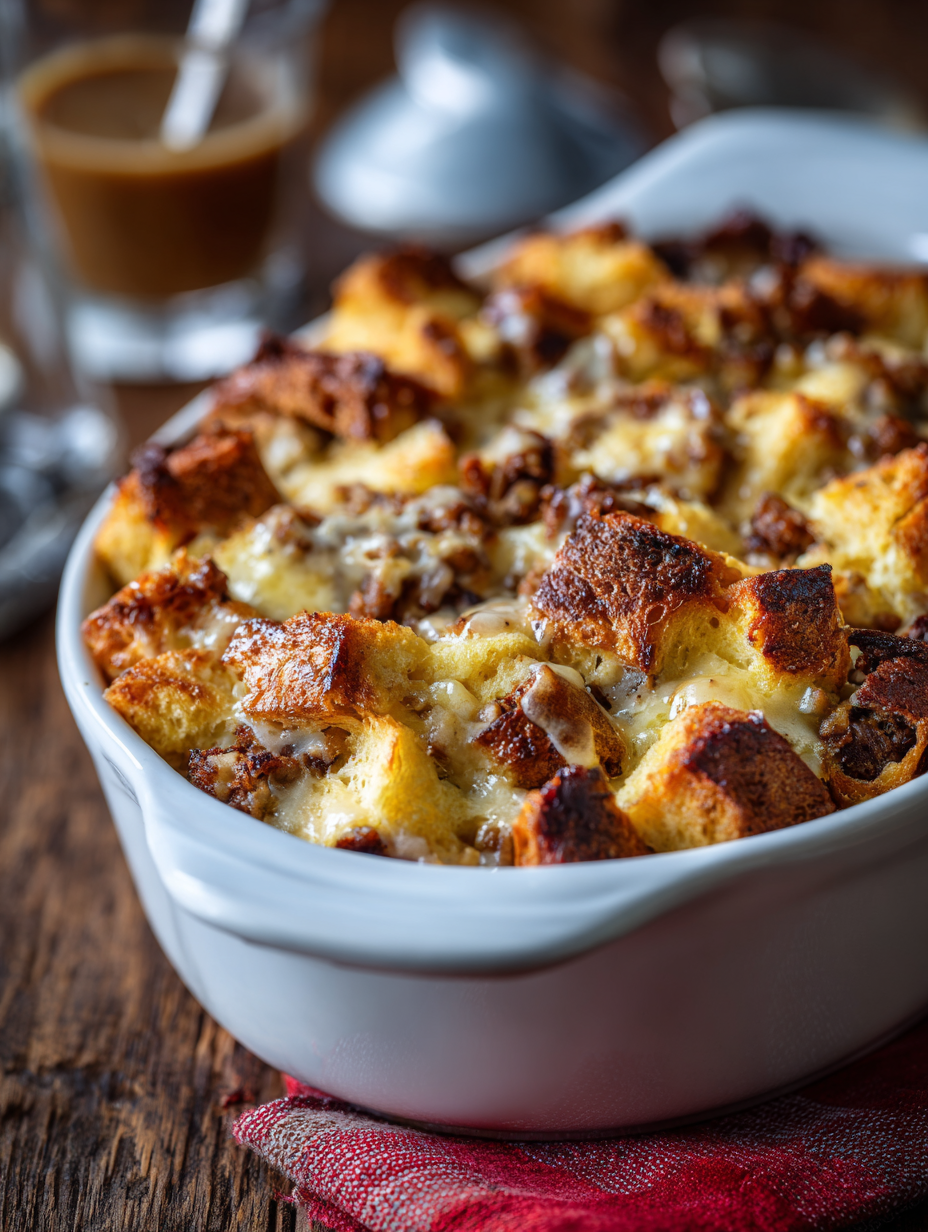
But anyone who has actually eaten a good bread pudding knows the truth. It is the ultimate ugly duckling of the dessert world. What starts as stale, rock-hard leftovers transforms into a golden, custardy, comfort-food masterpiece. It defies logic. You take trash (old bread) and turn it into treasure.
I have a distinct memory of watching my grandmother make this. She took a loaf of French bread that was hard enough to use as a baseball bat, drowned it in milk and eggs, and an hour later, the kitchen smelled like heaven. I felt skeptical. Then I took a bite. The crispy top, the creamy center, the hit of cinnamon—I was a believer.
We are going to master this humble dish. We aren’t making a soggy mess here. We are aiming for a dessert that boasts structure, flavor, and just the right amount of wobble.
The Foundation: It Starts With the Bread
You cannot build a house on a swamp, and you cannot make good bread pudding with fresh, soft bread. This is the golden rule. Fresh bread ruins the texture.
Why? Fresh bread contains too much moisture. When you add the custard, it turns into mush. You want bread that is thirsty. You want bread that has seen better days. Stale bread acts like a sponge, drinking up the custard without losing its structural integrity.
Choosing Your Loaf
While you can technically use any bread, some work better than others.
- Brioche or Challah: These are the MVPs. Their high egg and butter content yields a rich, decadent pudding.
- French Bread: This offers a great texture contrast. The crust stays chewy while the inside softens.
- Sourdough: Yes, really. The slight tang of the fermentation cuts through the sweetness of the custard beautifully. If you have leftovers from your own sourdough bread recipe, don’t throw them out; cube them for this.
Pro Tip: If your bread is too fresh, cheat. Cube it up and throw it in a low oven (250°F) for 15 minutes to dry it out.
The Custard: The Liquid Gold
The custard binds everything together. It bridges the gap between breakfast toast and dessert. A weak custard leads to a watery pudding, so we need fat and flavor.
Do not use skim milk. I repeat: Do not use skim milk. This is dessert, not a diet seminar. You need whole milk at a minimum, but a mixture of whole milk and heavy cream (half-and-half) creates that luxurious, silky mouthfeel we crave.
The Egg Ratio
You need enough eggs to set the liquid, but not so many that it tastes like a sweetened omelet. Generally, four to five eggs per quart of liquid works perfectly. I like to use extra yolks for richness.
Flavoring the Mix
This is where you get to play jazz.
- Vanilla: Use the real stuff. A generous splash of homemade vanilla extract makes a massive difference compared to the imitation stuff.
- Spices: Cinnamon is mandatory IMO. Nutmeg adds that classic “bakery” scent. A tiny pinch of cardamom adds a sophisticated twist.
- Booze: A shot of bourbon or dark rum in the custard batter? Yes, please. The alcohol cooks off, leaving a deep, warm flavor.
The Soak: Patience is a Virtue
Here is where most people mess up. They pour the custard over the bread and immediately shove it in the oven. Stop.
You must let it sit. The bread needs time to hydrate. If you bake it immediately, the liquid stays on the outside, and the inside of the bread cubes remains dry. You want consistency.
Pour the custard over the bread. Press the bread down gently with a spatula. Then, walk away. Let it soak for at least 30 minutes. If I have time, I let it sit in the fridge for an hour. When you return, the bread should look swollen and heavy. That is how you know it’s ready.
Mix-Ins: To Raisin or Not to Raisin?
This topic divides families. Some people believe raisins are essential to bread pudding. Others believe raisins are nature’s way of ruining dessert .
I sit firmly in the “texture matters” camp. Bread pudding is soft on soft. You need something to break up the monotony.
- Dried Fruit: Raisins, dried cranberries, or chopped apricots work well. If you soak them in hot water (or rum/bourbon) before adding them, they become plump little flavor bombs.
- Nuts: Pecans or walnuts add a fantastic crunch. Toast them first to release their oils.
- Chocolate: Dark chocolate chunks turn this into a completely different beast. It becomes a dessert that rivals the richness of a classic cheesecake, but with way less effort.
The Baking Vessel
You can bake bread pudding in almost anything. A 9×13 inch casserole dish is standard. However, I prefer a deeper baking dish or even individual ramekins. A deeper dish keeps the center softer while the top gets crunchy.
Butter the dish. Be aggressive with the butter. You want the edges to fry slightly in the fat, creating a caramelized crust that people will fight over.
The Bake: Achieving the Perfect Texture
Preheat your oven to 350°F (175°C). You want a moderate heat. High heat burns the raisins on top before the custard sets in the middle.
The Water Bath Debate
Some purists insist on baking bread pudding in a bain-marie (water bath). This involves placing your baking dish inside a larger pan filled with hot water. This technique regulates the temperature and ensures a super-creamy, souffle-like texture.
Is it necessary? No.
If you want a rustic, hearty pudding with crispy edges and a chewy top, skip the water bath. If you want a smooth, consistent texture all the way through, use the bath. I usually skip it because I love the contrast of the crunchy top layer.
The Doneness Test
How do you know when it’s done?
Look for the puff. The pudding will puff up in the center. Give the pan a gentle shake. The center should jiggle slightly, like Jell-O, but it shouldn’t wave like a liquid. Stick a knife in the center; if it comes out clean (no raw liquid egg), pull it out.
Remember, it continues to cook as it cools. If you bake it until it’s completely solid, it will be dry by the time you eat it.
The Sauce: The Crowning Glory
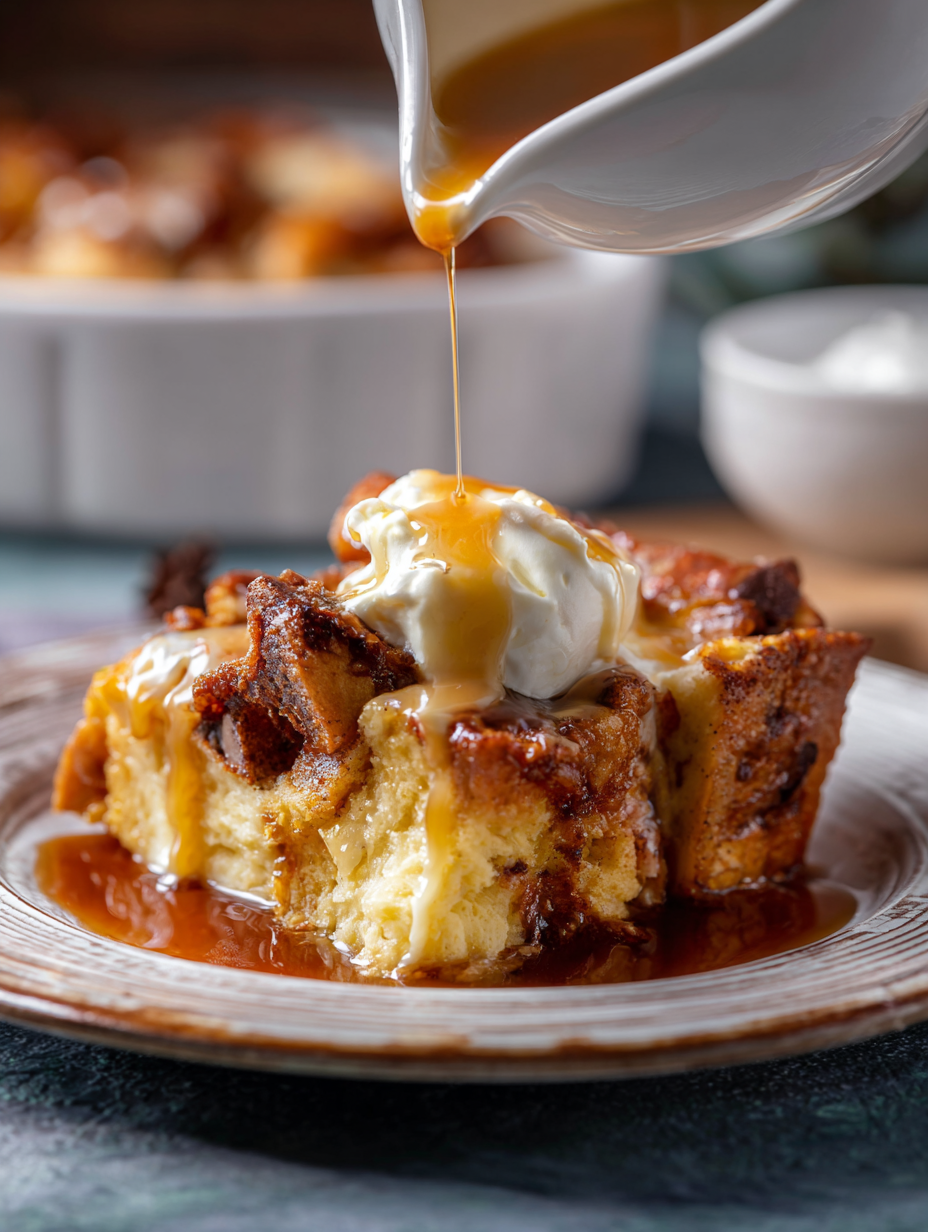
Bread pudding on its own is great. Bread pudding with sauce is life-changing. Since the pudding itself acts like a sponge, it begs for a warm sauce to soak into the crevices.
1. Whiskey Sauce
This is the New Orleans classic. It involves melting butter and sugar, adding cream, and finishing with a healthy dose of whiskey or bourbon. It cuts the sweetness and warms the chest.
2. Vanilla Crème Anglaise
Fancy name, simple concept. It’s basically a pouring custard. It adds a creamy, milky sweetness that pairs perfectly with spiced pudding.
3. Salted Caramel
If you want to go modern, a drizzle of salted caramel works wonders. The salt highlights the savory notes of the bread and the sweetness of the custard.
Troubleshooting Your Pudding
Even with a simple recipe, things can go sideways. Let’s troubleshoot.
Problem: The top is burnt, but the middle is raw.
Solution: Cover the top loosely with aluminum foil halfway through baking. This shields the bread from direct heat while the center catches up.
Problem: It’s too soggy.
Solution: You probably used too much custard for the amount of bread, or you didn’t bake it long enough. Next time, add an extra handful of bread cubes.
Problem: It’s dry.
Solution: You baked it too long, or you used too much bread. Don’t worry; sauce fixes everything. Drown it in whiskey sauce, and nobody will know.
Why This Dish Reduces Food Waste
We live in a world where we throw away a staggering amount of food. According to The World Wildlife Fund, bread is one of the most wasted food items globally.
Making bread pudding essentially acts as a delicious form of recycling. You take a product destined for the bin and give it a second life. It feels good to use everything up. It saves money, it saves food, and it tastes better than a fresh loaf ever could.
Variations to Keep It Interesting
Once you master the basic formula (Bread + Custard + Bake), you can take this in a million directions.
The Breakfast Swap
Who says this has to be dessert? Reduce the sugar. Add sausage, cheese, and spinach. Suddenly, you have a savory bread pudding (also known as a strata) that wins brunch. It prep time is minimal, and you can assemble it the night before.
The Seasonal Twist
- Fall: Add pumpkin puree and pumpkin spice to the custard.
- Summer: Fold in fresh blueberries or peaches.
- Winter: Use panettone or eggnog instead of milk.
The “Fancy” version
Use croissants. If you buy those big boxes of croissants from Costco and can’t finish them, make croissant bread pudding. The flaky layers of the pastry create an incredibly light and buttery texture. It feels illegal to eat something that rich, but it’s worth it.
Serving Suggestions
Serve it warm. Cold bread pudding tends to firm up and lose its magic. If you have leftovers (unlikely), microwave a slice for 30 seconds before eating.
Top it with:
- A scoop of vanilla bean ice cream.
- Fresh whipped cream (unsweetened, to balance the sugar).
- A dusting of powdered sugar for aesthetics.
Final Thoughts
Bread pudding represents everything I love about cooking. It is unpretentious, forgiving, and deeply satisfying. It doesn’t require fancy equipment or expensive ingredients. It just asks for patience and a little bit of love.
So, the next time you see a loaf of bread turning rock hard on your counter, don’t toss it. See the potential. Grab some eggs, grab the milk, and make something amazing.
Now, go check your pantry. I bet you have everything you need right now. Happy baking!
The Best Homemade Bread Pudding
Author: Prep: 50 minutes Cook: 30 minutes Total: 1 hour 45 minutesEquipment
- 9×13-inch baking dish
- Large mixing bowl
- Whisk
- Serrated Bread Knife
- Small Saucepan (for the sauce)
Ingredients
The Bread Base
- 1 pound loaf French bread or Brioche stale is best!, cut into 1-inch cubes
- 3/4 cup raisins or chopped pecans optional, but adds great texture!
- 2 tablespoons unsalted butter melted (for drizzling)
The Custard
- 4 large eggs lightly beaten
- 2 cups whole milk
- 1 cup heavy cream
- 3/4 cup granulated sugar
- 1/4 cup light brown sugar packed
- 1 tablespoon vanilla extract use the good stuff!
- 1 teaspoon ground cinnamon
- 1/2 teaspoon ground nutmeg
- 1/4 teaspoon salt
The Warm Vanilla Sauce (Optional but recommended)
- 1/2 cup unsalted butter
- 1/2 cup heavy cream
- 1/2 cup granulated sugar
- 1 teaspoon vanilla extract or a splash of bourbon if you’re feeling fun
Instructions
- Prep the Bread:
- Preheat your oven to 350°F (175°C). Grease a 9×13 inch baking dish generously with butter. Place your cubed bread into the dish. If using raisins or nuts, scatter them over the bread now so they get tucked in. Drizzle the melted butter over the bread.
- Make the Custard:
- In a large mixing bowl, whisk together the eggs, whole milk, heavy cream, granulated sugar, brown sugar, vanilla, cinnamon, nutmeg, and salt. Whisk until fully combined and the sugar has mostly dissolved.
- The Soak (Do Not Skip!):
- Pour the custard mixture evenly over the bread cubes. Press the bread down gently with a spoon or spatula to ensure every piece gets submerged. Let it stand for 30 minutes. This allows the bread to absorb the liquid so your Bread Pudding isn’t dry inside!
- Bake:
- Place the dish in the oven and bake for 45–55 minutes. You are looking for the top to be golden brown and the center to be set but still jiggly (like Jell-O). If the top browns too fast, loosely cover it with foil for the last 10 minutes.
- Make the Sauce:
- While the pudding bakes, combine butter, cream, and sugar in a small saucepan over medium heat. Stir until the butter melts and sugar dissolves. Do not boil vigorously; just a gentle simmer. Remove from heat and stir in the vanilla (or bourbon).
- Serve:
- Let the pudding cool for about 10 minutes (it will deflate slightly, that’s normal). Serve warm with a generous pour of the sauce.
Notes
- Stale is Better: If your bread is fresh, cube it and bake it at 250°F for 10–15 minutes to dry it out. Dry bread soaks up more custard!
- Storage: Keep leftovers in the fridge for up to 4 days. Reheat in the microwave for 30 seconds to bring back that soft texture.
- Alcohol Twist: For a New Orleans vibe, add a splash of bourbon or rum to the custard mix before soaking.
- Dairy: Don’t skimp on the fat. Using skim milk will result in a watery pudding. Whole milk and cream are essential for that velvety texture.