Let’s be honest. Morning people terrify me. You know the type—they wake up at 5:00 AM, run a half-marathon, and then casually whip up made-to-order omelets for the whole family before I’ve even located my coffee mug. I am not that person. I believe mornings should involve minimal movement and maximum comfort. That is exactly why the breakfast casserole exists. It is the ultimate hack for people who want to eat like royalty but sleep like teenagers.
If you have ever hosted a holiday brunch or a family reunion, you know the panic of trying to scramble eggs for twelve people while simultaneously burning toast. It’s a nightmare. A good breakfast casserole solves every logistical problem you have. You assemble it the night before (while you are awake and coherent), shove it in the fridge, and bake it the next morning. It allows you to sip your coffee in peace while the oven does the heavy lifting. We are going to break down how to make a savory, cheesy, sausage-packed masterpiece that will make you the hero of the breakfast table.
Why This Dish Beats the Omelet Station
You might ask, “Why not just make scrambled eggs?” Sure, you could do that. But scrambled eggs get cold in thirty seconds. A casserole holds its heat. It feeds a crowd. And frankly, it tastes better. The bread soaks up the egg custard, the sausage fat infuses everything with flavor, and the cheese acts as the glue that holds our lives together.
Think of this as a savory bread pudding. It has texture, depth, and richness that a simple plate of eggs just cannot compete with. Plus, it serves as a complete meal in one square slice. You have your protein, your dairy, and your carbs all hanging out together. IMO, it’s the most efficient way to consume breakfast.
The Holy Trinity: Sausage, Eggs, and Cheese
Since this recipe relies on simple staples, the quality of those staples matters. You cannot hide bad ingredients in a dish this stripped-down.
The Sausage Strategy
Please, do not buy the pre-cooked, gray-looking sausage patties. You need raw pork sausage. I prefer a “hot” or “spicy” variety to cut through the richness of the eggs, but a classic sage breakfast sausage works too.
You must brown the sausage thoroughly before it goes into the casserole. Break it up into small crumbles as it cooks. If you leave the chunks too big, the casserole becomes difficult to cut. Also, drain the grease! I love fat as much as the next person, but we don’t want an oil slick floating on top of our eggs. If you appreciate the savory, meaty punch of my sausage balls recipe, you understand why getting a high-quality, flavorful sausage makes or breaks this dish.
The Cheese Factor
I feel like a broken record, but I will say it again: Grate your own cheese.
Pre-shredded cheese comes coated in potato starch to keep it from clumping in the bag. That starch prevents the cheese from melting into the gooey, stretchy perfection we want. Buy a block of Sharp Cheddar or Monterey Jack and shred it yourself. It takes two minutes.
The Egg Base
You need a lot of eggs. I usually use a full dozen for a standard 9×13 pan. But eggs alone yield a rubbery texture. You need dairy to create a custard. I use a mix of milk and half-and-half. This ratio ensures the mixture stays fluffy and light rather than dense and spongy.
The Bread: The Unsung Hero
Here is where people mess up. They use soft, fresh white bread. Stop doing that. Fresh bread turns into mush when it hits the egg mixture. You end up with a soggy, wet texture that feels unpleasant in your mouth. :/
You need sturdy bread.
- Sourdough: The tang adds a nice flavor contrast.
- French Loaf: A day-old baguette works wonders.
- Texas Toast: The thick slices hold up well.
The Cube and Dry Method
Cut your bread into 1-inch cubes. If the bread feels fresh, spread the cubes on a baking sheet and toast them in the oven for 10 minutes. You want them slightly stale and dry. Think of them as sponges; if the sponge is already full of water (or moisture from freshness), it can’t soak up the delicious egg custard. We want thirsty bread.
The Vegetable Debate
Purists say a breakfast casserole should only contain meat, cheese, and eggs. I say those people are boring. Adding vegetables adds color and texture, but you have to be careful.
Water is the Enemy
Vegetables like bell peppers, onions, and mushrooms release water when they cook. If you throw raw veggies into your casserole, they will release that water during the baking process, watering down your custard.
Sauté Everything First
You must cook your vegetables before adding them to the mix. Sauté the onions and peppers in the leftover sausage grease (flavor win!). Cook the mushrooms until they are dry and browned. This ensures your final product remains firm and rich, not soupy.
Assembly: The Layering Technique
Do not just dump everything in a bowl and mix. We want even distribution. Nobody wants the slice that is 90% bread and 0% sausage.
- Grease the Pan: Be generous with the butter or non-stick spray. Eggs love to stick to corners.
- Bread First: Lay your dried bread cubes in the bottom of the pan.
- Meat and Veggies: Scatter the cooked sausage and veggies over the bread.
- Cheese: Sprinkle the cheese over the meat.
- The Pour: Whisk your eggs, milk, salt, pepper, and spices (maybe a dash of dry mustard or garlic powder) in a bowl. Pour this mixture evenly over the entire pan.
The “Squish” Move
Once you pour the eggs, take a spatula and gently press down on the solids. You want to ensure every piece of bread gets submerged in the liquid. Dry bread on top will burn; soaked bread turns into a soufflé.
The Waiting Game: Why Overnight is Best
You can bake this immediately, but it won’t be as good. The magic happens in the fridge.
Cover the casserole with foil and refrigerate it for at least 4 hours, or ideally overnight. During this time, the dry bread drinks up the egg mixture. The flavors marry. The custard permeates the starch. When you bake it the next morning, it puffs up beautifully because the liquid is inside the bread, not just surrounding it.
It creates a texture similar to the comfort you get from a bowl of hearty potato soup. It becomes cohesive and velvety rather than disjointed.
Baking: The Wobble Test
When you wake up, pull the casserole out of the fridge about 30 minutes before baking. Putting a cold glass dish into a hot oven shatters dreams (and dishes). Let it take the chill off on the counter while the oven preheats to 350°F (175°C).
Bake it covered for the first 20 minutes. This heats the center without burning the top. Then, remove the foil and bake for another 20–25 minutes.
How do you know it’s done?
Give the pan a gentle shake. The center should look set, not liquid. If it ripples like a waterbed, it needs more time. If it jiggles slightly like firm Jell-O, it’s perfect. It will continue to set as it cools.
Variations to Keep It Fresh
Once you master the base recipe, you can change the flavor profile completely.
The Mexican Twist
Swap the breakfast sausage for Chorizo. Use Pepper Jack cheese instead of Cheddar. Add a can of drained green chiles. Serve it with salsa and avocado.
The Veggie Delight
Skip the meat. Load up on spinach (squeezed dry!), roasted red peppers, and goat cheese. It feels fancy and lighter.
The “Hash Brown” Swap
Some people hate bread. I don’t understand those people, but I respect them. You can replace the bread cubes with a bag of frozen shredded hash browns (thawed and squeezed dry). It changes the texture completely, making it more of a potato bake, but it works deliciously.
Serving Suggestions
This casserole is heavy. It’s rich. You need something to cut through that fat.
I always serve this with a bright fruit salad or just sliced melon. The acid and sweetness balance the salty sausage. Coffee is non-negotiable. If you want to make it a true feast, pair it with something contrasting. While green bean casserole with bacon usually dominates the savory side of holiday dinners, this egg casserole holds that same heavyweight title for the morning hours.
Troubleshooting Common Disasters
Even easy recipes have pitfalls. Let’s troubleshoot.
“My casserole is soggy.”
You either used fresh bread, didn’t sauté your veggies, or didn’t cook it long enough. Next time, toast the bread cubes and cook the veggies down until dry.
“The top is burnt but the center is raw.”
Your oven runs hot. Cover the dish with foil loosely for the last 10 minutes of baking. This traps heat to cook the center while protecting the cheesy crust.
“It tastes bland.”
Eggs require a surprising amount of salt. If you used plain pork sausage and didn’t season the egg mixture, it will fall flat. Add salt, pepper, and onion powder to your egg whisk.
Storage and Reheating
This dish feeds a village, so you will likely have leftovers.
Fridge: It lasts 3–4 days in the refrigerator.
Freezer: You can freeze individual slices. Wrap them in plastic wrap and then foil.
Reheating is easy.
Microwave a slice for 60 seconds. Or, if you want to be fancy, put the slices on a baking sheet and warm them in the oven at 350°F for 10 minutes. This re-crisps the edges.
A Note on Food Safety
Since we are dealing with eggs and pork, safety matters. According to the USDA, egg dishes need to reach an internal temperature of 160°F to be safe to eat. If you are unsure about the “jiggle test,” just stick a thermometer in the center. It takes the guesswork out of the equation.
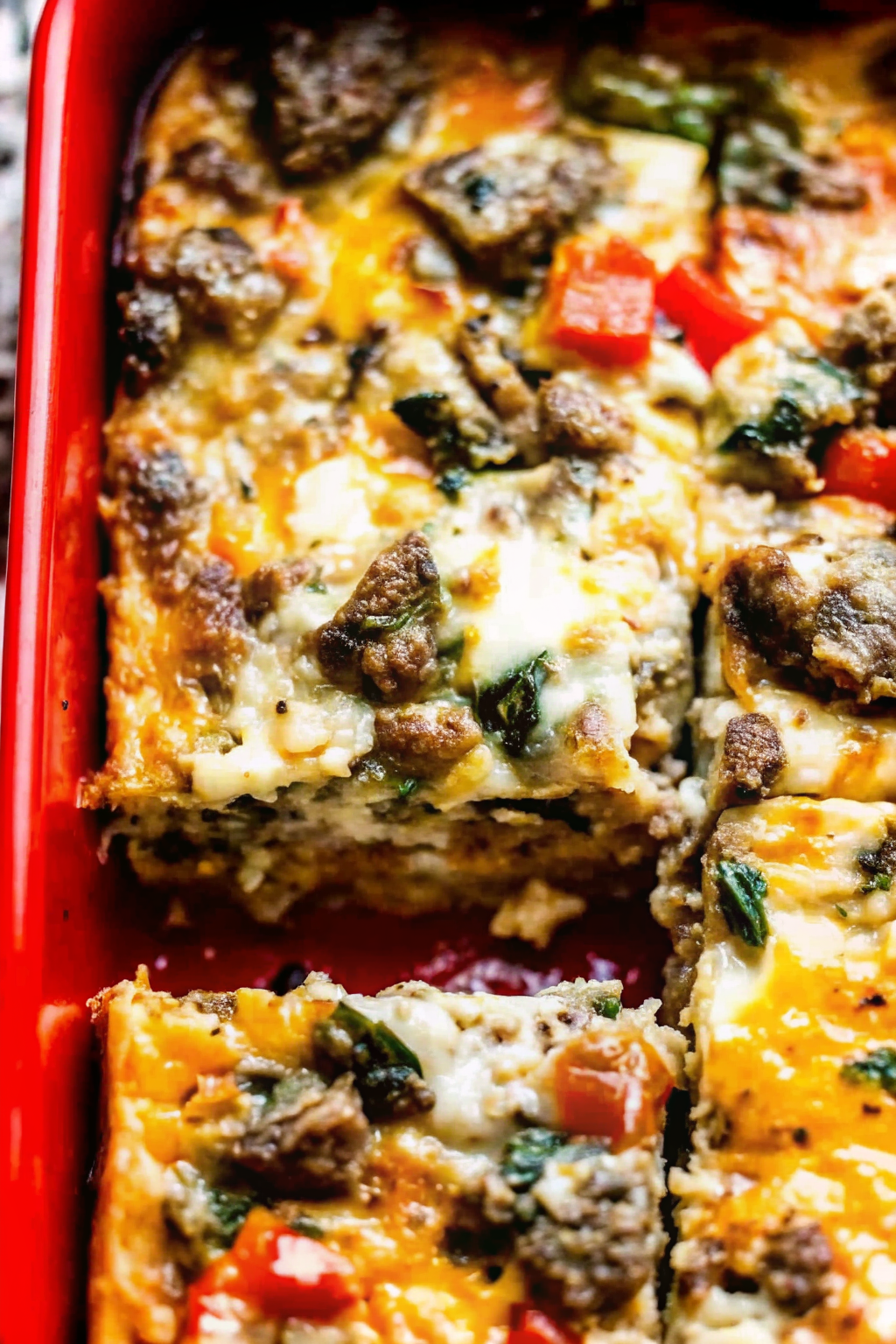
Final Thoughts
The breakfast casserole is more than just food; it is a sanity saver. It allows you to enjoy your coffee while the house fills with the smell of sizzling sausage and melting cheese. It lets you be present with your family instead of chained to the stove.
So, grab that loaf of sourdough, brown that sausage, and grate that cheese. Your future self (the one waking up tomorrow morning) will thank you profusely. Now, if you’ll excuse me, I’m going to go assemble one right now so I can sleep in on Saturday.
Happy baking!
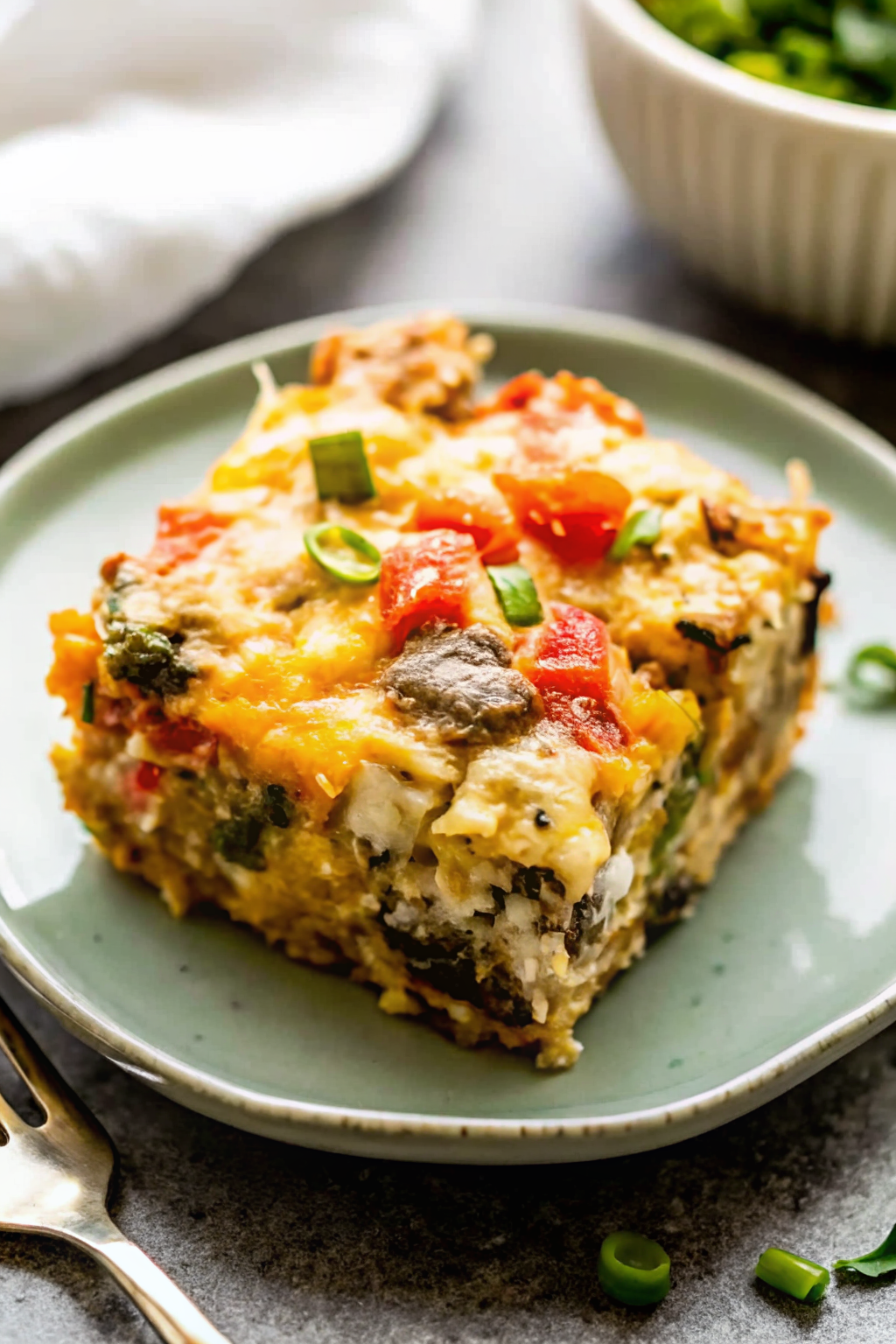
Cheesy Sausage Breakfast Casserole
Author: Prep: 20 minutes Cook: 45 minutes Total: 5 hours 5 minutesEquipment
- 9×13-inch baking dish
- Large Skillet
- Whisk
- Large mixing bowl
- Box Grater (for cheese)
Ingredients
The Foundation:
- 1 loaf Sourdough or French Bread stale is best!, cut into 1-inch cubes (about 6-8 cups)
- 1 lb Ground Breakfast Sausage Hot or Sage variety
- 1 medium Yellow Onion diced
- 1 Red Bell Pepper diced (optional, for color)
- 2 cups Sharp Cheddar Cheese freshly grated (8 oz block)
The Custard:
- 12 large Eggs
- 1 cup Whole Milk
- 1 cup Half-and-Half
- 1 tsp Salt
- ½ tsp Black Pepper
- ½ tsp Dry Mustard powder optional
- ½ tsp Garlic Powder
Instructions
- Prep the Bread: Grease a 9×13 inch baking dish. If your bread is fresh, spread the cubes on a baking sheet and toast in a 350°F oven for 10 minutes to dry them out. This prevents a soggy breakfast casserole. Place the bread cubes into the prepared baking dish.
- Brown the Meat: In a large skillet over medium-high heat, cook the sausage until browned and crumbled. Remove the sausage with a slotted spoon and scatter it over the bread.
- Sauté Veggies: In the same skillet (keep that sausage grease!), sauté the onion and bell pepper for 3–5 minutes until soft. Spread the veggies over the sausage layer.
- Cheese Layer: Sprinkle the freshly grated cheddar cheese evenly over the top of the meat and vegetables.
- Whisk the Custard: In a large bowl, whisk together the eggs, milk, half-and-half, salt, pepper, dry mustard, and garlic powder until frothy and combined.
- Pour and Press: Pour the egg mixture evenly over the entire casserole. Use a spatula to gently press the bread down to ensure every piece is submerged and soaking up that liquid gold.
- The Wait: Cover tightly with foil and refrigerate for at least 4 hours, or ideally overnight. This allows the bread to absorb the custard fully.
- Bake: When ready to eat, remove the casserole from the fridge and let it sit on the counter for 30 minutes. Preheat oven to 350°F (175°C).
- The Two-Step Bake: Bake covered with foil for 20 minutes. Then, remove the foil and bake for another 20–25 minutes until the top is golden brown and the center is set (it should jiggle slightly like firm Jell-O, not ripple like water).
- Serve: Let it rest for 10 minutes before slicing. Serve hot!
Notes
- Bread Matters: Use sturdy bread like Sourdough or a French baguette. Soft white sandwich bread will turn to mush.
- Grate Your Own Cheese: Pre-shredded cheese contains anti-caking agents that stop it from melting properly. For the best gooey texture, grate a block of cheddar yourself.
- Don’t Skip the Soak: The chilling time is crucial! It allows the flavors to marry and the bread to become custardy rather than just wet.
- Veggie Tip: Always cook your vegetables before adding them. Raw veggies release water while baking, which can make your breakfast casserole watery.
- Storage: Leftovers keep well in the fridge for 3-4 days and reheat perfectly in the microwave.
Nutrition