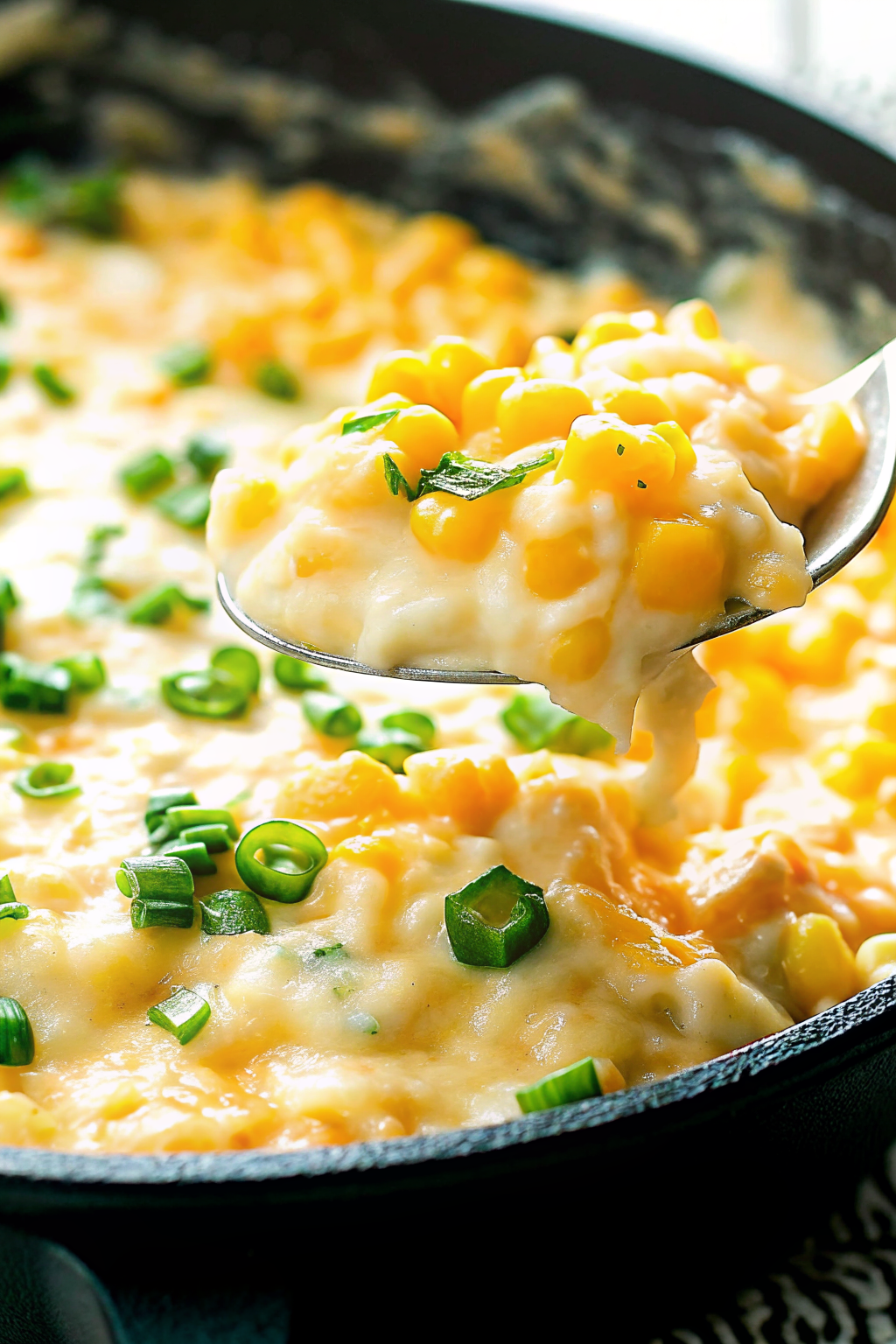
Let’s talk about a dish that defies logic but completely conquers the taste buds. You take a vegetable (technically a grain, but let’s not split hairs), drown it in mayonnaise, cover it in sugar, and bury it under a mountain of cheese. It sounds like a chaotic experiment from a college dorm room. But it isn’t. It is corn cheese, and it is arguably the greatest side dish to ever emerge from Korean cuisine.
If you have ever eaten at a Korean BBQ restaurant, you know exactly what I’m talking about. The waiter brings out a sizzling cast-iron plate. The corn bubbles violently. You take a bite, burning your tongue in the process, and realize that you don’t even care about the pain because the flavor is that good.
For years, I tried to replicate this at home and failed. I ended up with watery, milky soup with floating corn kernels. It was tragic. But after much trial, error, and an embarrassing amount of mozzarella, I cracked the code.
So, grab your skillet. We are about to make the gooey, sweet, savory masterpiece that will make you the most popular person at the dinner table.
What Exactly IS Corn Cheese?
You might ask, “Is it a dip? Is it a side dish? Is it dessert?” The answer is yes.
In Korea, they often serve this as anju—food you eat while drinking. It creates a rich, fatty base that helps you handle spicy food or a few too many drinks. It balances heat, salt, and alcohol with pure, unadulterated creaminess.
Why does it work?
- Texture: You get the “pop” of the corn kernels against the stretch of the melted cheese.
- Flavor Profile: The mayonnaise adds tang, the sugar adds sweetness, and the cheese adds savory saltiness.
- Simplicity: You likely have all the ingredients in your pantry right now.
IMO, this is the ultimate comfort food. It rivals the comfort level of loaded baked potatoes, but with way less prep time and significantly more cheese pull.
The Ingredient Breakdown: Do Not Substite
You cannot just throw random dairy products at corn and hope for the best. The alchemy of corn cheese relies on specific ingredients interacting with heat.
The Corn
Use canned sweet corn. I know, fresh corn is “better,” but not here. Canned corn has a specific texture and sweetness that fits this dish perfectly. Plus, it’s consistent. Just make sure you drain it. Then drain it again. If you think it’s dry, drain it one more time. Water is the enemy.
The Mayo
This is controversial for some, but you need mayonnaise. Do not use sour cream. Do not use Greek yogurt. You need the oil and egg emulsification of real mayo.
Pro Tip: If you can find Kewpie mayo (the Japanese brand with the baby on the bottle), buy it. It uses egg yolks only and contains MSG, which boosts the savory flavor profile through the roof.
The Cheese
You want low-moisture mozzarella. Fresh mozzarella contains too much water and will turn your dish into a soup. You want the block of pizza cheese that shreds nicely and stretches for miles. If you want a sharper flavor, mix in a little cheddar, but keep mozzarella as your base.
The Prep: The Secret to avoiding “Corn Soup”
Most people fail because they dump wet ingredients into a pan and bake them. That is wrong. You need to remove moisture before you add creaminess.
- Drain the Corn: I mentioned this, but I will mention it again. Dump the can into a colander and let it sit.
- Sauté First: Melt some butter in your skillet and sauté the corn before adding the mayo. This evaporates residual water and toasts the kernels slightly.
- Season the Base: Add your sugar and a pinch of salt directly to the hot corn. The heat melts the sugar, coating each kernel in a light syrup.
If you love the satisfying crunch of stovetop popcorn, you will appreciate the pop of the corn kernels here. By sautéing them first, you preserve that texture so they don’t turn into mush.
The Mixing Method
Once your corn looks glossy and smells sweet, turn off the heat. Now you add the mayonnaise.
Why turn off the heat?
If you add mayonnaise to a screaming hot pan, the oil separates. You end up with a greasy slick. You want the residual heat to warm the mayo so it binds with the corn, creating a creamy sauce.
Stir it in until everything looks coated. Flatten the mixture with the back of your spoon. This creates a uniform surface for the cheese layer.
The Cheese Layer: Go Big
Now, cover the entire surface with your shredded mozzarella. Do not be shy. You should not see any corn peeking through.
The Garnish:
Sprinkle a little extra sugar on top of the cheese.
Wait, sugar on cheese? Yes. Under the broiler, that sugar caramelizes and creates those beautiful brown spots we all fight over. It adds a crème brûlée vibe to your savory dish.
Cooking: Stovetop vs. Oven
You have two paths to glory here. Both work, but they offer different results.
The Stovetop Method (The Classic)
Cover the skillet with a lid. Turn the heat to low. Let it sit for about 5 minutes until the cheese melts completely.
The Result: A super gooey, stretchy cheese pull. The bottom of the corn gets slightly crispy in the butter, which is delicious.
The Broiler Method (The Looker)
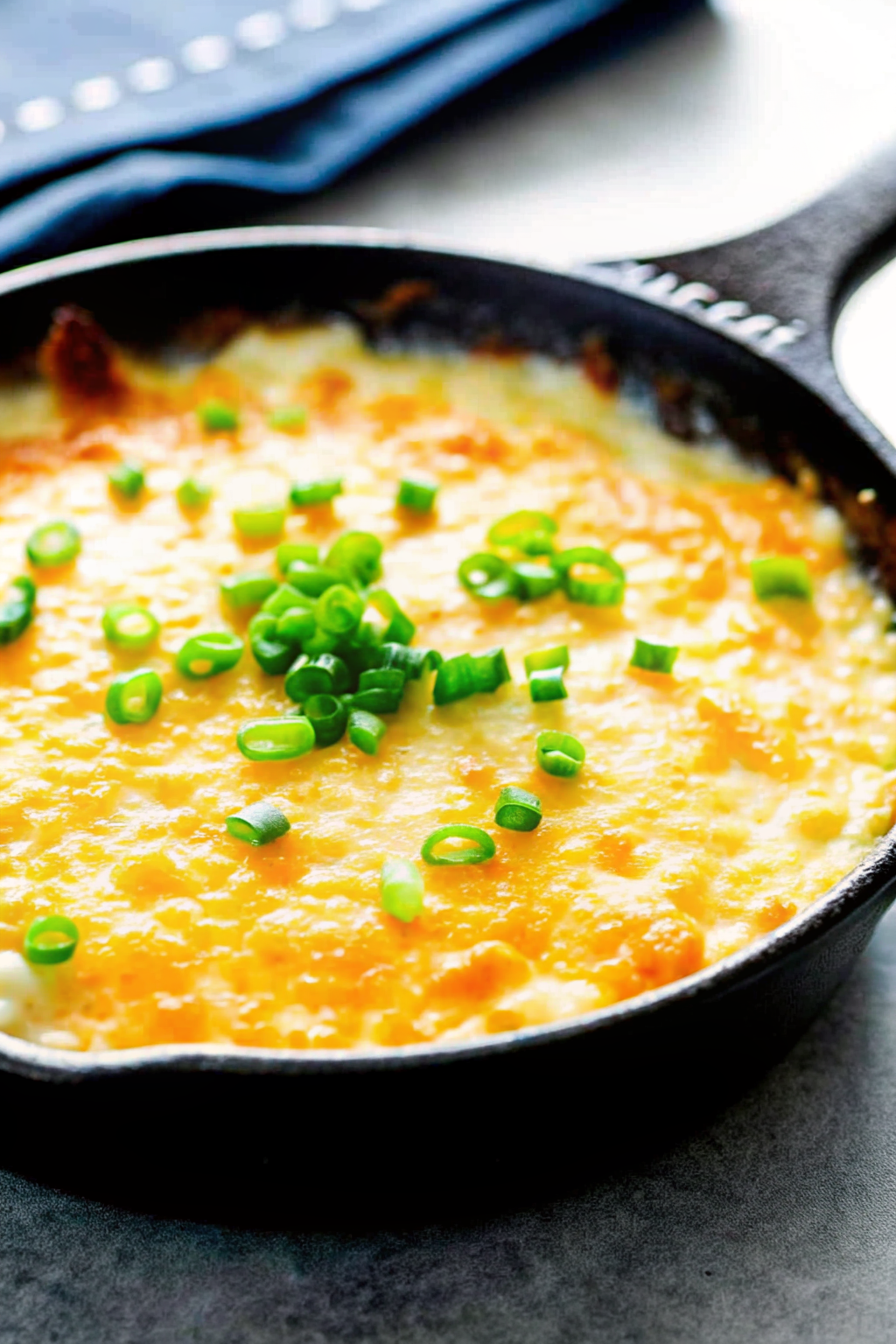
Put your oven-safe skillet under the broiler for 3–5 minutes. Watch it like a hawk. Cheese goes from “golden brown” to “charcoal” in about 30 seconds.
The Result: A bubbly, browned, crispy top layer that shatters when you dig in. This is my preferred method because I live for crispy cheese.
Variations to Spice It Up
Classic corn cheese is perfect, but sometimes you want to add a little flair.
The Spicy Kick:
Chop up a jalapeño or add a spoonful of gochujang (Korean chili paste) to the mayonnaise mixture. The heat cuts through the richness of the mayo and cheese beautifully.
The Bacon Factor:
Everything tastes better with bacon. Cook some bacon until crispy, crumble it, and mix it into the corn. The smokiness pairs incredibly well with the sweet corn.
The Bell Pepper Crunch:
Finely dice red and green bell peppers and sauté them with the corn. They add a festive color and a nice textural contrast to the soft cheese.
Serving Suggestions
You just pulled a bubbling skillet of molten lava out of the oven. What do you do with it?
Eat it straight from the pan.
This is the traditional way. Give everyone a spoon and let them fend for themselves. Be careful, though; corn holds heat exceptionally well. I have burned the roof of my mouth more times than I care to admit :/
Pair it with BBQ.
If you are grilling steaks or pork belly, this is the mandatory side dish.
The Party Spread:
If you host a gathering, serve this alongside honey-glazed smoked sausages for the ultimate sweet-savory party spread. The sticky glaze on the sausages complements the creamy sweetness of the corn perfectly.
Troubleshooting Your Corn Cheese
Did things go wrong? Here is how to fix it.
“It’s a puddle of water.”
You didn’t dry the corn enough, or you used fresh mozzarella.
- The Fix: Use a spoon to carefully skim the liquid off the edges. Next time, sauté the corn longer.
“The mayonnaise split.”
You got the pan too hot.
- The Fix: Stir in a teaspoon of cold water or milk to help re-emulsify the sauce. It won’t be perfect, but it will still taste good.
“It’s too sweet.”
You went heavy on the sugar.
- The Fix: Sprinkle some cayenne pepper or more salt on top to balance it out.
Why Canned Corn Reigns Supreme
I want to circle back to the canned corn debate. In the culinary world, we often shame canned vegetables. But corn is unique. The canning process preserves the sweetness and the crisp skin of the kernel.
When you try to use fresh corn, the kernels release a “milk” when you cut them off the cob. This starch thickens the dish in a weird way and makes it gummy. Frozen corn often has freezer burn or mushy texture.
Canned corn provides that distinct “pop” that defines this dish. Just make sure you buy “whole kernel sweet corn,” not “creamed corn.” If you use creamed corn, you are making soup, and I cannot help you.
A Note on Calories (Or Ignoring Them)
Look, I will be honest with you. This is not a diet food. It is carbs mixed with fat, topped with fat, and cooked in fat.
But that is the point. It is soul food. It creates happiness. Eating a salad is responsible; eating corn cheese is joyful. Just share the skillet with friends so you don’t accidentally eat 1,000 calories of mayonnaise by yourself (not that I have ever done that…).
The Cultural Impact
It’s fascinating how this dish evolved. Corn isn’t native to Korea, and neither is cheese. This dish arose from modern history, blending Western ingredients with Korean culinary sensibilities. It balances the “five flavors” perfectly: sweet, salty, sour, bitter (if you char it), and umami.
For a deeper dive into how modern Korean cuisine adopts and adapts ingredients like corn and spam, Serious Eats has a fantastic breakdown of the history and technique. It really shows that authenticity is about flavor, not just ancient history.
Can You Veganize It?
Surprisingly, yes. Vegan mayonnaise has come a long way, and vegan mozzarella melts reasonably well now.
- The Swap: Use a high-quality vegan butter for the sauté. Use Hellmann’s Vegan Mayo or similar.
- The Challenge: Vegan cheese doesn’t always brown well. It just melts. If you use vegan cheese, I recommend using a kitchen torch to get some color on top, rather than relying on the broiler, which might just dry the cheese out.
Final Thoughts
We often overcomplicate cooking. We think we need expensive ingredients or complex techniques to impress people. But sometimes, you just need a can of corn and a block of cheese.
Corn cheese proves that the sum is greater than the parts. It transforms humble pantry staples into a sizzling, golden, bubbly masterpiece that demands attention.
So, the next time you stare at a can of corn in your pantry, don’t just heat it up with butter and salt. Dream bigger. Get the mayo. Get the sugar. Preheat your broiler. You are about to make the best decision of your day.
Now, go grate that mozzarella. Your skillet is waiting! FYI, save the crispy cheese bits on the edge of the pan for yourself; they are the best part