Let’s have a serious talk about comfort food. You can keep your fancy risottos and your deconstructed salads. When I had a bad week, or honestly, even a perfectly average Tuesday, I don’t want culinary art. I want a massive, steaming potato drowning in dairy and pork products. I want loaded baked potatoes.
We have all suffered through the “steakhouse potato” disappointment. You know the one. It arrives wrapped in sweaty foil, the skin is wet and mushy, and a cold pat of butter sits sadly on top of a dense, undercooked center. It is a tragedy. A potato has so much potential, yet restaurants consistently ruin it by rushing the process.
If you treat the potato as a vehicle rather than an afterthought, you unlock a masterpiece. I’m talking about skin so crispy it shatters like glass, an interior that creates its own mash, and toppings that actually meld together instead of sitting in separate, cold layers.
So, turn on your oven. We are going to build a potato that qualifies as a main course, a spiritual experience, and possibly a mild health risk all at once.
The Potato Selection: Size and Starch Matter
You cannot make a championship dish with minor league ingredients. Do not try to load a red potato. Do not try to load a Yukon Gold. Those are waxy potatoes. They hold their shape, which makes them great for salads but terrible for fluffing.
You need a Russet (Idaho) potato.
Russets have high starch and low moisture. When you bake them, that starch expands and separates, creating that cloudy, fluffy texture we crave.
Size strategy:
Go big. If you plan to call this dinner, you need a potato that weighs at least 10 to 12 ounces. I personally hunt for the ones that look like slightly deflated footballs. You need surface area to hold the mountain of cheese we are about to apply.
The Foil Debate: Ban the Silver Jacket
I will say this as clearly as possible: Never, ever wrap your potato in foil.
Wrapping a potato in foil steams it. It traps the moisture against the skin. You end up with a wet, gummy exterior and a dense interior. We want to roast the potato, not steam it. We want the moisture to escape so the skin turns into a crispy shell and the inside turns into a cloud.
If you see a recipe that tells you to wrap the potato, close that tab immediately. They do not have your best interests at heart :/
The Prep: The Salt Crust Technique
Here is how you achieve that restaurant-quality skin that actually tastes good.
- Scrub it down: Potatoes grow in dirt. Wash them thoroughly and dry them completely. Moisture is the enemy of crispiness.
- The Poke: Stab the potato all over with a fork. This allows steam to escape. If you skip this, you risk a potato explosion in your oven. I have cleaned exploded potato off heating elements; it is not fun.
- The Oil Bath: Rub the dry potato with a generous amount of olive oil or bacon grease. Coat every inch.
- The Salt Coat: Roll the oiled potato in coarse Kosher salt. Don’t be shy. The salt pulls moisture out of the skin and creates a savory, crunchy crust.
The Cook: Patience is Key
You cannot rush greatness. If you try to microwave the potato to save time, you will fail. Microwaves cook water molecules unevenly, resulting in gummy spots and hard spots.
The Oven Method:
Preheat your oven to 400°F (200°C). Place the potatoes directly on the oven rack. Putting them on a baking sheet creates a hot spot on the bottom that can burn. By placing them on the rack, hot air circulates the entire spud.
Timing:
Bake for 45 to 60 minutes.
How do you know it’s done? Use a potholder and give it a squeeze. It should yield easily to pressure, like a ripe avocado. If the center feels hard, it needs more time. The internal temperature should reach about 205°F if you want to be scientific about it.
The fluffing Ceremony
Once you pull that blazing hot potato out of the oven, you need to open it correctly. Do not just slice it down the middle.
The Drop Method:
Some enthusiasts swear by picking the potato up (with a towel) and dropping it onto the counter from a height of six inches. This shatters the internal structure.
The Squeeze Method:
I prefer the squeeze. Slice a line down the top, leaving an inch connected at both ends. Then, push the two ends toward the center. The potato will pop open, pushing the white flesh upward. Now, take a fork and mash the inside gently before you add toppings. You want to create nooks and crannies for the butter to hide in.
The Layering Strategy: Order of Operations
You have a hot, fluffy canvas. Now we build the loaded baked potatoes. The order in which you apply toppings defines the success of the dish. You must capitalize on the residual heat.
Step 1: The Butter
Add the butter immediately. It needs to hit the steaming potato flesh so it melts all the way to the bottom. Use high-quality salted butter. Mix it in slightly with your fork.
Step 2: The Cheese
Add the cheese while the potato is still nuclear hot. You want the cheese to melt on contact.
Crucial Tip: Grate your own cheese. Pre-shredded cheese in bags is coated with cellulose (wood pulp) to keep it from clumping. That cellulose prevents a smooth melt. Grate a block of sharp cheddar or Monterey Jack for the best results.
Step 3: The Hot Meats
If you are adding chili, pulled pork, or bacon, add it now. The heat from the meat keeps the cheese melty.
Step 4: The Cool Down
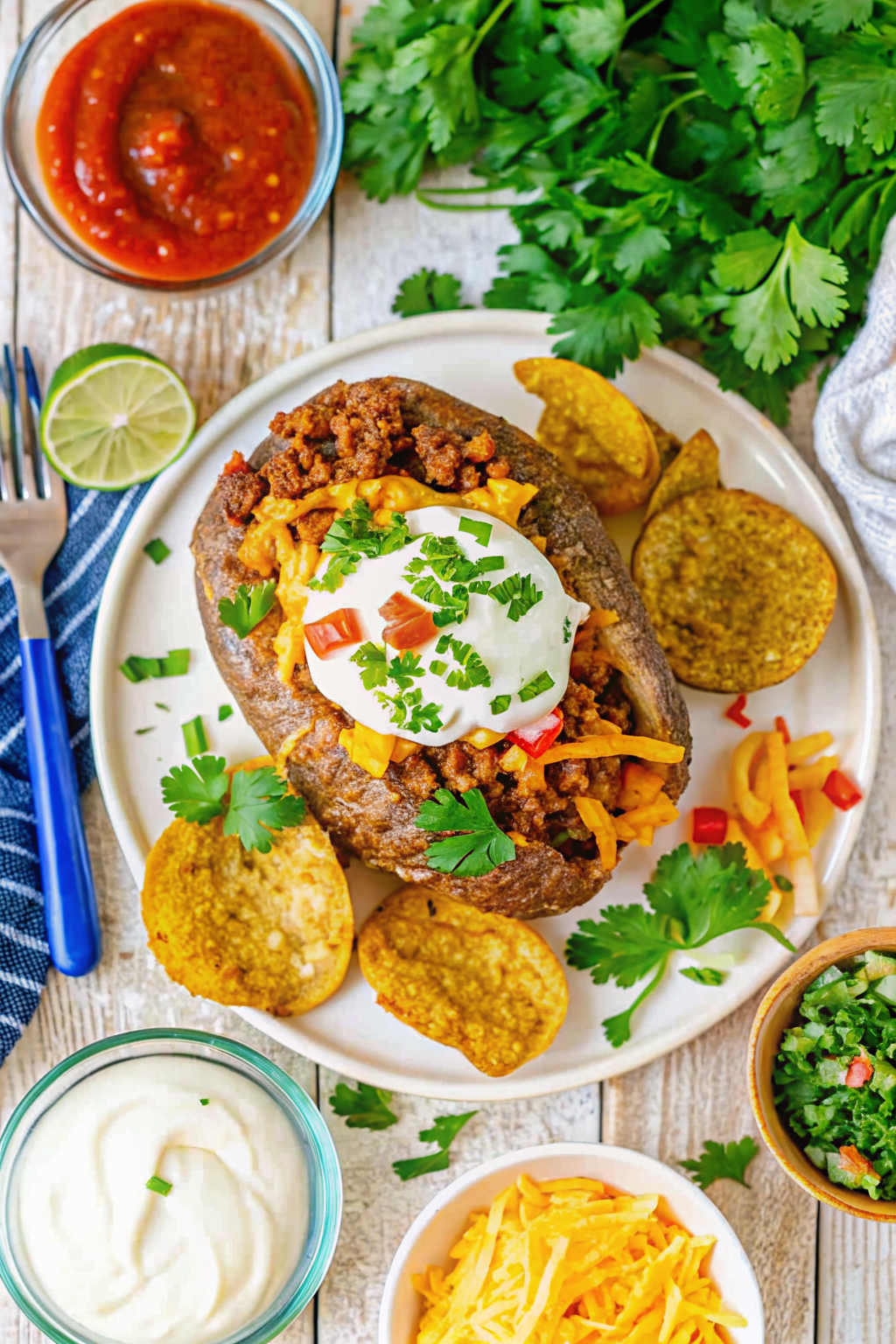
Finally, top with your cold ingredients: sour cream, chives, or green onions. This creates a temperature contrast—hot potato, cold cream—that makes every bite interesting.
Topping Ideas: Beyond the Basics
While the classic bacon-cheddar-sour cream trio is legendary, the potato is a versatile vessel.
The Broccoli Cheddar:
Maybe you want to pretend this is healthy. Steamed broccoli adds a nice texture. Better yet, use roasted broccoli for extra flavor. I often chop up leftover Parmesan roasted broccoli and throw it on top. The crispy, nutty flavor of the roasted vegetable pairs perfectly with a cheese sauce.
The Meat Lover:
Leftovers are your friend here. Do you have leftover taco meat? Throw it on. Did you make chili? Chili cheese potatoes are a meal in themselves. Personally, I love chopping up honey-glazed smoked sausages and tossing them into the cheesy mix. The sweetness of the honey glaze cuts through the heavy starch and dairy beautifully.
The “Everything” Potato:
Cream cheese, everything bagel seasoning, and smoked salmon. It sounds weird, but it works.
The Bacon: Do It Right
Do not use those jarred bacon bits that taste like red food dye and sadness. They have the texture of gravel.
Take the time to fry real bacon. Cook it until it is crispy, then chop it into bits. Save the grease! You can use that bacon grease to rub the outside of your next batch of potatoes. It’s the circle of life.
Troubleshooting Common Disasters
Even a simple dish has pitfalls. Here is how to fix them.
“The skin is soggy.”
You wrapped it in foil, didn’t you? Or you put it on a baking sheet that trapped steam. Next time, use the rack and skip the foil.
“The center is hard.”
You didn’t cook it long enough. Potatoes vary in density. A large Russet can take over an hour. Trust the squeeze test, not the timer.
“It’s bland.”
Potatoes absorb salt. You salted the skin, but did you salt the inside? When you fluff the potato with butter, sprinkle in a little extra salt and pepper.
Serving Suggestions: Main or Side?
A fully loaded baked potato is a meal. It has carbs, fats, and protein. I usually serve it with a simple green salad to cut the richness.
However, if you exercise restraint with the toppings, it works as a side dish for steak or chicken. But let’s be real—restraint is not why we are here.
If you find that a giant potato is too much of a commitment for a side dish, you might want to pivot. You can get similar flavors with crispy garlic roasted potatoes. They offer that crunchy skin and fluffy interior in a bite-sized format that leaves more room on the plate for the main protein.
The Leftover Strategy
A loaded potato does not reheat well. The sour cream separates, and the lettuce (if you used it) wilts.
However, if you have plain baked potatoes left over, you hit the jackpot.
- Potato Skins: Scoop out the center, brush the skins with butter, add cheese and bacon, and bake until crispy.
- Fried Potatoes: Cube the cold potato and fry it in a skillet with onions for breakfast.
- Soup: Mash the insides into a creamy potato soup.
Why We Love Them
There is something primal about a baked potato. It’s cheap. It’s filling. It’s warm. It connects us to a simpler time when dinner wasn’t a stress test.
When you pull a potato out of the oven, you have created something from almost nothing. You took a root vegetable that looks like a rock and turned it into a fluffy cloud of joy.
For more science on why the starch in Russet potatoes behaves the way it does, check out this breakdown from Idaho Potato Commission. They explain exactly why the low moisture content creates that fluffy texture we all chase.
Final Thoughts
The next time you stare into your pantry wondering what to make for dinner, grab the sack of Russets. Don’t overthink it.
Wash them. Oil them. Salt them. Roast them until they surrender. Then, raid your fridge for every cheese and meat product you can find.
Making loaded baked potatoes at home gives you total control. You want double bacon? Do it. You want to use pepper jack instead of cheddar? Go for it. You are the architect of your own happiness.
So, go preheat that oven to 400°F. Your perfect potato is waiting. And FYI, make sure you make an extra one, because you will definitely want a midnight snack later
Ultimate Loaded Baked Potatoes
Author: Prep: 10 minutes Cook: 1 hour Total: 1 hour 15 minutesEquipment
- Oven (wire rack)
- Fork (for poking)
- Tongs or Oven Mitts
- Cheese Grater
Notes
- Preheat: Preheat your oven to 400°F (200°C).
- Scrub and Dry: Wash the potatoes thoroughly to remove any dirt. Crucial Step: Dry them completely with a paper towel. If they are wet, the skin won’t get crispy.
- The Poke: Stab each potato 6–8 times all over with a fork. This lets the steam escape so your potato doesn’t explode in the oven.
- Oil and Salt: Rub the dry potatoes generously with olive oil (or bacon grease). Roll them in the coarse Kosher salt until they are well-coated.
- Bake: Place the potatoes directly on the oven rack (do not use a baking sheet, and definitely do not use foil!). Place a tray on the rack below to catch any oil drips if you’re worried about mess.
- The Wait: Bake for 45 to 60 minutes. They are done when the skin feels crisp and the insides feel soft when you give them a gentle squeeze with an oven mitt. The internal temp should be around 205°F.
- The Fluff: Remove from the oven. Slice a line down the center (leaving the ends connected) and squeeze the ends toward the middle to pop the potato open. Mash the inside flesh gently with a fork.
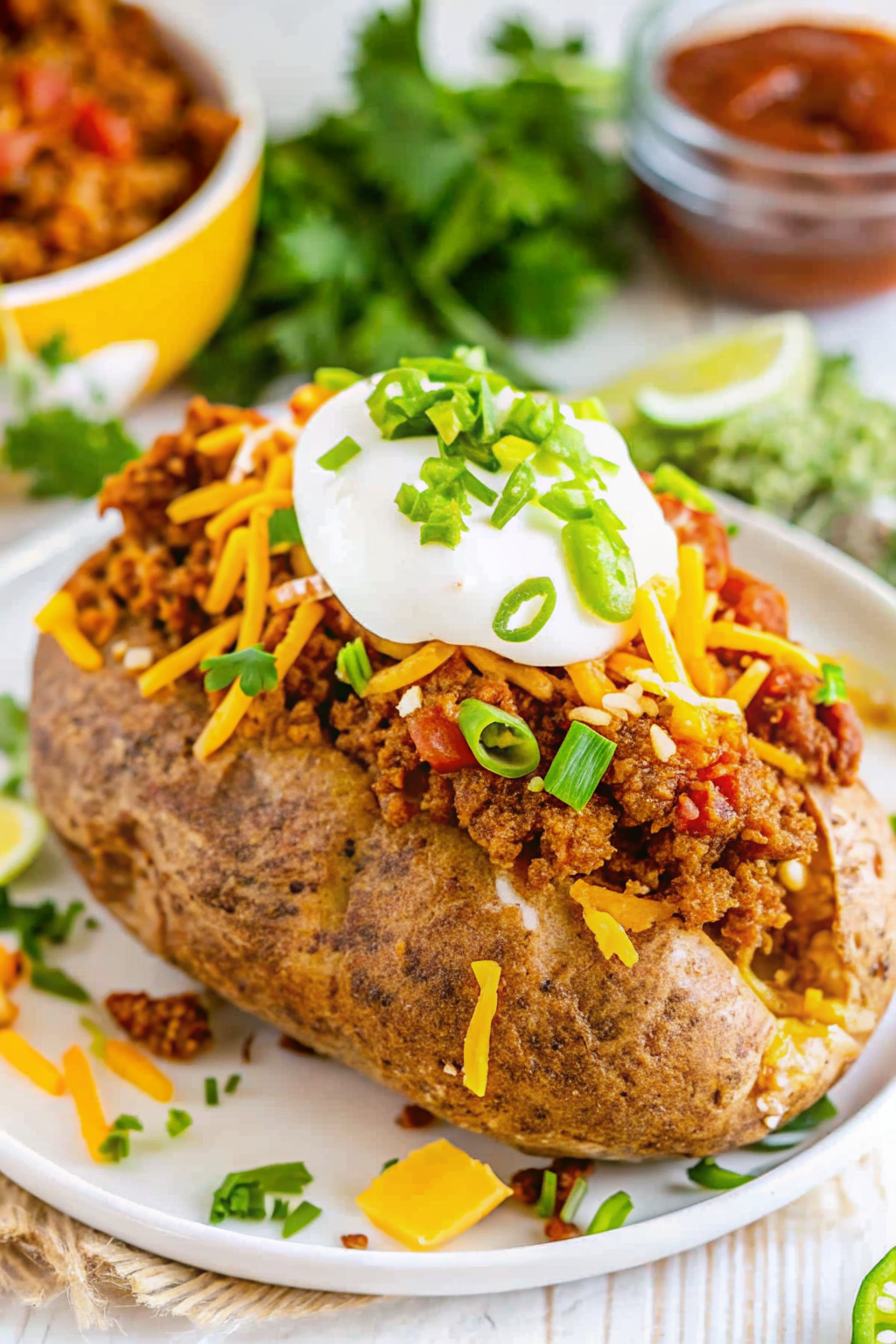
- Load It Up: Immediately add the butter and grated cheese while the potato is steaming hot so they melt instantly. Top with crispy bacon, a dollop of sour cream, and fresh chives. Serve immediately!
Nutrition