Let’s be honest. The turkey is a lie. We spend hours brining, basting, and stressing over a giant bird that essentially serves as a delivery vehicle for gravy. But the real MVP of the dinner table? It’s the holiday stuffing. That glorious, carb-loaded casserole represents the true soul of the meal. It absorbs flavor like a sponge, provides textural contrast, and frankly, tastes better cold right out of the fridge at midnight than anything else on the menu.
I take my stuffing very seriously. I’ve suffered through too many bowls of gummy, paste-like mush or dry, flavorless croutons to let you make those same mistakes. We are going to break down exactly how to build a side dish that outshines the main course. Whether you call it stuffing or dressing (we will get to that debate later), this guide ensures your pan comes back empty every single time.
The Foundation: It All Starts With the Bread
You cannot build a house on a swamp, and you cannot build great holiday stuffing on soft, fresh bread. If you grab a loaf of Wonder Bread from the pantry and tear it up five minutes before cooking, you will fail. The bread needs structural integrity. It needs to be thirsty.
Choose Your Fighter
The type of bread you choose dictates the entire flavor profile.
- White Sandwich Bread: This is the classic choice. It offers a neutral canvas for your herbs and broth.
- Sourdough: I personally love the tang sourdough adds. It cuts through the richness of the sausage and butter.
- Cornbread: If you want a Southern-style dressing, you need cornbread. It brings a natural sweetness and a crumbly texture that sets it apart.
- The Mix: Honestly? My secret involves using a mix of sourdough and cornbread. You get the tang, the sweet, and the crunch all in one bite.
The Staling Process
You must dry the bread out. If the bread retains moisture, it cannot absorb the flavorful broth without turning into baby food.
- Cut the bread into 1-inch cubes.
- Spread them on a baking sheet.
- Bake at 250°F for about 45 minutes to an hour.
You want them crisp, like giant croutons. Do not skip this step. If you rely on leaving them on the counter overnight, they just get stale; the oven actually removes the water.
The Aromatics: Building the Flavor Base
Bland stuffing is a crime against holidays. The flavor doesn’t come from the bread; it comes from the “mirepoix”—a fancy French term for onions, celery, and carrots sautéed in fat.
Butter is Your Friend
Do not skimp on the butter. We aren’t counting calories today; it’s a holiday. Melt a generous amount of butter in a large skillet. Add diced yellow onions and plenty of chopped celery. I usually skip the carrots because I don’t like the sweetness they add here, but you do you.
The Herbal Notes
Fresh herbs make a massive difference. Dried herbs lose their punch after sitting in your cabinet since 2018. :/
- Sage: This is the non-negotiable scent of Thanksgiving.
- Thyme: It adds an earthy, floral note.
- Rosemary: Use this sparingly, as it can overpower the dish.
- Parsley: Finish with fresh parsley for color and brightness.
Sauté the veggies until they soften and the onions turn translucent. Then, stir in the herbs right at the end to wake up their oils. Your kitchen should smell amazing at this point.
The Sausage Factor
Sure, you can make a vegetarian version. But if you eat meat, adding sausage takes this dish to the stratosphere. The rendered fat from the pork mixes with the butter and coats the bread in pure savory goodness.
I prefer a bulk sage breakfast sausage or a mild Italian sausage. Brown it in the pan before you add the onions and celery. Break it up into small crumbles so you get a little bit of meat in every forkful. If you love the savory kick in a good sausage balls recipe, you know exactly why adding pork to bread is a winning strategy. It adds a richness that broth alone just can’t achieve.
The Wet vs. Dry Debate
This is the moment of truth. You have your dry bread in a massive bowl. You dump your buttery vegetable and sausage mixture over it. Now you have to add the liquid.
Broth Selection
Use low-sodium chicken or turkey broth. You want to control the salt level yourself. If you use regular broth and salty sausage, you might dehydrate your guests before dessert.
The Sponge Technique
Add the broth slowly.
- Pour in a cup.
- Toss gently with your hands or a big spoon.
- Wait a minute.
The bread needs time to drink. You want the cubes to feel moist and heavy, like a damp sponge, but there should not be a pool of liquid at the bottom of the bowl. If you squeeze a piece of bread, it should hold its shape but not drip.
- Too dry? The stuffing falls apart on the plate.
- Too wet? It turns into a solid brick.
- Just right? It clumps together loosely but maintains individual bread identity.
To Stuff or Not to Stuff?
Here lies the Great Controversy. Do you cook the stuffing inside the bird or in a casserole dish?
Team Casserole (The Winner)
I firmly believe you should bake your holiday stuffing in a casserole dish. Why?
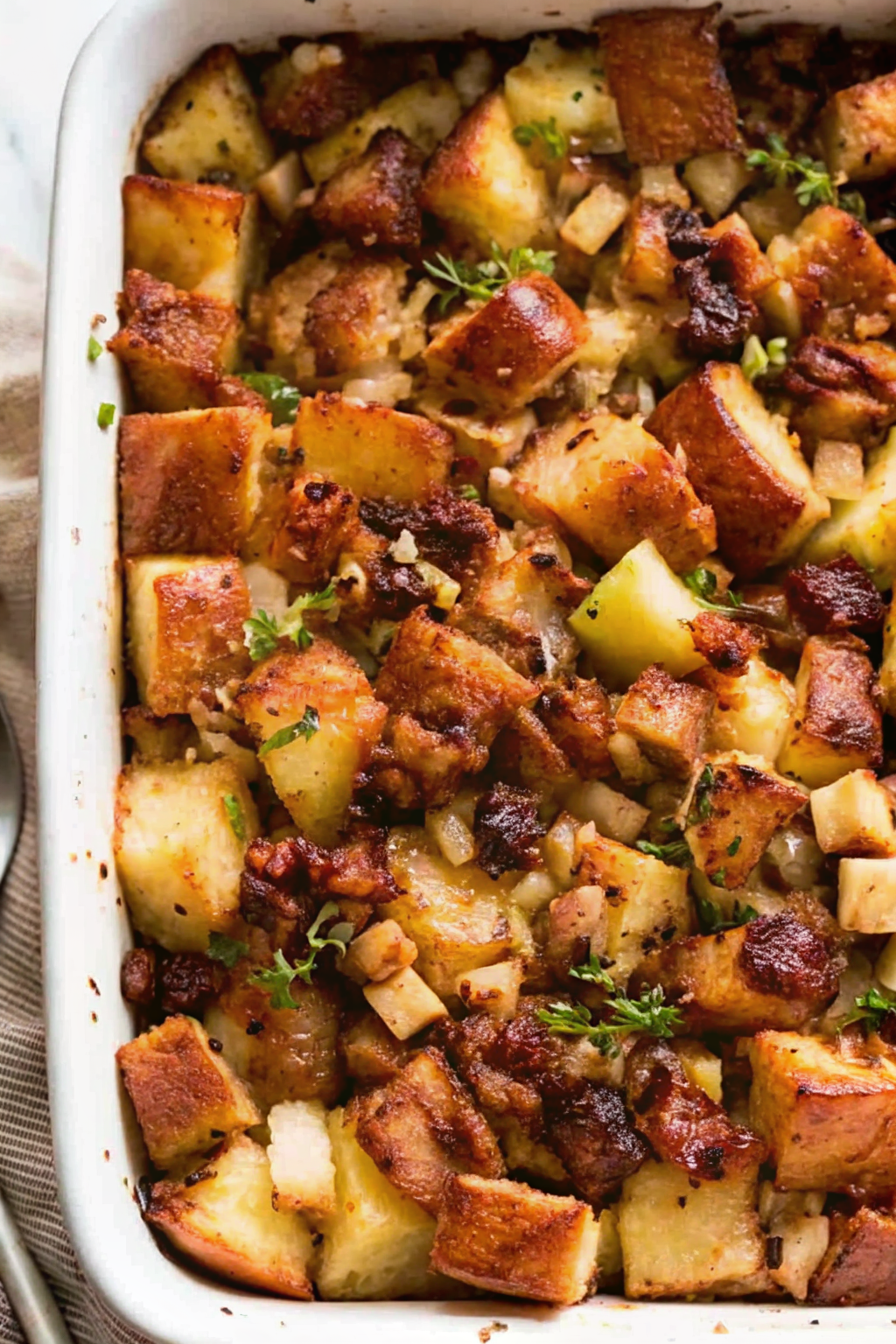
- Crispy Edges: When you bake it in a dish, you get that golden-brown, crunchy top layer. That texture is the best part. Inside the bird, everything stays soft and steamy.
- Safety: To kill bacteria, the stuffing inside a turkey must reach 165°F. By the time the stuffing gets that hot, you have likely overcooked the turkey breast into sawdust.
- Space: A turkey cavity only holds so much. A 9×13 pan holds enough for leftovers.
While your green bean casserole with bacon fights for attention on the sideboard, a perfectly crispy stuffing usually steals the show because of that textural contrast between the soft center and the crunchy top.
Baking to Perfection
Preheat your oven to 350°F (175°C). Grease your baking dish generously with butter. Dump the mixture in, but do not pack it down. Keep it loose and airy. If you compress it, you create a dense brick.
The Foil Method
- First 30 Minutes: Bake it covered with foil. This steams the bread and ensures the center heats through.
- Last 15-20 Minutes: Remove the foil. crank the heat up slightly if needed. This crisps the top.
You know it’s done when the center hits 165°F and the top looks golden brown and irresistible.
Customization: Making It Your Own
Once you master the base recipe, you can get creative. The neutral nature of bread allows for endless variations.
Add Some Crunch
Toss in some toasted pecans or walnuts. The nutty texture surprises the palate and breaks up the softness of the bread.
Add Some Sweet
Chopped apples, dried cranberries, or dried cherries add a pop of tart sweetness. This works particularly well if you use sausage, as the sweet-salty combo always wins.
The Oyster Route
I know people who swear by oyster stuffing. IMO, it’s an acquired taste, but if you love seafood, folding in chopped oysters and their liquor adds a briny depth that screams tradition for many coastal families.
Troubleshooting Common Disasters
Even the best cooks have off days. Let’s fix your stuffing problems.
“It’s too dry!”
Did you bake it too long uncovered? No panic. Heat up a little more broth on the stove. Poke holes in the stuffing with a fork and drizzle the warm broth over the top. Cover it with foil and let it sit in a warm oven for 10 minutes. The steam will rehydrate it.
“It’s too wet/mushy!”
You added too much liquid. Spread the stuffing out onto a baking sheet in a thin layer. Bake it at 375°F to increase the surface area and evaporate the moisture. Then, scoop it back into the serving dish.
“It tastes bland.”
Did you forget the salt? It happens. Melt some salted butter with fresh sage and garlic powder. Pour this seasoned butter over the top before serving. It adds a flavor punch right where it counts.
Comparison: Boxed vs. Homemade
Look, I grew up eating Stove Top. I have a nostalgic soft spot for it. It takes five minutes and tastes like salt and sage. But comparing boxed stuffing to homemade holiday stuffing is like comparing a postcard to a vacation.
Boxed stuffing lacks texture. It is uniform and soft. Homemade stuffing offers variety—big chunks of bread, bits of sausage, crisp celery, and that buttery crunch. The effort requires maybe 20 minutes of active prep time, but the payoff transforms the meal.
Leftovers: The Morning After
I would argue that stuffing leftovers rival the main meal. You can reheat it in the oven, sure. But have you ever made a stuffing waffle?
Take a scoop of cold stuffing, mix in a little egg to bind it, and smash it into a waffle iron. It becomes ultra-crispy on the outside and soft in the middle. Top it with gravy and a fried egg. It changes your life. You can even serve it alongside a sweet potato casserole for a morning-after brunch that hits all the sweet and savory notes.
Final Thoughts
We put so much pressure on ourselves during the holidays. We want everything to look like a magazine cover. But the best food usually looks a little messy and tastes like home.
Holiday stuffing forgives you. It doesn’t need to look perfect. It just needs to taste savory, buttery, and herbaceous. It bridges the gap between the turkey and the sides. It soaks up the gravy. It comforts you when family politics get too loud.
So, put down the red box. Buy the good bread. Splurge on the fresh herbs. When you pull that bubbling, golden pan out of the oven, you will know exactly why we bother doing this every year.
According to the food safety experts at the USDA, baking your stuffing in a separate dish really is the safest method to ensure everyone stays healthy and happy, so stick to the casserole dish and enjoy the crispy results!
Now, go cube that bread. You’ve got a feast to prepare.
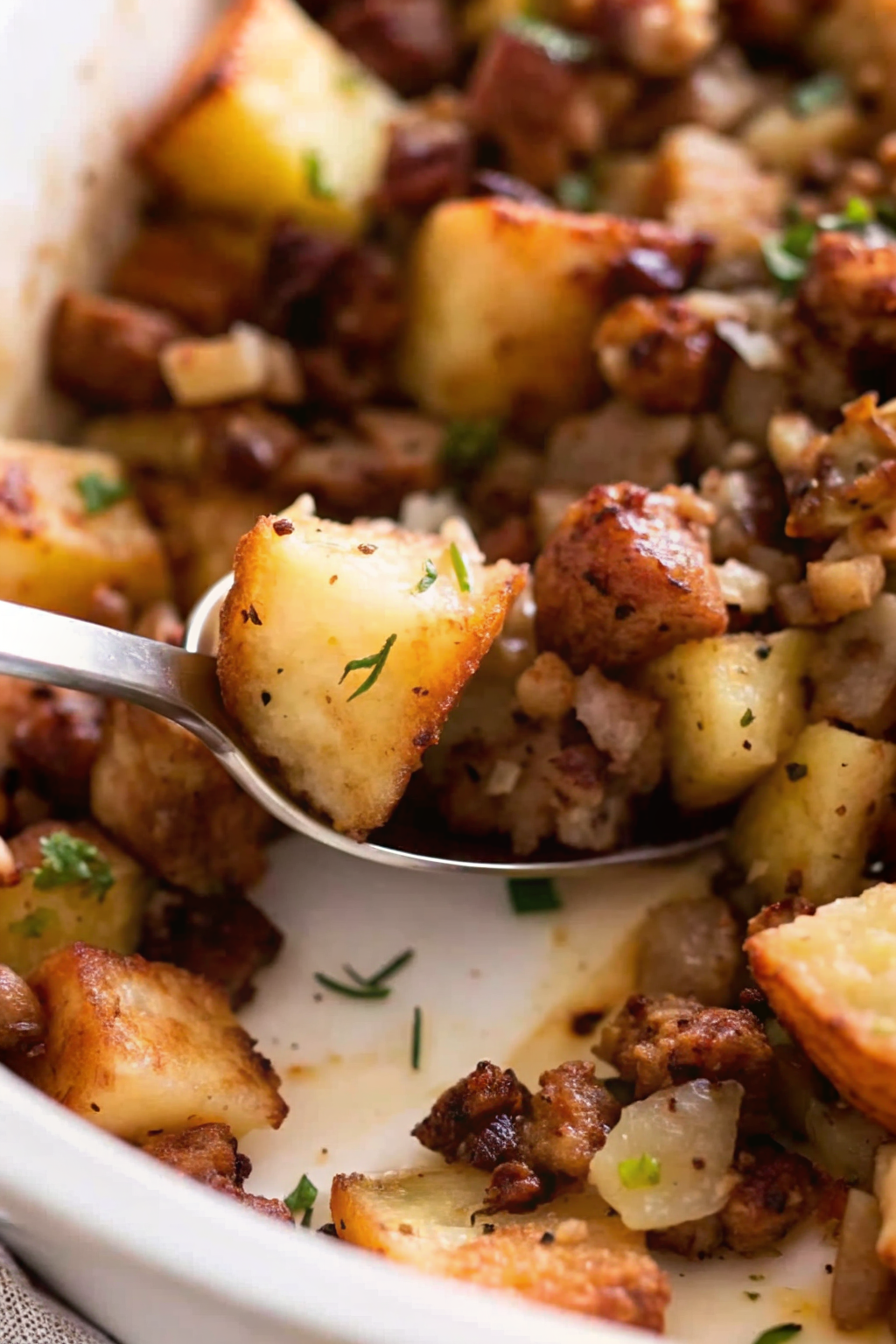
The Best Sausage & Herb Holiday Stuffing
Author: Prep: 50 minutes Cook: 50 minutes Total: 10 hours 15 minutesEquipment
- 9×13 Inch Baking Dish (Casserole Dish)
- Large Skillet
- Large mixing bowl
- Baking Sheet (for drying bread)
Ingredients
The Bread Base:
- 1 loaf Sourdough White Bread, or Cornbread (about 12 cups), cut into 1-inch cubes
- Note: A mix of sourdough and cornbread works beautifully!
The Savory Mix:
- 1 lb Bulk Breakfast Sausage Sage or Mild Italian
- ½ cup Unsalted Butter 1 stick
- 2 large Yellow Onions diced
- 3 stalks Celery chopped
- 1 tbsp Fresh Sage chopped
- 1 tbsp Fresh Thyme leaves
- 1 tsp Fresh Rosemary minced
- ½ cup Fresh Parsley chopped
- 1 tsp Kosher Salt
- ½ tsp Black Pepper
The Liquid:
- 2 ½ to 3 cups Low-Sodium Chicken or Turkey Broth
Instructions
- Dry the Bread: (If your bread isn't already stale). Preheat oven to 250°F (120°C). Spread the bread cubes on a large baking sheet. Bake for 45–60 minutes, tossing halfway, until they feel dry and crisp like croutons. Transfer to a massive mixing bowl.
- Increase Heat: Turn the oven heat up to 350°F (175°C). Grease a 9×13 baking dish with butter.
- Brown the Sausage: In a large skillet over medium-high heat, cook the sausage. Break it up with a wooden spoon into small crumbles. Cook until browned and cooked through. Use a slotted spoon to transfer the meat to the bowl with the bread, leaving the rendered fat in the pan.
- Sauté Aromatics: Add the butter to the skillet with the sausage fat. Once melted, add the diced onions and celery. Sauté for 8–10 minutes until softened and translucent.
- Add Herbs: Stir in the sage, thyme, rosemary, salt, and pepper. Cook for 1 minute until fragrant. Pour this buttery vegetable mixture over the bread and sausage.
- The Sponge Technique: Add the fresh parsley. Slowly pour 2 cups of the broth over the mixture. Toss gently with a large spoon. Let it sit for a minute to absorb. Add more broth, ½ cup at a time, until the bread feels moist and heavy (like a damp sponge) but not sopping wet. You may not need all 3 cups.
- Bake: Transfer the holiday stuffing to the prepared baking dish. Do not pack it down! Keep it loose to ensure good texture.
- Cover & Cook: Cover the dish with foil. Bake for 30 minutes.
- Crisp the Top: Remove the foil and bake for another 15–20 minutes, until the top is golden brown and crispy. (The center should reach 165°F).
- Serve: Let it rest for 10 minutes before serving.
Notes
- Bread Choice: Don’t use fresh soft bread! It turns to mush. You must dry it out in the oven or let it sit on the counter for 24 hours to stale.
- The Broth: The amount of broth depends on your bread type. Cornbread drinks more liquid than white bread. Use your judgment—you want moist, not soupy.
- Make Ahead: You can assemble the entire dish, cover it tightly, and refrigerate up to 24 hours before baking. Just add 10 minutes to the covered baking time.
- Variations: Feel free to add ½ cup of dried cranberries or chopped apples for a sweet twist, or toasted pecans for crunch.
- Storage: Leftovers keep in the fridge for up to 4 days. Reheat in the oven with a splash of broth to keep it moist.
Nutrition