Let’s get one thing straight right out of the gate. You didn’t come here for a salad. You didn’t come here for a green smoothie that tastes like lawn clippings and sadness. You came here because you want a plate of warm, savory, rib-sticking comfort. Sausage gravy with biscuits represents the absolute pinnacle of hearty American breakfasts. It’s messy, it’s not particularly photogenic, and it creates a mountain of dirty dishes. But man, does it heal the soul.
I remember the first time I tried to make this dish. I was twenty-two, confident, and completely clueless. I ended up with a gray, gluey paste that tasted vaguely of pork and despair. I learned the hard way that while the ingredients are simple, the technique requires a little bit of respect. Since then, I’ve refined my method to ensure I get that creamy, peppery goodness every single time.
So, grab your skillet (cast iron if you have it, obviously) and let’s make some magic. We are going to break down exactly how to master this classic without losing your mind or your patience.
The Foundation: Let’s Talk Biscuits
You cannot have sausage gravy with biscuits without the biscuits. It’s in the name. Yet, so many people treat the bread as an afterthought. They pop a can of dough, throw it on a sheet pan, and call it a day. Look, I’m not judging you if you use the canned stuff. We all have busy mornings. But if you have the time, a homemade buttermilk biscuit changes the entire game.
You want a biscuit that can stand up to the weight of the gravy. It needs a crisp exterior and a fluffy interior. If the biscuit is too soft, it turns to mush the second the gravy hits it. If it’s too hard, you need a steak knife to get through breakfast.
Store-Bought vs. Homemade
If you go the store-bought route, aim for the “Southern Style” or “Buttermilk” varieties. They tend to have more layers. If you bake them yourself, keep your butter cold. Cold butter creates steam pockets during baking, and those pockets create flakes. Flaky biscuits act like little sponges that soak up just the right amount of sauce.
Whatever you choose, get them in the oven before you start the gravy. The gravy comes together fast, and you want it hot when the biscuits come out golden brown.
The Sausage: Fat is Flavor
Here is where my first attempt failed miserably. I used lean turkey sausage. Do not do this. I repeat: do not use lean sausage.
You need the fat. The fat renders out of the meat and mixes with the flour to create the roux. That roux thickens the milk. If you use lean meat, you have to add butter or oil, and the flavor just isn’t the same. You want pork sausage. Specifically, you want a breakfast sausage heavily seasoned with sage.
Brown It Well
Don’t just cook the meat until it’s gray. You want color. Caramelization equals flavor. Smash the sausage against the hot pan. Let it get crispy edges. Break it up into small crumbles, but leave a few larger chunks for texture.
When you think the sausage is done, let it go for another minute. You want to see those brown bits stuck to the bottom of the pan. Chefs call this “fond.” I call it “the good stuff.” When we add the liquid later, those bits will lift off and flavor the entire sauce.
The Roux: The Science Part
Okay, don’t let the fancy French word scare you. A roux is just fat and flour cooked together. This mixture thickens your sausage gravy with biscuits and prevents it from looking like milk soup.
Once your sausage is brown and crispy, look at the pan. You need about a quarter cup of grease. If your sausage didn’t release enough fat (it happens), add a tablespoon of butter or bacon grease. Yes, bacon grease. If you have a jar of it in the fridge, now is the time to shine.
Adding the Flour
Sprinkle all-purpose flour directly over the meat. Stir it in immediately. The flour needs to coat every piece of sausage and mix with the fat.
Cook the flour. This is the step most people skip. If you add the milk immediately, your gravy will taste like raw flour. You need to cook the flour-fat mixture for at least one to two minutes. It should smell nutty and look like a thick paste. This cooking process activates the starch and gets rid of that chalky taste.
The Liquid: Milk Matters
Now we turn that paste into gravy. You need whole milk. Skim milk creates a watery, sad sauce that lacks richness. Half-and-half works if you want a heart attack on a plate, but whole milk offers the best balance.
The Pouring Technique
Do not dump all the milk in at once. If you do, the flour will clump up, and you’ll spend the next ten minutes chasing lumps with a spoon.
- Pour a splash: Add about half a cup of milk.
- Stir like crazy: The mixture will seize up and look terrible. Panic will set in. Ignore the panic. Keep stirring.
- Repeat: Add another cup. Stir again. It will smooth out.
- Finish: Add the rest of the milk and bring it to a simmer.
As the milk heats up, the flour expands and thickens the liquid. Turn the heat down to low. You want a gentle bubble, not a violent boil. A boil can cause the dairy to separate, and nobody wants curdled gravy.
Seasoning: The Pepper Principle
Authentic sausage gravy with biscuits relies heavily on one spice: black pepper. You need more than you think. You want to see distinct black specs floating in that creamy sea of white.
I prefer coarse ground black pepper. The dust in the pre-filled shakers doesn’t pack the same punch. Crank that pepper mill until your wrist hurts. Then crank it a few more times.
The Secret Weapon
Aside from pepper, I add a tiny pinch of cayenne. It doesn’t make the dish spicy; it just adds a background warmth that cuts through the rich dairy. Some people swear by a dash of nutmeg. I find nutmeg a bit weird in a savory dish, but hey, you do you.
Taste your gravy. Always taste your food. Does it need salt? Sausage is salty, so you might not need much. Does it taste flat? Add more pepper. Does it taste too rich? A drop of lemon juice (weird, I know) can brighten it up without changing the flavor profile.
Texture: Finding the Sweet Spot
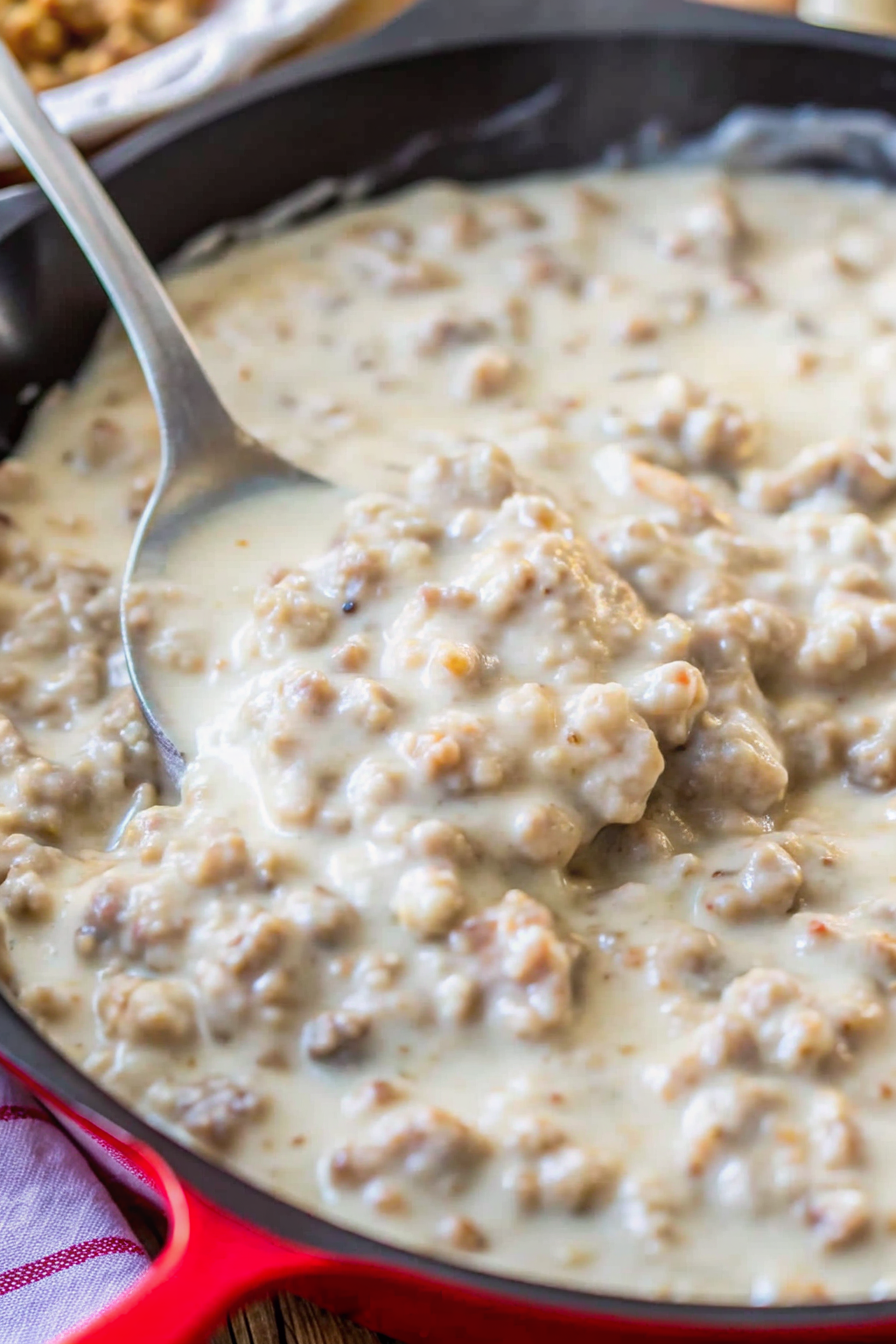
How thick should it be? This is a personal preference, but generally, you want it to coat the back of a spoon. If you run your finger through the sauce on the spoon, the line should stay.
Remember that gravy thickens as it cools. If you cook it until it looks like cement in the pan, it will be unspreadable by the time it hits the table. Take it off the heat while it’s still a little looser than you want.
If you accidentally make it too thick, don’t panic. Just whisk in a splash of milk or even water. If it’s too thin, let it simmer for a few more minutes. The water will evaporate, and it will thicken up.
Serving: The Main Event
Now comes the best part. Split those warm biscuits in half. Lay them open on the plate. Ladle a generous amount of gravy over the top. I like to let it cascade over the sides like a delicious, savory waterfall.
You can eat this alone, but it plays well with others. I love serving this alongside scrambled eggs with cottage cheese because the eggs add a nice protein punch without being too heavy. The lightness of the eggs balances the heaviness of the gravy perfectly.
If you really want to impress guests, sprinkle some fresh chives or parsley on top. It adds a pop of color to an otherwise beige meal. Does it change the taste? Not really. Does it make you look like a professional chef? Absolutely.
Common Mistakes to Avoid
We’ve all been there. You try to make a nice breakfast, and it ends in disaster. Let’s troubleshoot some common issues so you don’t have to learn the hard way.
- Burnt Flour: If you cook the roux too high, the flour burns. It creates a bitter taste that you cannot fix. If you see black specks that aren’t pepper, dump it and start over.
- Greasy Gravy: This happens if the sausage releases a ton of fat and you don’t add enough flour to absorb it. The fat separates and floats on top. To fix this, you can skim the fat off the top with a spoon, or whisk in a slurry of cornstarch and cold milk to bind it back together.
- Blandness: As mentioned, this dish lives or dies by the seasoning. Milk dilutes flavor. You have to over-season the base to ensure the final product tastes good.
Variations on a Classic
Once you master the basic sausage gravy with biscuits, you can start experimenting. Cooking should be fun, right?
Mushroom Gravy
If you have vegetarians coming over, you can swap the sausage for mushrooms. Finely chop cremini mushrooms and sauté them in butter until they are dark brown. Treat them exactly like the sausage. The mushrooms provide that savory “umami” flavor. You might need to add a splash of soy sauce to deepen the color and taste.
Spicy Sausage Gravy
Swap the breakfast sausage for hot Italian sausage or chorizo. The paprika and chili oils in the chorizo turn the gravy a light orange color and pack a serious punch. This version creates a fantastic fusion breakfast that wakes you up instantly.
The “Red Eye” Twist
Some people add coffee to their gravy. It sounds insane, I know. But a splash of strong black coffee adds a bitterness that balances the rich fat. It also darkens the gravy. It’s a very regional thing, but it’s worth a try if you feel adventurous.
Why This Meal Matters
In a world obsessed with kale and quinoa, dishes like this feel rebellious. They remind us of slow Sunday mornings. They remind us of diners with sticky tables and waitresses who call you “honey.”
Preparing this meal forces you to slow down. You can’t rush the browning of the meat. You can’t rush the thickening of the milk. It’s a rhythmic, calming process. Plus, the smell that fills your kitchen? It beats any scented candle on the market.
This isn’t just food; it’s a hug on a plate. It’s what you make when you have a bad week. It’s what you make when family comes to visit. It’s simple, honest, and unpretentious.
Pairing Ideas
Since this dish is practically a nap waiting to happen, you might want to balance the meal with something distinct. A sharp fruit salad works wonders to cut the palate. Or, if you are going all-in on the savory feast, why not try some air fryer breakfast potatoes? The crunch of the potatoes contrasts beautifully with the soft biscuits and creamy sauce.
And hey, if you end up with leftover biscuits (unlikely, but possible), don’t throw them out. Stale biscuits make excellent croutons or bread pudding. You can even use them as a base for a chicken casserole later in the week.
Final Thoughts
Making sausage gravy with biscuits from scratch is a skill every home cook needs in their arsenal. It requires minimal ingredients—sausage, flour, milk, biscuits, pepper—but delivers maximum satisfaction.
Don’t let the fear of lumpy gravy stop you. Remember the whisk is your friend. Remember that salt and pepper are the real heroes here. And please, for the love of breakfast, use full-fat milk. You deserve it.
Next time you wake up on a rainy Sunday, skip the drive-thru. Skip the cereal. Get that skillet hot and treat yourself to the ultimate comfort food. You won’t regret it. Well, your arteries might lodge a formal complaint, but your taste buds will be throwing a party. 🙂
Now, if you’ll excuse me, I’m getting hungry just typing this. I need to go check if I have any sausage in the freezer. Happy cooking!
For more tips on the science of cooking sauces and avoiding culinary disasters, check out this guide on mother sauces which explains the roux in fascinating detail. FYI, knowing the “why” makes the “how” a lot easier!

Ultimate Sausage Gravy Biscuits
Author: Prep: 5 minutes Cook: 15 minutes Total: 20 minutesEquipment
- Large Cast Iron Skillet (preferred)
- Wooden spoon
- Whisk
- Pepper Mill
Ingredients
The Base
- 8 large Buttermilk biscuits homemade or high-quality store-bought
- 1 lb 450g Breakfast pork sausage (Sage flavor is best)
- 1 tbsp Butter or bacon grease optional, only if your sausage is lean
The Gravy
- 1/3 cup All-purpose flour
- 3 to 4 cups Whole milk warmed slightly helps prevent lumps
- 1 tsp Salt adjust to taste
- 2 tsp Coarse ground black pepper be generous!
- 1 pinch Cayenne pepper for warmth, not heat
Instructions
- Get the Biscuits Going: Preheat your oven and bake your biscuits according to your recipe or package directions. You want them hot and golden right when the gravy is ready.
- Brown the Meat: While the biscuits bake, place your skillet over medium-high heat. Add the pork sausage. Break it up with a wooden spoon into crumbles. Cook until it’s browned and crispy bits (the fond) form on the bottom of the pan. Do not drain the grease! That fat is pure flavor.
- Make the Roux: If the pan looks dry, add a tablespoon of butter or bacon grease. Sprinkle the flour evenly over the sausage. Stir immediately to coat the meat. Cook this mixture for 1–2 minutes until it smells nutty and the raw flour taste is cooked out.
- Add the Liquid: Turn the heat down to medium. Pour in about 1/2 cup of milk and whisk vigorously. It will thicken instantly and look messy—don’t panic. Add another cup of milk and keep whisking.
- Simmer and Thicken: Pour in the remaining milk. Bring the mixture to a gentle simmer (not a violent boil). Let it cook for 3–5 minutes until it thickens enough to coat the back of a spoon.
- Season it Up: Stir in the black pepper, salt, and that pinch of cayenne. Taste it! It should be peppery and savory. If it’s bland, add more salt.
- Serve: Split the warm biscuits in half and place them on plates. Ladle the hot sausage gravy with biscuits generously over the top. Enjoy immediately.
Notes
- The Milk Factor: I highly recommend using whole milk for the richest flavor. Skim milk will make the gravy thin and watery.
- Too Thick? Gravy thickens as it cools. If it turns into cement in the pan, just whisk in an extra splash of milk or water to loosen it up.
- Reheating: Leftovers can be stored in the fridge for up to 3 days. Reheat gently on the stove, adding a little milk to get the creamy texture back.
- Spice it Up: For a kick, swap the breakfast sausage for hot Italian sausage or add red pepper flakes.
Nutrition